

Thirty years ago, the Capital Markets Authority was a small institution with a very big idea.The idea was that Uganda could build a market through which savings could become investments; businesses could raise long-term capital; ordinary Ugandans could participate in wealth creation; and capital could help finance the development of our country.
Today that idea has become an institution and that institution now carries even bigger responsibility from possibility to Scale.Thirty years ago, the fundamental question was: Can Uganda build a functioning capital market?Today, we know the answer.Yes, we can. And yes, we have.But the question before us today is different.How large can it become?How inclusive can it become?How innovative can it become?
And, most importantly, how much impact can it have on Uganda’s development?These questions have become even more urgent because Uganda has set itself an extraordinary ambition – to build a USD 500 billion economy by 2040.That transformation will require enormous amounts of capital.
And we must recognise something very clearly:We cannot bank-finance our way to a USD 500 billion economy. Banks will remain critical to our economy. But transformational development also requires long-term, patient capital. It requires equity,pension and institutional capital, innovative investment vehicles and capital markets capable of connecting Uganda’s savings with Uganda’s opportunities.
As I speak of 30 years’ journey, Assets under management in Collective Investment Schemes reached approximately UGX 7.06 trillion. Total funds mobilised through the capital markets reached approximately UGX 23.4 trillion,Public understanding of capital markets rose to 60.8 percent,CIS investor accounts grew to over 241,000 and dDomestic market capitalisation on the Uganda Securities Exchange surpassed UGX 15 trillion.Segregated fund assets exceeded UGX 6 trillion.

And CMA today regulates more than 160 licensed market participants.Those numbers would have been difficult to imagine when CMA began its life in a few modest rooms in the basement of the Bank of Uganda.
OUR Vision
One of our most important ambitions is participation.Within the life of our Strategic Plan, we want to see one million funded Collective Investment Scheme accounts.Why one million?Because behind every account is a person.A teacher who has decided to invest part of her salary,an entrepreneur building wealth beyond the business,f farmer investing the proceeds of a good harvest and young Ugandan who begins with UGX 10,000 or UGX 20,000 and discovers that investing is not something reserved for wealthy people. That is the Uganda we want to build.
For many years, financial inclusion has largely meant access to a bank account or mobile money.That was an important first step. But the next frontier must be investment inclusion.It is not enough for Ugandans only to transact.Ugandans must also invest, own and build wealth.
BEYOND GOVERNMENT SECURITIES
Government securities will remain an important part of Uganda’s financial system.But a mature capital market must offer investors more.We therefore want to accelerate the development of instruments such as Real Estate Investment Trusts, infrastructure bonds, green bonds, asset-backed securities, private capital solutions and Islamic finance instruments.
We are particularly committed to supporting the operationalisation of Uganda’s inaugural sovereign Sukuk.And this is about much more than introducing another financial product.It is about widening the pool of investors that can participate in financing Uganda.It is about opening our market to new sources of global capital.And it is about ensuring that Uganda participates meaningfully in the rapidly growing global Islamic finance ecosystem.

SUSTAINABILITY AND THE CAPITAL OF THE FUTURE
The market we build must also be ready for the capital of tomorrow.Globally, investors are increasingly asking questions about sustainability, climate, governance and long-term impact.Uganda must be ready for those conversations.
Through ESG disclosure frameworks, sustainable-finance guidelines, green-finance instruments and Islamic-finance initiatives, we are positioning our market to compete for these emerging pools of capital.
We therefore enter our 30th year proud of our progress, honest about our gaps and ambitious about our future.

TAKING CAPITAL MARKETS TO THE PEOPLE
Throughout this anniversary year, we will therefore take capital-markets education and engagement across the country.We will engage universities and young people through the University Quiz Challenge with, work with opinion leaders across Uganda, in partnership with the Uganda Financial Literacy Association.
We will take market intermediaries into downtown Kampala and Kikuubo, supported by multilingual radio programming.We will work with farmers through initiatives such as the Seeds of Gold programme.And we are launching one campaign that I particularly like:“Explain Capital Markets to Your Grandmother.”
Because if we cannot explain what we do to our grandmother in language she understands, perhaps we have not understood it well enough ourselves!Capital markets must cease to sound like something that belongs only to economists, lawyers, investment bankers and people wearing complicated suits.
They must become part of everyday conversations about saving, investing, ownership and wealth creation.And yes – we will take that conversation to YouTube, TikTok, Instagram and wherever else the next generation is having its conversations.
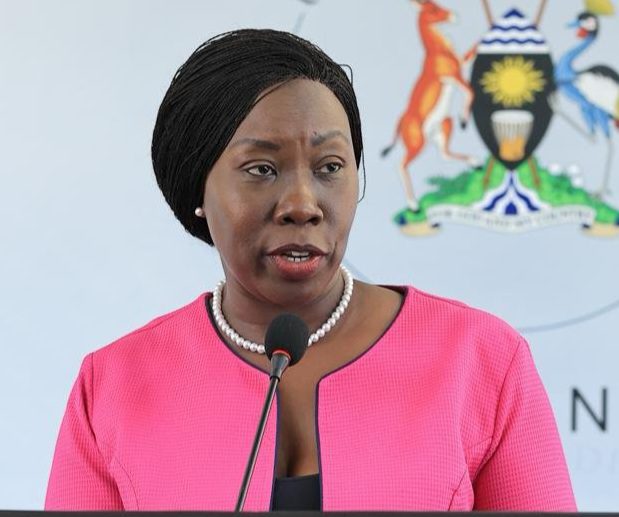
The Author Ms. Josephine Ossiya is Chief Executive Officer Capital Markets Authority
