

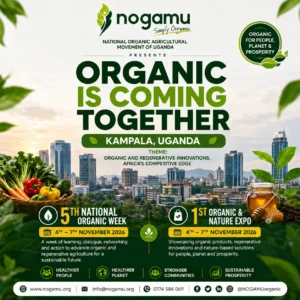
Uganda is cementing its position as the heart of Africa’s sustainable farming movement, playing host to two massive agricultural milestones this year.
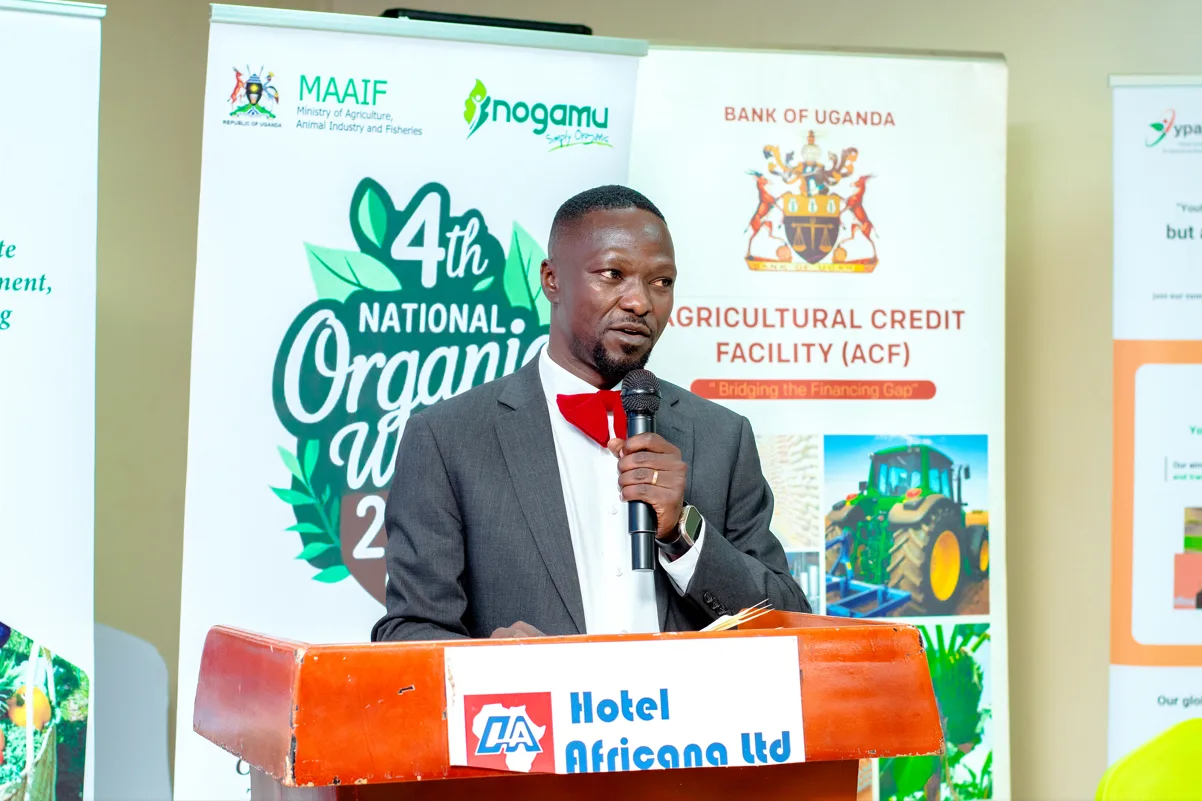
From November 4–7, 2026, the country will host the continent’s first-ever Organic and Nature Expo (ONE) at Hotel Africana in Kampala. This landmark event will bring together over 2,000 farmers, agribusiness leaders, investors, and policymakers from across the globe. Organized by the National Organic Agricultural Movement of Uganda alongside the Ministry of Agriculture, Animal Industry and Fisheries (MAAIF) and the African Organic Network (AfrONet), the expo is part of the 5th National Organic Week (NOW). Under the theme “Organic and Regenerative Innovations: Africa’s Competitive Edge,” the event aims to turn sustainable farming into a powerful driver for international trade and investment.
Meanwhile, the sustainable farming momentum is already underway in Soroti City. From October 15–16, 2026, small-scale farmers, researchers, and policymakers are gathering at the Soroti Museum for the second National Agroecology Festival.
Organized by the Eastern and Southern Africa Small-scale Farmers’ Forum (ESAFF) Uganda, this free-entry, two-day festival aligns with World Food Day (October 16) under the banner “Advancing Agroecology for Climate Action, Nutrition and Sustainable Livelihoods.”
The festival targets critical issues like soil degradation, climate change, and hazardous chemical pesticides through a rich lineup of activities:
Farmers are exhibiting locally adapted seeds, indigenous foods, and eco-friendly farming practices.
Stakeholders are discussing Uganda’s National Agroecology Strategy, food safety, and farmer-managed seed systems.
Organisers hope to adopt this declaration to solidify commitments toward environmentally responsible food production.
According to Naume Kalinaki (ESAFF Uganda’s Programmes Officer), agroecology helps smallholders slash production costs and boost enterprise profitability.
The public can enjoy farmer-led exhibitions, cookery demonstrations, food-tasting sessions, cultural performances, and awards.
Nancy Mugimba, ESAFF Uganda’s National Coordinator, emphasized that the gathering bridges the gap between practical farming experiences and national policy decisions. Backed by an organization representing over 765,560 small-scale farmers across 54 districts—67% of whom are women—this festival is a vital step toward secure food systems and thriving rural livelihoods in Uganda.
