

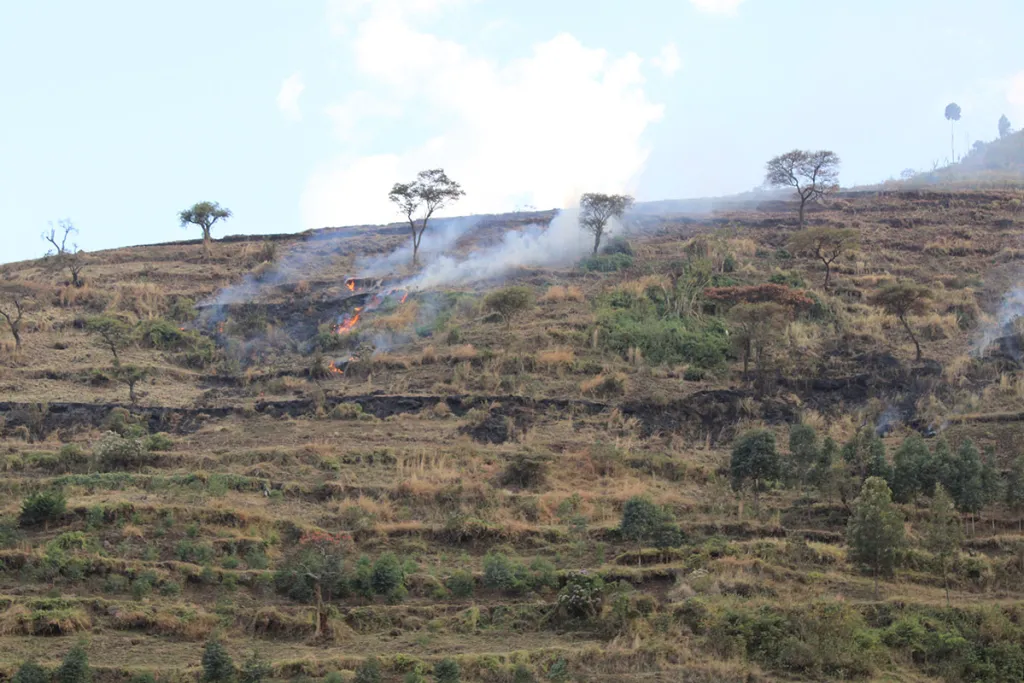
As Mt. Elgon’s ancient forests fall to human encroachment, East Africa’s largest water catchment area faces a slow, man-made disaster.
Two decades ago, stepping onto Mt. Elgon’s isolated moorlands felt like uncovering an untouched world. Untouched by the commercial, summit-hungry rush of other regional peaks, the mountain offered pure, uncluttered wilderness. Its lower slopes were tightly wrapped in dense tropical montane forests and towering walls of bamboo, which gracefully faded above 3,000 meters into scenic heath and rare afro-alpine moorlands. This thriving ecosystem formed a magnificent trans-boundary sanctuary, earning global recognition as a UNESCO Man and Biosphere Reserve.
But today, a bird’s-eye view of what is left of the Mt. Elgon forest in Kween District—one of the mountain’s critical water catchment areas—is deeply shocking. The pristine, grassy expanses that once lay unperturbed by human activity are gone. The trees that used to stand tall against permanently green hills have vanished. Instead, the former forest now resembles a landscape of bald heads standing side by side, mockingly fringed by thin patches of surviving hair that fail to cover the shame of their destruction.
Mt. Elgon is currently experiencing severe rates of deforestation that threaten both its unique flora and fauna. According to the Uganda Wild Life Authority this mass clearing destroys the forest’s natural ability to store rainwater, prevent catastrophic flooding, maintain soil fertility, and regulate regional climate conditions.

The mountain, renowned for hosting more than 197 indigenous tree species, is being stripped bare. Rare and ecologically vital species are facing localized extinction as people scramble to settle and farm. Among the hardest hit are Elgon Teak (Olea welwitschii),Mahogany (Neoboutonia macrocalyx),Podocarpus (Podocarpus latifolius) and Essential indigenous medicinal trees heavily relied upon by local communities.
This destruction compromises one of Uganda’s largest watersheds. The Mt. Elgon National Park forest feeds several critical lakes, rivers, and swamps across both Eastern Uganda and Western Kenya. Yet, the forest continues to shrink under relentless human pressure.
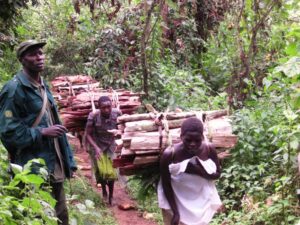
Even designated protected areas inside the national park are not immune. The Kween slopes of Mt. Elgon are facing rapid deforestation as trees are cut down for commercial timber, fuel wood, and agricultural expansion.
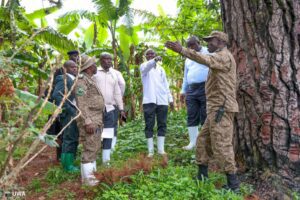
A visit to the slopes in Kween District reveals open, degraded ground with almost no natural tree regeneration. Heavy livestock grazing combined with continuous logging is aggressively eroding the forest edges. The lush green canopy that once made the Kween side an ecological powerhouse is fading fast. It has been replaced by open fields of barley and wheat, drying timber stacks, temporary settlements, and bare land fighting to redeem itself from fresh destruction.
Inside Benet village, located deep within the contested forest boundary in Kween District, the reality of this ecological depletion is undeniable. UWA reports show that the forest has lost the wild fruit trees that sustain native primates, including the white calabash monkey (colobus), red-tailed monkey, and vervet monkey.
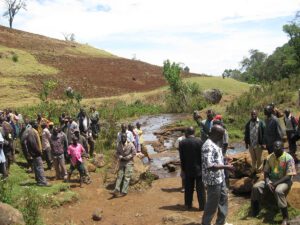
A report by the monitoring and research unit at Mt. Elgon National Park notes that adjacent communities rely heavily on the forest for poles, firewood, traditional medicine, and honey production. The data paints a grim picture: a staggering 8,664 hectares (87 sq km) of forest land has been cleared, with 3,055 hectares (about 30.5 sq km) lost in the Benet area of Kween District alone.
The research warns that this enormous watershed—with its rich diversity of altitudinal vegetation ranging from lush montane belts to unique high moorlands dotted with uncommon plants like giant lobelia and groundsel—will be completely lost if immediate conservation interventions are not enforced.
This tragedy is no longer isolated to Kween; it has spread across the entire Mt. Elgon ecosystem. Forests across Mbale, Bududa, Namisindwa, Bulambuli, Kapchorwa, Bukwo, and Sironko districts are on the verge of disappearing entirely.

According to official monitoring reports, once-dense forest zones in the following sub-counties have been heavily compromised in Bududa District: Bumayoka, Bubiita, Bulucheke, and Bududa sub-counties,Manafwa District: Buwabwala and Bumbo sub-counties,Mbale District: Wanale, Bufumbo, and Busano sub-counties,Sironko District: Bumasifwa and Busulani sub-counties and Bukwo District: Kapsegek sub-county.
“It is unfortunate that those responsible for protecting natural resources are sometimes the very persons enabling forest destruction,” states Mr. Nelson Chelimo, an elder and former LCV Chairman for Kapchorwa. “The forest land is being rapidly converted into gardens of maize, beans, barley, and wheat, or replaced by monoculture eucalyptus trees.”
The escalating crisis has caught the attention of the highest office in the country. Presiding over the national celebrations for World Tourism Day on September 27, 2026, at the Mbale Secondary School Grounds, President Yoweri Kaguta Museveni issued a stern warning to those encroaching on the region’s fragile ecosystems.
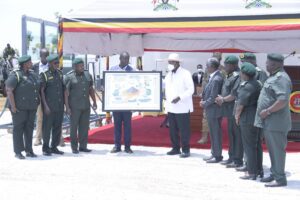
During the event, President Museveni formally commissioned the Mbale Wild Life Conservation Education Centre (commonly known as the Mbale Zoo), established by UWA to bring wildlife appreciation closer to Eastern Uganda. While touring the animal exhibits, the President explicitly labelled forest and wetland encroachers as “enemies of Uganda’s tourism development,” warning that unchecked environmental degradation will cripple the nation’s economic assets.
“The environmental destruction threatens Uganda’s tourism industry because forests, wetlands, wildlife habitats, and other ecosystems form the foundation of many of the country’s attractions,” Museveni stated. He noted that local weather patterns have broken down due to the loss of tree cover: “The temperatures in the region have changed significantly compared to conditions experienced in the 1960s.”

To counter the human pressure driving families deeper into Mt. Elgon National Park, the President urged residents to shift away from land-intensive subsistence farming and instead embrace wealth-creation sectors like tourism. He noted that service industries—including accommodation, guiding, and cultural enterprises—can support household incomes without requiring families to clear pristine forest landscapes.
The call for structural change was echoed heavily by sector heads and regional administrators during the celebrations. The Minister of State for Tourism, Wildlife and Antiquities, Hon. Susan Nakawuki Nsambu, urged the leadership of UWA to remain steadfast, fearless, and legally decisive in fulfilling their enforcement duties.
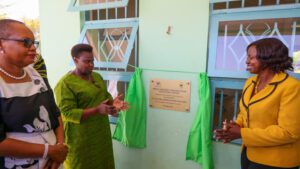
“Leaders should not fear criticism when making tough, legally supported decisions to enforce the Uganda Wildlife Act,” Nakawuki emphasized. She underlined that firm boundaries must be maintained if the ecosystem is to survive.
Compounding this policy enforcement push is a parallel effort by UWA’s Honorary Wildlife Officers (HWOs), who have launched grass-roots consultative dialogues. Led by their chairperson, Capt. John Emily Otekat, and welcomed by the Mt. Elgon Conservation Area Acting Chief Warden, Mr. Richard Matanda, these officers are actively holding direct meetings with local government officials and community figures across the heavily affected districts of Bududa and Bukwo.
Local leaders in attendance acknowledged that historical community tensions can be healed through these channels. By utilizing local leaders as mediators, UWA aims to transition regional residents away from hostile land expansion and into active partners who participate in wildlife enforcement and sustainable forest zoning.

In direct response to the crisis, the government has moved beyond rhetoric. Alongside the launch of the Mbale Zoo, President Museveni unveiled the Tourism Conservation Strategy for the Elgon Sub-region. This newly active framework outlines a series of strict structural measures designed by UWA to halt deforestation and restore degraded areas across the Mbale region.
The UWA strategy deploys several urgent lines of defense:
- Targeted Ecosystem Restoration: Acting on direct directives from the President during his visit to the wildlife exhibits, UWA is leading a coordinated effort to restore degraded forest reserves, heavily utilizing traditional indigenous tree varieties to replace lost canopies and combat slope instability.
- Aggressive Anti-Encroachment Enforcement: Backed by the national executive, the policy establishes firm, harmonized boundary enforcement measures to end political interference and stop local communities from expanding agricultural plots past park demarcation lines.
- The Zoo as a Social Anchor: The newly opened Mbale Zoo will function as an educational hub. UWA intends to use the facility to build a localized culture of environmental ownership, teaching surrounding communities how healthy forests directly protect their downstream water supply and regional microclimates.
Local authorities acknowledge that the success of UWA’s new strategy hinges entirely on transparent, uncompromised execution on the ground. Without a unified approach between local governments and central conservation bodies to enforce these new boundaries, Mt. Elgon’s unique biosphere will soon be replaced entirely by a landscape of dust, logs, and regret—leaving millions downstream completely dry.
