

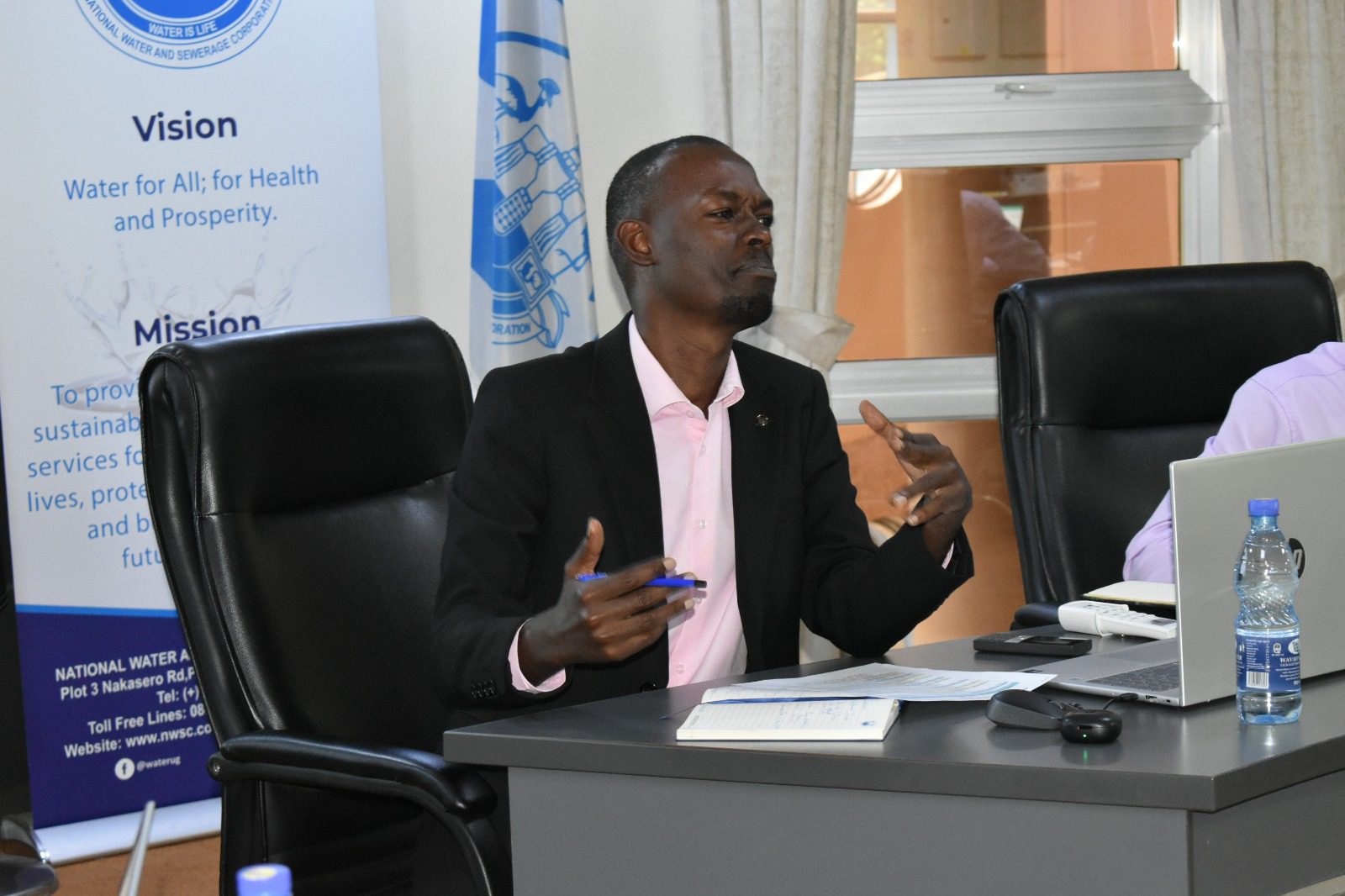
The National Water and Sewerage Corporation (NWSC) has solidified its reputation as Africa’s premier learning hub for utility management. This week, the corporation is concurrently hosting two high-level powerhouse delegations: Sierra Leone’s Guma Valley Water Company (GVWC) and the Tanzania Electric Supply Company (TANESCO).
While one deals in gallons and the other in kilowatts, both have come to Uganda with a singular focus: to benchmark against NWSC’s industry-leading operational models. As NWSC Managing Director Dr Eng.Silver Mugisha often notes:
“Utilities in developing countries operate at the intersection of climate resilience, public finance, governance, and social equity. To survive, public utility companies must shift from purely engineering-driven operations to customer-centred service delivery.”
A high-level delegation from GVWC, led by Managing Director Ing. Mariwan Kallon, has kicked off a comprehensive experiential tour of NWSC operations. This is far from a standard courtesy call—it is an immersive, hands-on masterclass spanning the entire utility value chain.
The exchange comes at a pivotal moment for Sierra Leone. Under the Freetown WASH and Aquatic Environment Revamping Project, the country operates a unique model where water services and sewerage services are split between two entirely separate entities. Inspired by NWSC’s vast continental footprints, GVWC is studying Kampala Water’s strategic framework to optimize its own operations.
NWSC has lined up a robust mix of technical presentations, laboratory insights, and field excursions. The delegation’s core priorities include:
- Infrastructure & Tech: Advanced asset management, GIS mapping, IT frameworks, and automated billing systems.
- Commercial Operations: Meter workshop mechanics, branch office dynamics, and aggressive revenue collection strategies.
- The War on Water Loss: First-hand exposure to NWSC’s celebrated infrastructure for leak detection and combating non-revenue water (NRW).
A major highlight of the tour is NWSC’s specialized model for low-income urban communities. GVWC aims to adapt these people-centered approaches to improve service delivery in Freetown.
Highlighting the importance of this shift, Dr. Mugisha recently shared that the true measure of success isn’t just network expansion, but tangible social impact:
“We are shifting our focus from how many people we serve to the true impact our services have on their lives.” He stressed.
Beyond pipes and pumps, the team is exploring the human side of utilities. They are studying how NWSC uses stakeholder engagement to eliminate community resistance during major engineering projects. To cap off the experience, the delegation will participate in an NWSC Barazawitnessing the corporation’s unique internal culture of open staff communication and visible leadership.
On the surface, NWSC and the Tanzania Electric Supply Company (TANESCO) trade in completely different commodities. But underneath, their DNA is strikingly similar. Both are capital-intensive, regulated monopolies that live and die by how well they manage vast asset networks and satisfy customers.
Driven by these shared pressures, TANESCO officials are attending a week-long benchmarking workshop at NWSC running under the theme: “Strengthening performance-based monitoring and evaluation for improved utility performance.”
By studying NWSC’s metrics up close, TANESCO aims to refine how it measures what matters, manages regulatory demands, and drives cross-industry innovation to deliver better value to Tanzanian consumers
