

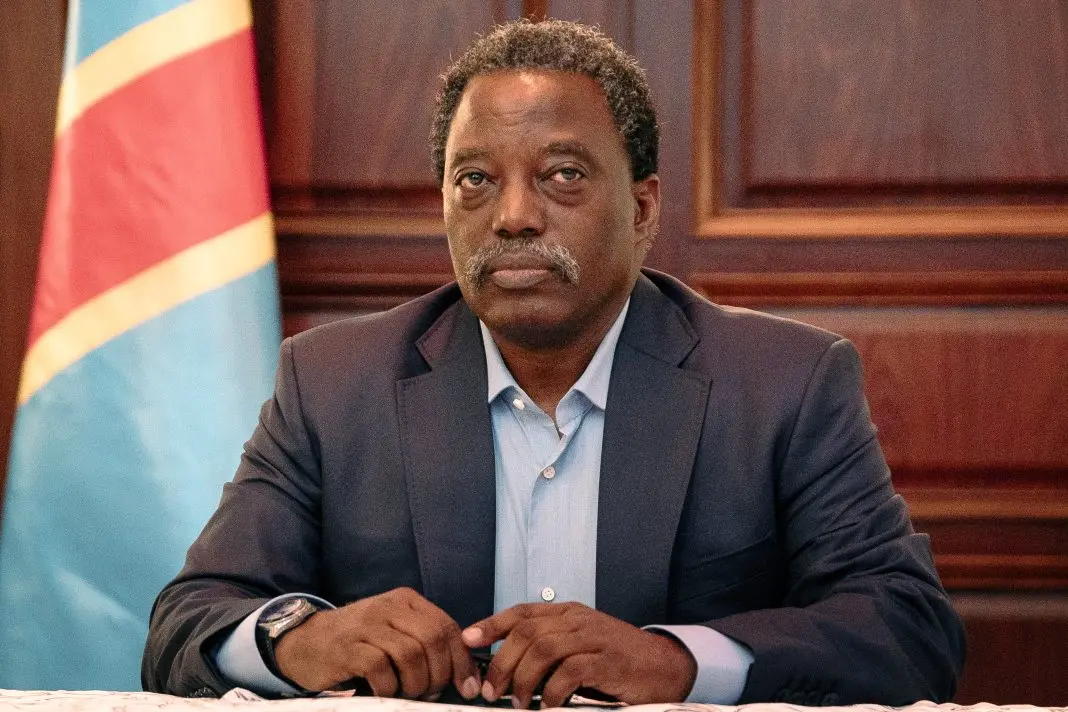
Former President Joseph Kabila has officially assumed leadership of a newly formed political-military coalition, the Front for the Refoundation of the Nation (FRN). Unveiled on October 12, 2026, in the eastern city of Goma, the movement marks a major restructuring of opposition forces aligned with the M23 rebellion, directly shifting the political and military dynamics of the ongoing conflict in the Democratic Republic of Congo (DRC).
The FRN absorbs and replaces the Congo River Alliance (AFC), consolidating its political and military architecture under Kabila’s direct oversight. Former AFC leader Corneille Nangaa, alongside prominent rebel commanders, has transition into senior leadership roles within the new front.
The FRN defines itself as a unified political-military front dedicated to challenging the administration of President Félix Tshisekedi. The coalition’s stated mission is to dismantle what it describes as governance characterized by tyranny, asserting that it will use all available means, including armed force, to achieve its objectives.
Despite its militant stance, the FRN announced on Thursday that it intends to honour existing diplomatic commitments, including the ongoing, Qatari-mediated peace talks with the Kinshasa government that began in April 2025.
Kabila’s formal consolidation of power within the rebellion follows a series of severe international and domestic legal escalations:
Death Penalty Sentence: Congolese authorities previously sentenced Kabila to death in absentia due to his alleged operational ties to eastern insurgencies. Kabila has consistently dismissed these legal proceedings as politically motivated maneuvers.
U.S. Sanctions: In April 2026, the United States government leveled economic sanctions against Kabila, citing material support for the M23 and AFC networks.
The formation of the FRN comes amidst high geopolitical stakes in the region. While United Nations experts have historically reported that M23/AFC military command structures receive coordination from Kigali—a claim Rwanda strongly denies—the appointment of a former Congolese head of state aims to position the rebellion as a legitimate domestic political movement.
Military analysts from the Congolese research institute Ebuteli note that while the restructuring alters the coalition’s internal hierarchy, it may not trigger an immediate shift in the frontlines. Heavy combat involving artillery and unmanned aerial vehicles (UAVs) persists across South Kivu following the major spring 2025 offensive that saw coalition forces seize Goma and Bukavu.
Kabila’s overt return to the political arena coincides with deepening national friction regarding the future of the Tshisekedi administration, ahead of the expiration of the current presidential term limit in 2028. However, the domestic political landscape remains fractured:
The primary domestic opposition coalitions have actively maintained distance from Kabila’s armed alliance.
Structural fracturing has emerged within Kabila’s own political party, the People’s Party for Reconstruction and Democracy (PPRD), based in Kinshasa.
Diplomatic observers warn that Kinshasa may escalate domestic security crackdowns, potentially linking political dissent within the capital to treasonous support for the eastern rebellion.
The elevation of Kabila to the head of the FRN introduces a complex impasse for international mediation. It remains highly uncertain whether the Tshisekedi administration will sustain direct negotiations with a coalition led by its foremost political adversary, threatening broader U.S.-led diplomatic initiatives aimed at stabilizing regional security and securing critical mineral supply chains.
