


The high-stakes standoff between media personality Frank Gashumba and Pastor Robert Kayanja of Miracle Centre Cathedral has blown open a conversation that Uganda has quietly swept under the rug for decades. By putting a Shs 500 million cash bounty on the table—daring Born-Again pastors to empirically prove their miraculous healing powers in an intensive care unit (ICU)—Gashumba did not just spark a theological debate. He exposed a gaping, infected wound in our nation’s social and legal fabric.
At its core, this feud is not a personal grievance. It is a symptom of a deeper, systemic crisis: the unmonitored evolution of the Ugandan church from a refuge of spiritual hope into an unregulated marketplace where staged miracles drain the life savings of the most vulnerable.
To understand how we arrived at a point where a spiritual leader issues life-threatening warnings from the pulpit over a demand for accountability, we must examine the history of faith in Uganda, the psychology of modern religious exploitation, and the statutory tools available to the legal system to protect its citizens.
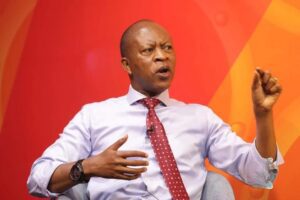
Gashumba’s challenge was simple, albeit aggressive: produce empirical, medical verification of instant divine healing. The response from the pulpit, however, was anything but academic. Rather than providing clinical or verifiable proof to claim the Shs 500 million bounty, Pastor Robert Kayanja retreated into defensive, highly weaponized rhetoric.
During a fiery sermon on Wednesday, October 14, 2026, Kayanja deflected the financial challenge by accusing Gashumba of building a public profile around attacking national institutions and personalities. He bellowed to his congregation:
“This man, Frank Gashumba, attacks everyone. He attacks the Katikkiro of Buganda, and before that, he was insulting the President. But ENOUGH IS ENOUGH!”.
Kayanja continued, defensively insisting that “Our miracles aren’t fake,” yet failing to present the requested empirical parameters. Instead, the rhetoric crossed a dangerous line when Kayanja invoked a spiritual death warrant against his critic. Calling on heaven, earth, dust, and wind to turn against the commentator, Kayanja declared:“Your own blood will kill you.”

When a religious leader responds to a consumer fraud challenge not with evidence, but with a public curse evoking the gruesome fates of former dictators like Muammar Gaddafi, the line between spiritual guidance and intimidation dissolves. This is a calculated exertion of extrajudicial authority designed to silence critics and maintain a monopoly over a lucrative, untaxed market.
Uganda’s relationship with Christianity has always been intense, dating back to the late 19th-century arrival of Anglican and Catholic missionaries and the profound historical weight of the Uganda Martyrs. For generations, traditional churches operated under strict, centralized institutional hierarchies. They built schools, founded hospitals, and maintained a predictable moral authority.
However, the late 1970s and 1980s birthed a spiritual revolution: the Pentecostal (Balokole) movement. In a country recovering from the trauma of past regimes, the traditional churches often felt too rigid, too closely tied to political history. The Born-Again movement offered something radically different—vibrant worship, a deeply personal relationship with God, and an intoxicating message of immediate, divine transformation. Early pioneers preached holiness, modesty, and genuine communal care.
But as the decades rolled on, a theological shift occurred. The self-denying holiness of early Pentecostalism was steadily replaced by the imported American phenomenon of the “Prosperity Gospel.” Under this new doctrine, faith became transactional. Poverty and sickness were no longer viewed as systemic social challenges or biological realities; they were framed as spiritual failures, manageable only by “sowing a seed”—a euphemism for financial donations.
As the socio-economic gap widened in Uganda, leaving millions of youths unemployed and desperate for medical or financial breakthroughs, the demand for shortcuts to prosperity skyrocketed. The stage was set for the rise of the modern religious entrepreneur.

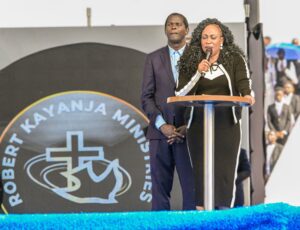
In any other industry, making a false claim about a product that results in financial loss or physical harm is prosecuted as fraud. In the religious sector, it is frequently protected under the guise of “faith.”
The modern “fake pastor” is a master of psychology. They target the desperate: the mother whose child has terminal cancer, the unemployed graduate looking for a job, the businessman on the brink of bankruptcy. These individuals do not walk into churches looking to be defrauded; they walk in carrying the heavy burden of systemic state failure. When public hospitals lack medicine and the economy fails to provide jobs, the church steps in as the ultimate safety net.
The miracles that follow are often carefully choreographed theatrical performances. From hiring actors to simulate paralysis, blindness, or poverty, to using highly charged emotional environments to induce psychosomatic relief, these stages are designed for one purpose: to validate the pastor’s financial demands. Once that authority is established, the exploitation begins:Envelopes for “special blessings” are distributed,Properties are deeded over to ministries and Life savings are emptied into church baskets in the tragic belief that God will return it tenfold.
Gashumba’s skepticism is not an attack on God, as his critics claim. It is a rational response to consumer fraud. If a pastor publicly claims to possess the biological cure for HIV or cancer through divine intervention, asking for a medical certificate or empirical validation is not blasphemy—it is a basic matter of public safety.
When the state attempts to regulate the religious sector, powerful lobbies consistently retreat behind the supreme law of the land. They cite Article 29(1)(c) of the 1995 Constitution of Uganda, which explicitly guarantees every citizen the “freedom to practise any religion and manifest such practice.”
However, religious leaders conveniently ignore Article 43(1) of the Constitution, which mandates that the enjoyment of these rights must not prejudice the public interest or the fundamental rights and freedoms of others. Freedom of worship is not an absolute shield for criminality.
When a pastor knowingly stages fake miracles to extract money from a believer, they cross the line from spiritual practice into a criminal offense under the Penal Code Act (Cap 120):Section 305 (Obtaining Money by False Pretences): The law dictates that any person who, by any false pretence, induces another to deliver money or property commits a felony punishable by up to five years in prison.
Section 304 (Definition of False Pretence): A false pretence is defined as any representation of a matter of fact, past or present, which the person making it knows to be false. Staging an actor to fake a disability to solicit tithes falls squarely under this definition and Section 271 (Fraudulent Disposition of Trust Property): Leaders who divert congregational funds, land, or corporate tithing to their personal estate can be criminally charged for misappropriation.
The argument that religious figures exist in a legislative vacuum is routinely dismantled by the executive branch. President Yoweri Museveni has repeatedly warned religious leaders against abusing their spiritual mandates.
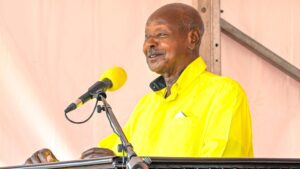
In addresses focused on public health and national productivity, Museveni has vehemently criticized religious leaders who exploit the sick. He has cautioned pastors against physically touching patients while claiming to heal them, emphasizing that prayer must strictly go alongside scientific and public-health measures.
Furthermore, during the National Prayer Breakfast, Museveni directly targeted the theological laziness of the prosperity gospel, stating that citizens must use their talents for productive work. He referenced Jesus’s multi-dimensional missions—which included preaching, working, healing, and feeding—explicitly contrasting this with modern pastors who do nothing but preach and collect money from the impoverished.
The President’s message is clear: Religion is not an exemption from civic, scientific, or economic reality.
The argument that Ugandan courts cannot or will not touch religious figures is factually incorrect. The judiciary has previously set strong precedents proving that pastoral titles do not grant legal immunity:
- The Jailing of Pastor Sirajje Semanda (2023): In a high-profile case handled by the State House Anti-Corruption Unit, Pastor Sirajje Semanda of the Revival Church in Bombo was convicted by the Buganda Road Magistrate Court for defrauding over 5,000 victims of more than Shs 4 billion. He was sentenced to two and a half years in prison and ordered to pay a Shs 405 million fine.
- The Streams of Life Land Fraud Case (2023): The High Court in Kampala found Senior Pastor Gerald Mwebe and his church, Streams of Life, guilty of obtaining land by fraud. The High Court ordered the church to vacate the land, cancelled their fraudulent title deeds, and slammed the pastor with a Shs 50 million damages bill.
These cases prove that when prosecutors and citizens utilize the Penal Code Act, the law can dismantle fraudulent religious syndicates.
The battle line between Frank Gashumba and Pastor Robert Kayanja is a watershed moment for Uganda. It forces a confrontation with a question we have long avoided: Where do a citizen’s religious freedoms end, and where does the state’s duty to protect its people from fraud begin?
Freedom of worship must be fiercely protected, but it cannot be used as a shield to practice extortion or endanger public health by discouraging sick people from seeking medical treatment. Uganda cannot afford to let the spiritual arena remain a Wild West of unchecked financial and psychological manipulation.
To halt this systemic predation, the state and its citizens must immediately execute a three-pronged intervention:
- Pass the National Policy on Religious and Faith-Based Organizations (RFOs): The Directorate of Ethics and Integrity must immediately finalize and enforce the RFO policy. This policy must mandate minimum academic theology qualifications for leaders and require transparently audited financial accounts for all religious institutions.
- Investigate Pulpit Intimidation and Extortion: The Uganda Police Force and the Directorate of Public Prosecutions (DPP) must treat staged miracles and public spiritual threats as criminal matters under Sections 304 and 305 of the Penal Code Act. A pastoral collar is not a license to extort, nor is the pulpit an immune zone for issuing death wishes.
- Demand Corporate and Civil Accountability: Congregants and civil society must aggressively utilize the judicial precedents set by the High Court. When financial misappropriation or land grabbing occurs under the guise of “seeding,” victims must bypass church tribunals and file immediate criminal fraud charges.
Frank Gashumba may not win his theological argument against the pulpit, but by forcing this raw, ugly reality into the open, he has handed the state the perfect mandate to act. The law must step into the sanctuary. Enough is enough.
