

Driven by an economic and mining boom, the district is drawing an unprecedented influx of workers and investors. But this rapid wealth has brought a deadly shadow: a thriving commercial sex trade, rampant multiple partnerships, and a population increasingly trading sex for survival.
Amidst this perfect storm, new HIV infections have skyrocketed more than tenfold in just recent months. Yet, precisely when defenses need to be highest, Moroto has been left completely unarmed.
The condoms have run out—and international funding has vanished.
This isn’t an accident; it is the direct fallout of devastating USAID funding cuts. When international development partners were forced to suspend operations, they took Moroto’s primary defense mechanism with them.
The vacuum left behind is catastrophic. A brief, emergency intervention by the Uganda People’s Defence Forces (UPDF)—who stepped in to supply Ulinzi condoms—has also run completely dry.
“We now have investors creating jobs, attracting people who leave their spouses behind and find new partners here,” warns Hassan Naburi, Chairperson of NAFOPHANU in Moroto. “How shall we ensure their safety if there are no condoms?”
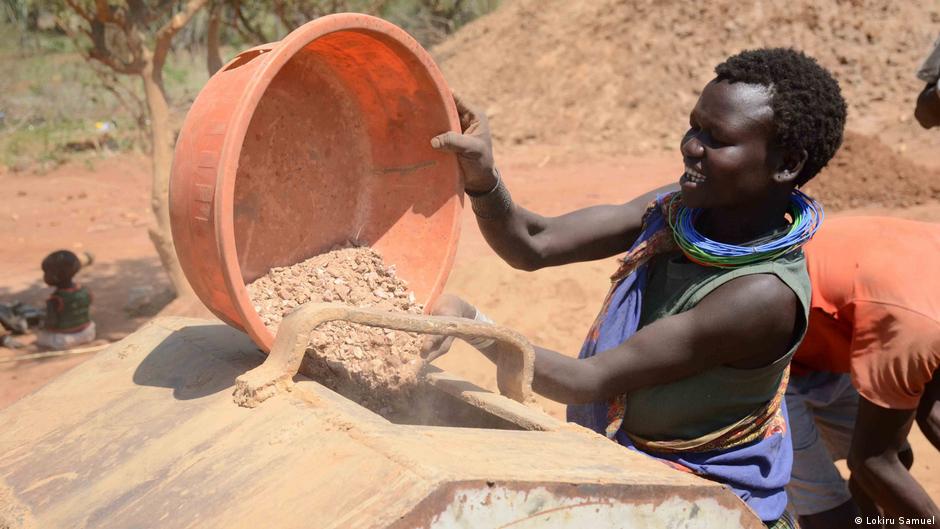
The crisis is highly concentrated within informal artisanal mining camps like Nakabaat and the hills of Rupa. The mineral rush has brought a massive shift in local demographics, predominantly attracting non-indigenous men arriving from as far as the Busoga region in Eastern Uganda. Living in isolated staff quarters away from their families, their purchasing power has fueled a hyper-active commercial sex trade.
Worse still, the local community remains trapped in a classic “resource curse.” While outside companies strip the land of lucrative gold, marble, and limestone—leaving behind dangerous, open mining shafts that severely degrade the environment—a local study reveals that mining contributes a meager 7.4% to local economic development. In these desperate, low-welfare pockets, adolescent girls and young women frequently find that the immediate threat of hunger outweighs the long-term risk of a virus, forcing them to trade sex just to access basic services and survive.

The ultimate irony is that science has already found a solution. The Ministry of Health is preparing to roll out Lenacapavir, a groundbreaking, twice-yearly injectable HIV prevention drug boasting near-perfect efficacy in clinical trials. Health educators in the Karamoja sub-region have already been trained to distribute it.
But a vaccine on a clipboard cannot stop a virus in the community. Until Lenacapavir shipments physically arrive and reach the high-risk miners, security forces, and commercial sex workers who need them, Moroto remains completely exposed.
The warning from local leaders to the government and global partners is stark, direct, and non-negotiable: Lenacapavir is the future, but the population is dying in the present. Restock condoms immediately, or watch a preventable crisis spiral entirely out of control.
Naburi says the district’s rapid economic growth and increasing influx of people have heightened the risk of HIV transmission at a time when condoms are no longer available.
“We now have investors in the region that have created job opportunities, and the jobs have attracted more people to the town. But you realize that these people don’t move with their spouses. Instead, they get their partners from within,”he stated.

He appealed to development partners and the government to urgently resume condom supplies to prevent a wider spread of HIV in the district. Although HIV prevalence in Moroto District stands at 2.1 percent, below the national average of 2.5 percent, HIV/AIDS educators say new infections have increased more than tenfold in recent months.
Charles Onyang Omudu, the District HIV/AIDS Focal Point Officer, acknowledges that new HIV infections are rising rapidly and require innovative interventions. Omudu attributes the increase to the growing commercial sex industry driven by the influx of people seeking economic opportunities in the district.
He also cites multiple sexual partnerships as another major driver of infections. “The population in the mining sector is at high risk of contracting HIV as some community members use sex in exchange for services,” Omudu says.
He explains that condoms, which remain a key prevention tool, are no longer readily available after development partners that previously supplied them suspended operations following the USAID funding cuts.
Omudu says the Uganda People’s Defence Forces (UPDF) briefly filled the gap by supplying Ulinzi condoms, but those supplies have also since run out. “The number of condoms has drastically reduced, exposing the population to a high risk of contracting HIV,” Omudu says. He called on partners to support the provision and utilization of condoms as the most immediate intervention to reduce HIV transmission.
In June 2026, the Uganda AIDS Commission trained health educators and HIV/AIDS focal persons across the Karamoja sub-region ahead of the rollout of Lenacapavir, a new twice-yearly injectable HIV prevention medicine recently introduced by the Ministry of Health.
Officials say once Lenacapavir supplies reach the region, priority will be given to populations at high risk of HIV infection, including commercial sex workers, miners, security personnel and long-distance truck drivers.
Until then, HIV/AIDS educators maintain that restoring access to condoms remains the most urgent intervention to reduce HIV transmission, particularly among populations that may not immediately benefit from the rollout of Lenacapavir in Moroto District.
