

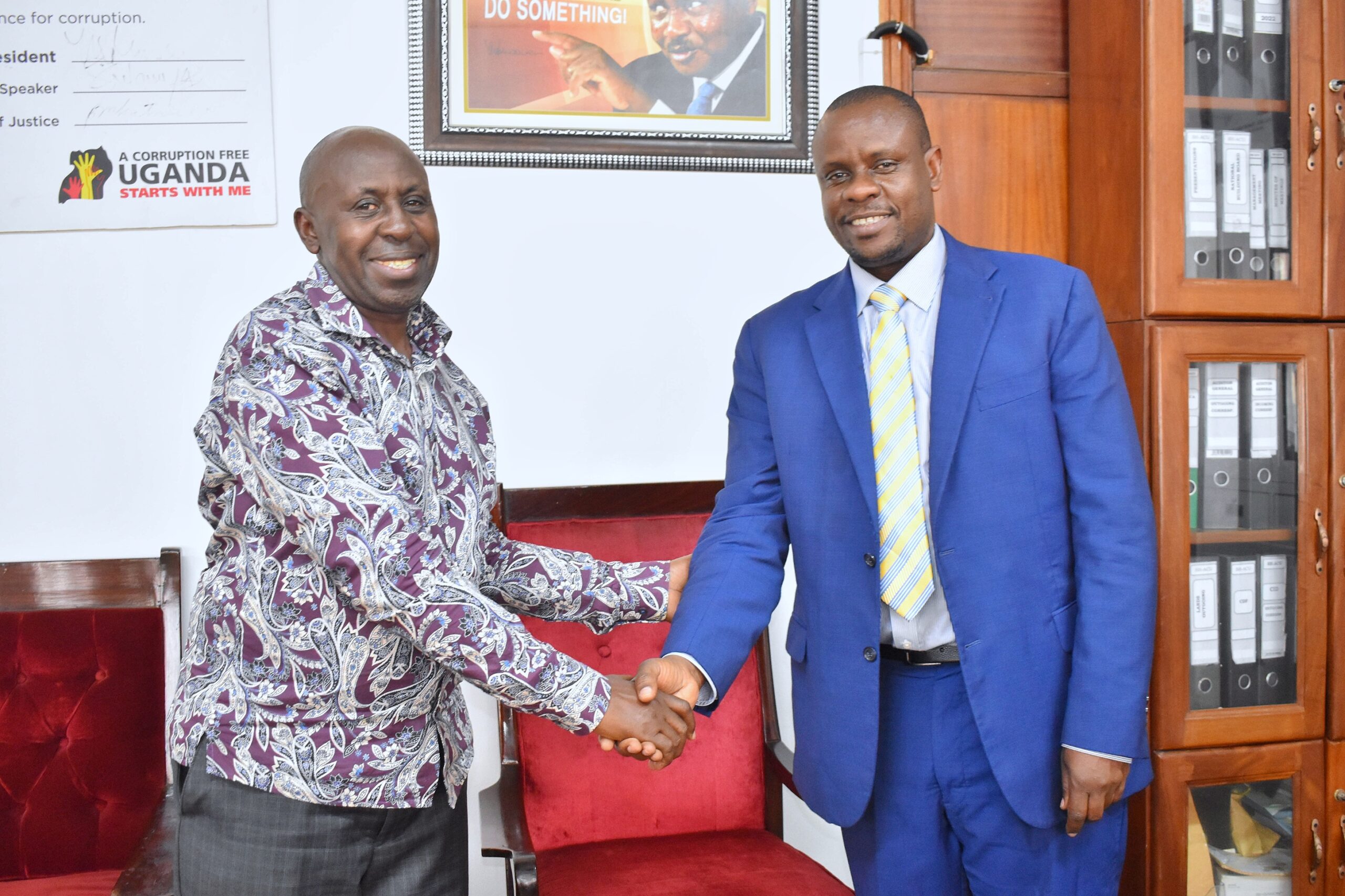
President Yoweri Kaguta Museveni’s nationwide “Expose the Corrupt” campaign has put Shs22.7 billion under intense investigation, triggering the arrest of 267 suspects and the interdiction of 253 public officials.
The aggressive multi-agency crackdown, led by the State House Anti-Corruption Unit (SHACU) and Local Government Minister Hon. Balaam Barugahara, has already seen nearly 40 accused persons hauled before the courts. The operation unites SHACU, the Criminal Investigations Directorate (CID), and the Directorate of Public Prosecutions (DPP) to dismantle systemic abuse of office, theft of public resources, and crippled service delivery across local governments.
SHACU head Brig. Gen. Henry Isoke revealed that the Shs22.7 billion represents funds actively tied to ongoing corruption complaints. While this figure denotes money currently under investigation rather than conclusively proven losses, Brig. Gen. Isoke emphasized that forensic audits and rigorous financial verifications are underway to pin down the exact criminal liability and recover every shilling.

The crackdown stems directly from President Museveni’s orders to bypass defensive local officials and engage directly with communities. Speaking to the NRM Parliamentary Caucus at Kololo Ceremonial Grounds, President Museveni stated that corruption has heavily sabotaged Uganda’s economic progression.
“This campaign is implementing what NRM has been telling you all the time,” the President declared, backing the aggressive grassroots approach.
Addressing public skepticism regarding the gap between 267 arrests and only 40 court appearances, Brig. Gen. Isoke stated that immediate arrests are a deliberate strategy. Investigators often lock up suspects quickly to block them from destroying vital documents, tampering with evidence, or intimidating witnesses.
“Before a person is taken to court, investigators and prosecutors must establish ironclad evidence,” Isoke explained. He noted that complex financial crimes require extensive forensic examinations and expert audits.
The strategy is already yielding results through fear alone. “Arrests in some districts have forced officials in other regions to suddenly execute long-ignored public works out of fear of being next,” Isoke revealed.
SHACU has generated 124 comprehensive case files from citizen complaints. The investigations have exposed deep-seated vulnerabilities in local government systems, specifically targeting procurement and contract inflation,Fraudulent recruitment by District Service Commissions,Extortion and theft of Parish Development Model (PDM) and Emyooga funds and Illegal fees charged to families in universal primary and secondary schools plus Shoddy infrastructure in roads, markets, and health facilities
In Busia, investigators uncovered inflated school enrollment figures, missing streetlights, and broken infrastructure. Meanwhile, in Mbale, four local government officials were dragged to the Anti-Corruption Court in July for illegally charging fees under the Universal Secondary Education program.
Dismissing concerns over whether SHACU’s close cooperation with Minister Barugahara compromises its independence, Brig. Gen. Isoke stated that institutional isolation hinders justice. “Fighting corruption demands a whole-of-government approach,” he said, noting that teamwork has streamlined investigations across the Ministries of Lands, Transport, and Economic Monitoring.
The “Expose the Corrupt” dragnet, which has already swept through Busoga, Bukedi, Bugisu, Sebei, Ankole, Buganda, and Tooro, has now expanded into the Bunyoro sub-region. Armed teams are currently on the ground in Kiryandongo, Masindi, Buliisa, Hoima, and Hoima City, executing spot-checks on public facilities to ensure accountability and drive Uganda towards its target of tenfold economic growth
