

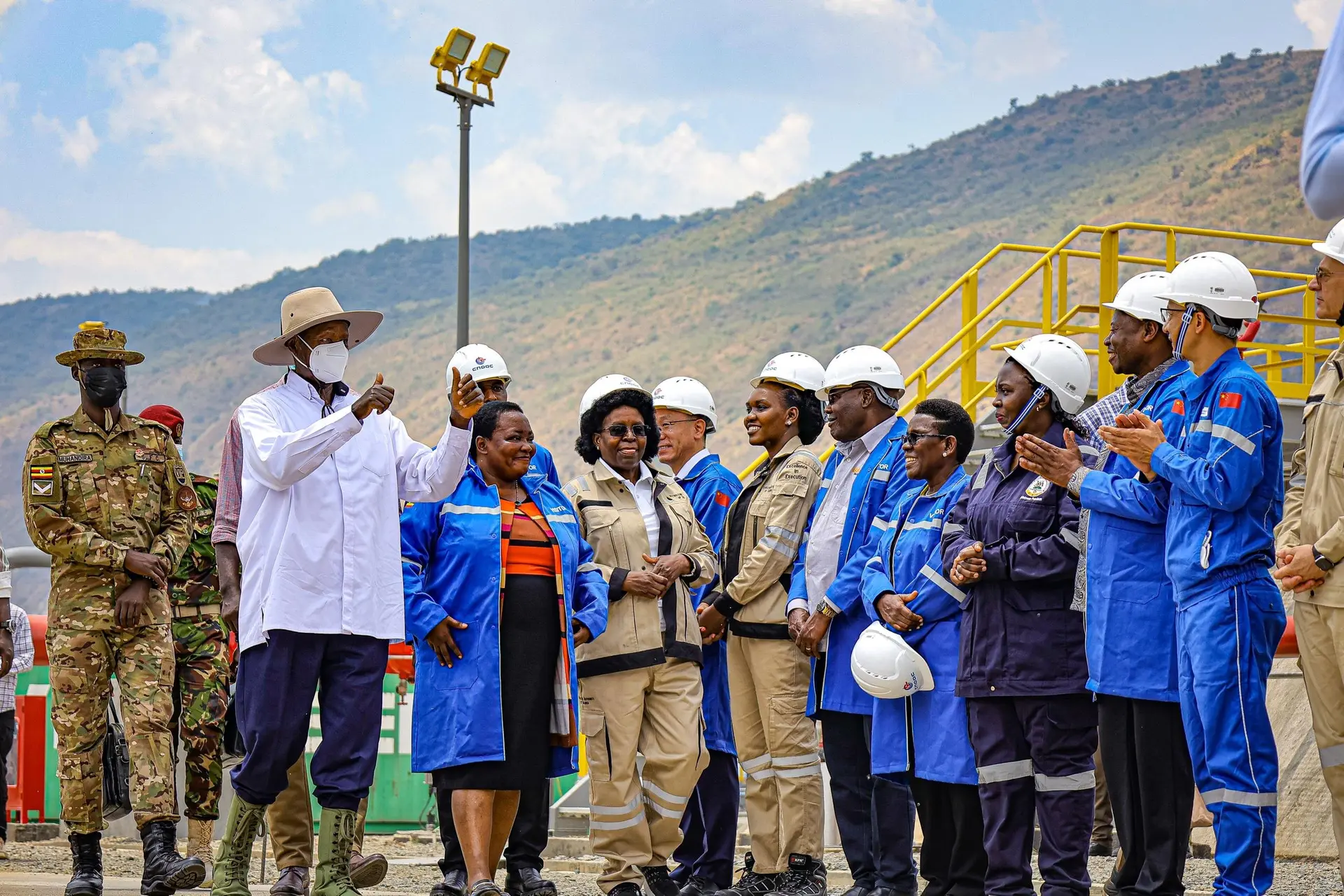
As Uganda moves closer to commercial petroleum production, the country’s oil and gas sector faces mounting pressure to prove its massive investments will deliver permanent economic, social, and environmental payouts. With the initial infrastructure and construction rush peaking, public and private attention is rapidly shifting from short-term building gains to long-term economic survival.
To date, the sector has attracted more than US$12.3 billion in capital investments, generated over 22,000 direct jobs, and yielded approximately US$2.3 billion in contracts for local Ugandan enterprises. Additionally, the industry supports an estimated 200,000 indirect and induced jobs across secondary supply chains.
These milestones, achieved through major developments like the Tilenga and Kingfisher fields, the East African Crude Oil Pipeline (EACOP), and refinery projects, mark a historic economic transition for the nation. However, as these large-scale infrastructure projects near completion, stakeholders face the critical challenge of ensuring these gains outlive the physical lifespan of the oil fields.

To address these vulnerabilities, the government, oil companies, civil society organizations, development partners, and host communities will convene at the Mestil Hotel in Kampala on Wednesday, November 11, 2026, for the 4th Annual Joint Civil Society Organisation Conference on Uganda’s Oil and Gas Sector.
Held under the theme, “Advancing Sustainability in Uganda’s Oil and Gas Sector: Progress, Lessons, and Look Ahead,” the summit serves as a crucial accountability forum to dissect Uganda’s readiness for its upcoming “first oil” milestone. Delegates will tackle critical vulnerabilities threatening the sector’s legacy, focusing on three priority areas:
- Economic Longevity: Creating frameworks to transition local businesses and the workforce from short-term construction contracts to permanent operational roles.
- Environmental Safeguards: Implementing strict ecological protections and climate resilience measures in project areas.
- Community Governance: Protecting host community livelihoods and securing transparent, responsible resource governance.

Commenting on the strategic importance of the upcoming summit, the Ministry of Energy and Mineral Development noted: “The US$12.3 billion invested in our petroleum projects is an investment in the generational transformation of our economy. Real success lies in ensuring that these economic gains outlive the physical lifespan of our oil infrastructure. We must transition our local workforce and businesses from short-term construction roles into permanent positions within the operational and secondary value chains.” Dr. Monica Musenero Masanza is the Minister of Energy and Mineral Development
The Ministry further emphasized that the Government of Uganda remains unequivocally committed to exploiting natural resources in adherence to stringently monitored ecological standards, utilizing petroleum revenues to fund the nation’s broader, long-term clean energy transition.
The November 11 meeting is expected to deliver actionable policy recommendations to anchor Uganda’s impending “first oil” milestone in an equitable, sustainable national framework.
