

The Uganda People’s Defence Forces (UPDF) Engineering Brigade has officially handed over a fully refurbished Busoga University campus to the Ministry of Education and Sports, paving the way for the institution’s transition into a fully operational public university after Church of Uganda failed to operate the university and run it on profitable ground.
The handover ceremony took place on July 20, 2026, at the university’s main campus in Iganga District. The Shs3.7 billion government-funded project involved extensive rehabilitation works, including the re-roofing and refurbishment of nearly 11 key buildings across the campus.

This major upgrade marks a significant milestone in the government’s plan to establish Busoga University as a public institution serving the Busoga sub-region and beyond.
According ministry officials the renovations are expected to improve teaching and learning infrastructure, enabling the university to admit students and roll out academic programmes in the near future.
Prof. John Robert Tabuti, Chairperson of the Busoga University Task Force, described the completion of the works as a critical step toward full operationalisation.
“This renovation paves the way for the next phase, including student admissions, staffing, and the rollout of academic programmes,” he said.
The project is part of broader government efforts to expand access to higher education in regional areas. Once fully operational, Busoga University is expected to offer programmes aligned with national development priorities and address skilled labour needs in the eastern region.
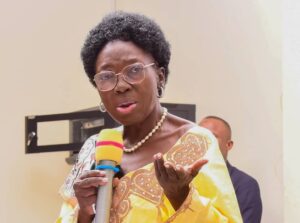
State Minister for Education and Sports, Dr. John Chrysostom Muyingo,emphasised the importance of strengthening public universities to reduce reliance on private institutions and improve equity in higher education access noted that the university’s re-establishment would also promote research, helping to drive meaningful development in the region. She announced that the construction works would be undertaken by the UPDF Engineering Brigade and are expected to be completed within three months. She explained that following the renovation, the institution would undergo inspection and accreditation, after which a statutory instrument would be presented to Parliament for approval to fully operationalize Busoga University
Busoga Voices
Local leaders and residents in Busoga have welcomed the development, viewing it as a boost to regional education and economic growth.
Third Deputy Prime Minister Lukia Nakadama hailed the government’s intervention, describing the university’s restoration as a catalyst for socio-economic transformation across the Busoga sub-region.
Nakadama pointed out that the university would create both direct and indirect employment opportunities for residents of Busoga and beyond. She added that local leaders had already launched initiatives to establish income-generating enterprises, particularly in the food and housing sectors, to cater to the welfare needs of incoming students and enhance household incomes.
Busoga University was originally founded and owned by the Busoga Diocese under church of Uganda
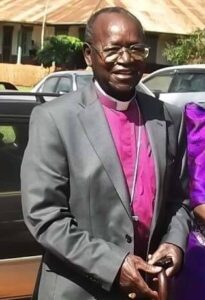
with leadership spearheaded by the pioneer Bishop of Busoga, the late Rt. Rev. Cyprian Bamwoze
The initiative started in 1993 when the Board of Governors of Busoga College Mwiri passed a resolution to create a university, asking the Busoga Diocesan Council and the House of Bishops to serve as the foundation body.
The late Bishop Cyprian Bamwoze led the establishment efforts alongside the structural support of the Busoga Diocese, which surrendered land and buildings (such as Bishop Hannington Theological College in Iganga) to form the campus.
After running as a private, church-founded institution and facing a license revocation in 2017, the Church of Uganda officially handed over all the university’s assets, liabilities, and land titles to the Government of Uganda’s Ministry of Education and Sports to be redeveloped into a public university.
According to UBOS Census of 2024 While basic school enrollment has historically been high across Busoga’s 10 districts (such as Jinja, Kamuli, and Iganga), adult and functional literacy lag behind higher-performing central regions like Kampala.
