

TORORO — Uganda’s heavy reliance on foreign fuel imports has taken a massive hit. The country is set to save a staggering US$250 million annually following the official commissioning of Bukona Fuel Blending Limited in Malaba, Tororo district.
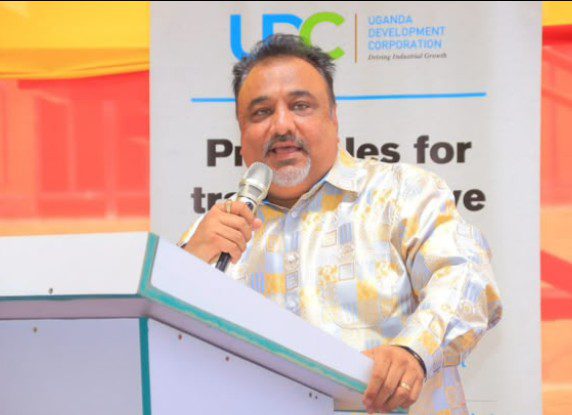
The state-of-the-art facility was commissioned on November 6, 2026, by the Minister of Trade, Industry, and Cooperatives, Sanjay Tanna. The strategic move aims to fortify local production, drive industrialization, and aggressively cut down on expensive petroleum imports.
Domestic fuel blending will stop the hemorrhage of valuable foreign exchange while opening up massive new markets for Ugandan farmers.
The initiative directly bridges the gap between agricultural supply and industrial demand. Farmers are now positioned to supply raw materials for ethanol production, driving the nation’s import substitution agenda.
The facility presents a massive financial windfall for farmers in northern Uganda namely Lango and Acholi sub-regions,Intensified production of cassava and maize and reliable supply chains for a rapidly growing biofuel sector.
“Whatever is coming from here is scientifically proven, robust and improved. This is the way forward,” Minister Tanna stated, rallying for deeper investments in home-grown industrial solutions.
Bukona Fuel Blending Limited enters the market with a formidable footprint of daily Capacity of 100,000 liters per day,over 460 million liters of fuel blended to date and operates within Uganda’s massive national demand of 2.5 billion liters annually.
The Uganda Development Corporation (UDC) backed the revival of the enterprise with strategic equity investment. Minister Tanna cited UDC’s intervention as proof that public-private partnerships can successfully de-risk vital industries and attract private capital.
The Malaba plant is also taking aim at household energy. The launch showcased ethanol-powered cooking stoves designed to phase out traditional charcoal and firewood. Widespread adoption is expected to drastically curb deforestation and environmental degradation across Ugandan households.
Uganda is looking at global templates like India—which successfully implemented a 20 percent ethanol blending program—as a roadmap to diversify its energy mix and champion green alternatives.
Hon. Sanjay Tanna addressed public skepticism surrounding biofuels and emphasized the scientific backing of the initiative dismissing concerns that ethanol ruins cars or increases fuel consumption as scientifically unproven. For full context of his statements, refer to.outlining UDC’s mandate to invest in high-impact, capital-intensive strategic enterprises and explaining how blending locally grown maize and cassava with petrol creates cleaner, cheaper, and farmer-centric energy.
Stakeholders and farmers highlighted the plant’s direct impact on agricultural markets and regional scaling:
Emmanuel Aliba Kiiza (Bukona Board Chairman) noted that turning cassava into fuel adds vital value beyond traditional food production.
Peter Ochieng (Tororo Cassava Farmer emphasized that the facility directly tackles the long-standing challenge of market access for smallholders.
Bhagyan Kekal Director, Bukona Agro-Processors stated that the plant has blended over 450 million liters of ethanol and supports more than 50,000 farmers in Northern Uganda.
Hatimu Muyanja Ministry of Energy & Mineral Development Official shared targets to raise ethanol blending in petrol from 3% to 5% by January 2027, with a potential capacity of 10%.
