

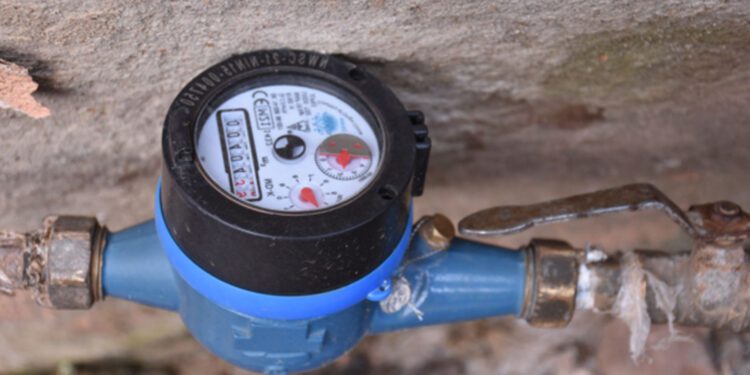
The National Water and Sewerage Corporation (NWSC) has attributed recent complaints of rising water meter readings during supply interruptions to undetected leaks in customers’ private plumbing systems.
The clarification follows viral social media posts and videos from residents in Kampala and Fort Portal City. In the posts, frustrated customers questioned why their meters continued to record consumption even when their taps were reportedly dry.
Following targeted investigations into the complaints, NWSC stated that the affected properties suffered from pipe bursts and leaks located downstream of the meters—specifically along the lines connecting the meters to private storage tanks.
Because these leaks occur after water passes through the meter, the lost water is still recorded as consumption.
“Such leakages, if not promptly identified and repaired, can result in higher water bills because the meter accurately records all water passing through it, including water lost through leakages on the customer’s side of the connection,” NWSC explained in a statement.
The corporation pushed back against public speculation that faulty meters were running on air or accumulating charges during dry spells.
“In the absence of water flow, a properly functioning meter should not register consumption,” NWSC maintained.
The utility emphasized that property owners are responsible for maintaining the plumbing network on their side of the connection. Hidden leaks—often buried underground or concealed inside walls—can drain significant amounts of water unnoticed over long periods, leading to unexpectedly steep bills.
While NWSC urged customers to distinguish between post-meter leaks and genuine meter malfunctions, the corporation did not disclose how many households were affected in Kampala and Fort Portal. It also did not clarify whether its recent investigations uncovered any faulty meters.
As public scrutiny over utility billing and service reliability grows, NWSC has advised customers experiencing unusual bill spikes or supply issues to report them immediately through official channels. Prompt reporting, the corporation noted, allows technical teams to inspect the lines and resolve disputes before costs escalate further.
The National Water and Sewerage Corporation (NWSC) is rolling out both a six-month emergency optimization drive and major long-term infrastructure upgrades to end water rationing and stabilize supply across the Greater Kampala Metropolitan Area (Kampala, Wakiso, and Mukono)
Launched in November 2026 and running through April 2027, the Kampala Water Forward-Looking and Optimisation of Water Supply (K-FLOWS)
programme targets households currently receiving water for less than 12 hours a day
NWSC is completing the Katosi–Mutungo Water Supply Stabilization Project and the Ggaba III–Muyenga Bypass by December 2026. These interconnections will immediately stabilize supply for nearly 27,000 customer accounts in Makindye, Rubaga, Lungujja, Nateete, Busega, Bulenga, Kakiri, and Nansana.
Teams are linking lines from Namanve to Mutungo to maximize output from the Katosi treatment plant. This eases heavy demand and pressure on the older Ggaba waterworks
To bridge immediate gaps in elevated or isolated pockets, NWSC is installing localized supply schemes and boreholes in areas including Mengo, Bukasa, Namungoona, Nalumunye, Maya, Kasenge, Kazinga, Kikokiro, and Kitagobwa.
