

Close Menu
  • Demos
  • Buy Now
  • Breaking news

Subscribe to Updates

Get the latest creative news from FooBar about art, design and business.

What's Hot

ROKO CONSTRUCTION NAMED AMONG TOP BRANDS AT 2026 AWARDS

November 20, 2026

MUSEVENI, SULUHU FAST-TRACK 93.9% COMPLETE OIL PIPELINE AND REGIONAL RAIL LINKS

November 18, 2026

WOVEN INTO LIVES: HOW DFCU’S 62-YEAR JOURNEY IS BUILDING UGANDA’S FUTURE

November 17, 2026
Facebook X (Twitter) Instagram
Facebook X (Twitter) Instagram Vimeo
Elix News
Subscribe Login
  • Home
  • Politics

    DECLARE OR DARE: IG KICKS OFF NATIONWIDE DRIVE AHEAD OF MARCH 2027 WEALTH DECLARATION

    November 17, 2026

    GOVERNMENT LAUNCHES MAJOR CRACKDOWN ON LABOUR EXTERNALISATION SECTOR AFTER DAMNING PARLIAMENTARY EXPOSÉ

    November 17, 2026

    FAMILY LAUNCHES KING OYO FOUNDATION TO HONOUR LATE MONARCH’S 31-YEAR LEGACY OF YOUTH, HEALTH, AND CONSERVATION

    November 16, 2026

    UBOS UNLEASHES THREE-POINT BLUEPRINT TO POWER UGANDA’S TENFOLD GROWTH

    November 16, 2026

    FROM GORILLA NAMING TO DEFENCE DEALS: UGANDA AND CZECH REPUBLIC EYE DEEPER TIES

    November 15, 2026
  • Business

    NWSC BLAMES HIGH WATER BILLS ON PRIVATE PLUMBING LEAKS AMID METER COMPLAINTS

    November 15, 2026

    THE DAWN OF ECO-LUXURY: PARADISE ISLAND RESORT ANNOUNCES DECEMBER 1ST GRAND LAUNCH

    November 9, 2026

    POWER MOVE: UEDCL LAUNCHES MASSIVE $994M PLAN TO END OUTAGES!

    November 6, 2026

    KCB BANK BACKS FOOD SECURITY AND JOB CREATION

    October 29, 2026

    LYNN NASIRUMBI NAMED PR RISING STAR AT 10TH PRAU EXCELLENCE AWARDS

    October 28, 2026
  • Education

    GLOBAL TECH STAGE: HUAWEI UGANDA IGNITES KYAMBOGO UNIVERSITY FOR 11TH ANNUAL ICT COMPETITION

    November 17, 2026

    UGANDA COMMITS UGX 1.4 TRILLION TO OVERHAUL NATIONAL DATA SYSTEMS AND BRING BACK GOVERNMENT STATISTICIANS

    November 16, 2026

    GOVERNMENT CHALLENGES UBOS TO TURN DATA SURPLUS INTO “ECONOMIC GOLD” USING AI

    November 15, 2026

    PHARMACY COUNCIL DEMANDS KIU STUDENT AUDIT AMID OVER-ENROLMENT FEARS

    November 6, 2026

    UVTAB OVERHAULS VOCATIONAL TRAINING CURRICULA INTRODUCES GREEN SKILLS

    November 2, 2026
  • Environmental

    BEYOND THE TAP: WHY UGANDA’S WATER MILESTONE MASKS A HIDDEN HEALTH CRISIS

    November 16, 2026

    BEYOND THE BOOM: CAN UGANDA TURN $12B OIL RUSH INTO LASTING WEALTH?

    November 9, 2026

    THE SECRET’S OUT: THIS DECEMBER, LUXURY GOES GREEN ON PARADISE ISLAND

    November 9, 2026

    NARO TO COMMERCIALIZE RESEARCH HUBS VIA PUBLIC-PRIVATE PARTNERSHIPS TO FUND AGRICULTURE INNOVATION

    November 6, 2026

    GOLDEN TRANSFORMATION: INSIDE UGANDA’S $150M BUSIA MEGA-MINE

    October 31, 2026
  • Regional

    MUSEVENI, SULUHU FAST-TRACK 93.9% COMPLETE OIL PIPELINE AND REGIONAL RAIL LINKS

    November 18, 2026

    BEYOND PAPERWORK: UGANDA AND IMO RALLY AFRICAN NATIONS TO TURN MARITIME POLICIES INTO JOBS AND TRADE

    November 17, 2026

    WEALTH WAVE: KURA ASSET MANAGEMENT LAUNCHES TO CAPTURE UGANDA’S SHS 7 TRILLION INVESTMENT BOOM

    November 3, 2026

    PRESIDENT MUSEVENI WOOS EGYPTIAN INVESTORS

    October 30, 2026

    TRAVEL MILESTONE: GHANA DECLARES VISA-FREE ENTRY FOR UGANDANS AS DIRECT FLIGHTS LAUNCH

    October 28, 2026
  • Entertainment

    DOUBLE BLESSING: BUSOGA KINGDOM CELEBRATES THE BIRTH OF THIRD ROYAL SON, PRINCE NADIOPE EZRA JOSIAH

    November 6, 2026

    ONE UNFORGETTABLE NIGHT—INSIDE LEVIXONE AND DESIRE LUZINDA’S MILESTONE NOVEMBER

    November 1, 2026

    EVICTION NOTICE: INSIDE ALIEN SKIN’S SHS36 MILLION RENT DISPUTE

    October 30, 2026

    UGANDA’S GHETTO KIDS WOW WORLD LEADERS IN MOSCOW!

    October 30, 2026

    FIK FAMEICA UNVEILED AS SPIRO BRAND AMBASSADOR

    October 29, 2026
  • Health

    ITALY INJECTS €12.75M INTO NORTHERN UGANDA HEALTH SYSTEM TO COMBAT CANCER AND MATERNAL MORTALITY

    November 9, 2026

    FISCAL SHOCK: LACOR HOSPITAL FACES UGX 1B TAX BILL ON DONATED INFRASTRUCTURE AS SYSTEM TEETERS

    November 8, 2026

    KING GABULA LAUNCHES UGX 50B PLAN TO CRASH TEENAGE PREGNANCY AND POVERTY IN BUSOGA

    October 25, 2026

    THE SHS16.8B LIFELINE: HOW AUSTRIA AND UNFPA’S ‘SAFER’ PROJECT TARGETS GBV HOTSPOTS

    October 25, 2026

    UGANDA REMAINS EBOLA-FREE WITH TIGHTENED BORDER CONTROLS

    October 25, 2026
Elix News
  • Home
  • Politics
  • Business
  • Education
  • Environmental
  • Regional
  • Entertainment
  • Health
Home»Opinion»WHY GOVERNMENT MUST FUND NATIONAL HOUSING TO CLOSE THE HOUSING DEFICIT
Opinion

WHY GOVERNMENT MUST FUND NATIONAL HOUSING TO CLOSE THE HOUSING DEFICIT

felix@elixnews.co.ugBy felix@elixnews.co.ugOctober 9, 2026Updated:October 9, 2026No Comments6 Mins Read
Facebook Twitter Pinterest LinkedIn Tumblr WhatsApp VKontakte Email
Share
Facebook Twitter LinkedIn Pinterest Email

The National Housing and Construction Company Limited (NHCC) has stood as a central pillar of Uganda’s urban development for six decades. However, as the parastatal marks 60 years of existence, it finds itself at a critical crossroads. Confronted by acute funding gaps, high borrowing costs, and rigid bureaucratic protocols, the state enterprise is actively shifting its focus away from residential housing to survive.

The depth of this systemic crisis came to light on October 8, 2026, when NHCC Chief Executive Officer Eng. Kenneth Kaijuka appeared before Parliament’s Committee on Commissions, Statutory Authorities and State Enterprises (COSASE). Responding to queries raised in the recent Auditor General’s report, Kaijuka delivered what he termed “sad news”: NHCC is actively scaling down its low-cost residential housing projects, choosing instead to pivot toward commercial government construction contracts.
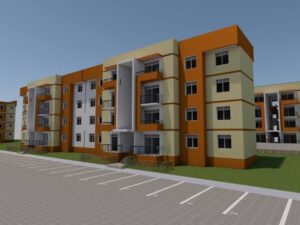
This shift leaves a glaring void in Uganda’s national housing strategy. The state cannot treat affordable housing as a self-sustaining commercial venture while expecting a public welfare outcome. Relying on presidential directives for direct procurement contracts might keep NHCC solvent as a general contractor, but it completely defeats its purpose as a national housing engine. To close the current housing deficit, the government must directly fund the NHCC for three critical reasons.

The fundamental problem facing NHCC is that it is mandated to serve a social good—providing affordable housing to low- and middle-income Ugandans—while being forced to operate under the same punishing commercial realities as private real estate developers. Unlike its regional counterparts, NHCC receives no state subsidies, operates without tax incentives, and must acquire land and construction materials at volatile market rates.

To finance its residential estates, the company has historically relied on commercial borrowing. Auditor General Edward Akol explicitly decried this structural neglect in his recent report, urging the state to immediately step up. The Auditor General highlighted that NHCC management had resolved to capitalise the company to the tune of Shs 231.5 billion through a rights issue, with the government expected to contribute Shs 118 billion.

Instead, the state starved the entity.Government allocated only Shs 30 billion, which is just 25 per cent of the expected contribution.

The consequences of this undercapitalisation are mathematically devastating. The Auditor General noted that due to the undercapitalisation of NHCCL, only 1,474 units [2.12 percent] out of the planned 69,288 units were constructed during the strategic plan period forcing NHCC to borrow Shs 200 billion on the open market forces the parastatal to price apartments in the hundreds of millions or billions of shillings just to break even. This commercial strain has directly compromised operational efficiency:

The Naalya condominium project, valued at Shs29.83 billion, stood at just 24% completion by its target date despite being heavily booked by citizens.

Direct government capitalization breaks this cycle. If the state funds the initial capital expenditure and land acquisition, NHCC can build projects efficiently, hit its completion timelines, and sell units at actual cost.

Uganda is facing an unprecedented urban youth bulge. For young professionals aged 25 to 40 seeking entry-level housing within 30 kilometers of Kampala, the state-backed entity offers no viable alternative to the exorbitant private market.

Most of the land is privately owned, which means that nearly every Ugandan becomes a builder… Families, lacking the means to negotiate with financiers, typically design homes based on what they can afford, leading to many rudimentary bungalows.

Without structured 10-to-15-year state-subsidized mortgage frameworks, NHCC is structurally restricted from addressing Uganda’s vast urban slum deficits. If young professionals earning decent formal wages are priced out of safe, structured urban centers, Kampala’s surrounding areas will devolve into dense, unserviced slums. Slum expansion devalues the capital city, strains municipal sanitation, and breeds social unrest.

Compounding these domestic strains, COSASE revealed that NHCC is currently trapped in a legal chokehold due to its historical shareholding. Libya acquired a 49% stake in NHCC in 2005 through a US$20.3 million (Shs35 billion) paper debt swap, while Uganda retained 51%. Following the fall of the Muammar Gaddafi regime in 2011, global UN sanctions barred Uganda from transacting with or locating its Libyan partners, completely freezing the company’s governance and blocking dividend collection.

Operating under an extraordinary High Court order as a “single shareholder” means NHCC cannot attract fresh international equity or conventional corporate financing without extreme legal risk. It is completely paralyzed on the open financial market. Direct government capital injections are not just a policy preference—they are the only lawful financial lifeline available to keep the company functioning.

The Auditor General’s report also exposed internal governance hurdles and compliance failures that stem directly from a cash-strapped company trying to cut corners to stay afloat. The parastatal was faulted for bypassing the Government Chief Valuer when renting out its commercial properties, as well as utilizing single-sourcing methods rather than competitive bidding for contracts worth Shs201 million. Furthermore, the report warned of financial leakages, pointing out that government laxity in collecting its 0.82% indirect share dividends from institutions like Housing Finance Bank deprives the state of critical revenue that could otherwise be re-allocated to public works.

While these administrative and procurement issues require stringent internal oversight, they must not serve as an excuse for the state to abandon its funding obligations. In fact, full government capitalization acts as a regulatory anchor: with direct funding comes strict parliamentary oversight, transparent milestones, and structural compliance.
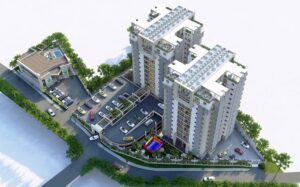
Every shilling the government directly injects into an NHCC low-cost housing development triggers a massive economic multiplier. Massive housing projects create thousands of immediate jobs for young artisans, masons, and engineers. Furthermore, it drives sustained local demand for Ugandan-made cement, steel, and structural timber, directly supporting the Build Uganda, Buy Uganda (BUBU) initiative.

To address its urban deficit, Kenya shifted from a developer-led model to an aggressive, state-driven ecosystem under the Affordable Housing Programme (AHP). This model provides an actionable blueprint for Uganda by leveraging structured state intervention across three main pillars:

If the company is to ever return to its original mandate of transforming slums and building homes for the average citizen, Uganda must implement targeted policy interventions:

Establishment of a National Housing Fund: Uganda needs a dedicated statutory fund to shield housing projects from the volatile commercial banking sector. This would enable NHCC to access capital at 0–3% interest, passing those savings directly to young prospective homeowners.

Legislating Rent-to-Own Legal Frameworks: Parliament needs to pass specific real estate guidelines protecting tenant-purchase agreements. This would allow young professionals to occupy a starter unit immediately and have their monthly rent legally recognized as equity contributions toward full ownership over a 15-year period.

Ultimately, NHCC cannot solve a public welfare crisis using purely commercial instruments. If the state wishes to change the aesthetic and structural reality of housing in Uganda, it must stop treating NHCC as a standalone commercial business and start funding it as a vital piece of national public infrastructure.

The Writer is an Urban Dweller foketcho22@gmail.com

Affordable Housing Programme AffordableHousingUganda Auditor General report on NHCC undercapitalisation Build Uganda Buy Uganda real estate BusinessSurvival CommercialProperty Committee on Commissions ConstructionUganda CorporatePivot COSASE parliamentary review NHCC EconomicInfrastructure FundingGaps Government funded housing Uganda GovernmentBureaucracy High interest rates Uganda mortgages HighBorrowingCosts HousingCrisis HousingSector How to fix Uganda housing deficit Kampala slum expansion risks Kenneth Kaijuka housing quotes Kenya affordable housing model vs Uganda Libyan shareholding crisis NHCC National Housing and Construction Company Limited NHCC NHCC shifting to commercial contracts NHCC Uganda housing crisis NHCC60Years Office of the Auditor General of Uganda PublicInfrastructureFunding Rent to own schemes for young professionals Uganda Statutory Authorities and State Enter Uganda affordable housing deficit Uganda urban development policy UgandaEconomy UgandaGovernment UgandaParastatals UgandaRealEstate UrbanDevelopment UrbanPlanningKampala Why government should fund national housing
Share. Facebook Twitter Pinterest LinkedIn Tumblr WhatsApp Email
Previous ArticleTHE FACE THAT FORCED MAKERERE TO BLINK: HANIFAH NAKIRYOWA’S 15-YEAR BATTLE FOR JUSTICE
Next Article THE NEXT PHASE OF UGANDA’S GROWTH WILL DEPEND ON WHERE CAPITAL FLOWS
felix@elixnews.co.ug

Related Posts

WOVEN INTO LIVES: HOW DFCU’S 62-YEAR JOURNEY IS BUILDING UGANDA’S FUTURE

November 17, 2026

UGX 111M BOOST: GOVERNMENT LAUNCHES FREE BUSINESS GRANTS FOR UGANDAN WOMEN

November 17, 2026

UGANDA CANNOT BORROW ITS WAY TO PROSPERITY: WHY BUSINESS CAPACITY MATTERS AS MUCH AS CAPITAL

November 17, 2026

WHY REOPENING SUSPENDED NGOS IS A SMART ECONOMIC MOVE FOR UGANDA—AND A CHANCE TO RALLY BEHIND VISION 2040

November 16, 2026
Leave A Reply Cancel Reply

Our Picks

CHARLES MBIIRE,DR SUDHIR RUPARELIA TOP UGANDA SECURITY EXCHANGE INVESTMENTS

February 8, 2026

PRESIDENT MUSEVENI ASSURES BUGANDA OF FREE AND FAIR ELECTIONS AND TOTAL PEACE

December 15, 2025

MAKERERE UNIVERSITY OPENS EDWARD MUTEESA MUSEUM

February 21, 2024

MUSEVENI TO FUND MECHANICS SACCO WITH SH 5BILLION

December 30, 2025
  • Facebook
  • Twitter
  • Pinterest
  • Instagram
  • YouTube
  • Vimeo
Don't Miss
Bussiness

ROKO CONSTRUCTION NAMED AMONG TOP BRANDS AT 2026 AWARDS

By felix@elixnews.co.ugNovember 20, 20260

ROKO Construction Limited, one of East Africa’s foremost civil engineering and construction groups, has been…

MUSEVENI, SULUHU FAST-TRACK 93.9% COMPLETE OIL PIPELINE AND REGIONAL RAIL LINKS

November 18, 2026

WOVEN INTO LIVES: HOW DFCU’S 62-YEAR JOURNEY IS BUILDING UGANDA’S FUTURE

November 17, 2026

BEYOND PAPERWORK: UGANDA AND IMO RALLY AFRICAN NATIONS TO TURN MARITIME POLICIES INTO JOBS AND TRADE

November 17, 2026
About Us
About Us

Elix News is your source for trusted news, anytime. Browse topics from Entertainment to Politics to Sports, we cover it all!

Our Picks

ROKO CONSTRUCTION NAMED AMONG TOP BRANDS AT 2026 AWARDS

November 20, 2026

MUSEVENI, SULUHU FAST-TRACK 93.9% COMPLETE OIL PIPELINE AND REGIONAL RAIL LINKS

November 18, 2026

WOVEN INTO LIVES: HOW DFCU’S 62-YEAR JOURNEY IS BUILDING UGANDA’S FUTURE

November 17, 2026
Facebook X (Twitter) Instagram Pinterest
  • Home
  • Breaking news
  • Featured
  • Business
  • Entertainment
© 2026 Elix News. Designed by Goph Technologies.

Type above and press Enter to search. Press Esc to cancel.

Sign In or Register

Welcome Back!

Login to your account below.

Google Icon
GitHub Icon
LinkedIn Icon
X Icon
Lost password?