

For the past ten months, several of Uganda’s most prominent civil society organisations have been stuck in regulatory limbo. Ever since the pre-election crackdown on January 9, 2026, froze their bank accounts and halted operations, the national conversation has mostly focused on politics, civic space, and national security.
But following Internal Affairs Minister Prof. Ephraim Kamuntu’s November 10 directive ordering the NGO Bureau to review and reopen compliant groups within two weeks, it is time to look at the bigger picture: the economy, accountability, and how civil society can help power Uganda’s ambitious development goals.
In Uganda, NGOs are not just advocacy groups. They are major employers, service providers, and a quiet lifeline for the Ugandan shilling. Keeping them locked up wasn’t just a regulatory standoff—it was an expensive economic bottleneck.
When the NGO Bureau invoked Section 42(d) of the NGO Act in January to freeze the accounts of groups like Chapter Four Uganda, ACFIM, HRNJ-U, the National NGO Forum, CCG, and ACTV, it unintentionally cut off a steady stream of hard currency.
According to data from the National Bureau FRO Non-Governmental Organisation and independent economic analyses
Uganda’s roughly 7,000 active NGOs inject an estimated Shs4 trillion to Shs4.5 trillion into the economy every year, largely funded by external donor grants against Uganda’s nominal GDP of roughly Shs226.3 trillion (per Uganda Bureau of statistics figures), the sector’s direct financial contribution accounts for nearly 2 percent of total economic output.
Let’s be realistic: reopening ten suspended organisations will not magically make the shilling overnight stronger against the dollar, especially after the currency has periodically tested the Shs4,000 mark. Exchange rates depend on broader trade balances, debt service, and global markets.
However, the signal it sends is priceless. Global aid budgets are shrinking fast following cuts to major bilateral programmes like USAID and the earlier exit of the Democratic Governance Facility (DGF). Uganda cannot afford self-inflicted bottlenecks that scare away the few donors still willing to send dollars here. Ireland’s Ambassador to Uganda, H.E. Mags Gaynor, calling the directive “excellent news” proves that regulatory predictability immediately boosts donor confidence.
The most painful impact of the January freeze wasn’t felt in boardrooms—it was felt by everyday Ugandans who suddenly lost their livelihoods.
According to the 2025/2026 UBOS Labour market survey a staggering 89.2 percent of Uganda’s 9.7 million workers operate in the informal sector without contracts or social protection, while youth unemployment sits at 17.9 percent.
Against those tough numbers, the NGO sector is one of Uganda’s most dependable engines of formal, structured employment:
NGOs employ tens of thousands of researchers, lawyers, community health workers, accountants, and administrators who pay PAYE taxes and contribute to NSSF.
When NGOs are active, landlords collect rent, hotels host workshops, transport operators move staff to the field, and local printers and caterers stay in business. Freezing those accounts starved an entire local supply chain.
While the reopening is a major win for civil society, it should not simply be a return to “business as usual.” Rather, this moment presents a vital opportunity for NGOs to introspect and raise their standards across three key areas:
There is need for Stronger Financial & Operational Accountability: Regulatory friction often stems from compliance gaps and opaque reporting. Reopened organisations must lead by example in transparency—accounting clearly for every shilling received, not just to foreign donors, but to Ugandan regulators and the public.
Better Service Delivery to Vulnerable Communities: Ultimately, the true beneficiaries of NGO work are ordinary citizens—survivors of torture seeking rehabilitation, rural farmers, youth needing skills, and marginalized groups needing legal aid. NGOs must ensure that donor funds translate into tangible, grassroots impact rather than getting swallowed by Kampala workshops and administrative overhead.
Lastly constructive Working Relations with Government: Civil society and the state do not have to operate as permanent adversaries. While NGOs have a constitutional role to hold leaders accountable, maintaining open, respectful, and professional working relations with government ministries and the NGO Bureau is the surest way to prevent future shutdowns that hurt vulnerable communities the most.
More importantly, reopened NGOs should seize this fresh start to actively rally behind—and complement—government efforts to achieve Uganda Vision 2040, the Fourth National Development Plan (NDPIV), and the ambitious Tenfold Growth Strategy.
With the government targeting a tenfold expansion of the economy from roughly US$50 billion to US$500 billion by 2040—anchored on Agro-industrialisation, Tourism, Mineral development, and Science, Technology & Innovation (ATMS)—the state cannot achieve double-digit growth alone. NDPIV specifically relies on non-state actors and private capital to bridge massive financing and execution gaps.
NGOs possess unmatched grassroots networks that can directly accelerate these national blueprints:
By aligning community projects with agro-industrial value addition, climate-smart agriculture, and financial literacy, NGOs can help lift the remaining 33.1 percent of Ugandan households out of subsistence farming into the money economy.
Vision 2040 and NDPIV hinge on a healthy, skilled, and productive workforce. Civil society investments in rural healthcare, youth skilling, digital literacy, and anti-corruption advocacy directly strengthen the human capital and governance standards required to attract foreign direct investment.
Minister Kamuntu’s directive is not an unconditional free pass—each organisation still has to pass a case-by-case compliance check. Civil society leaders at the recent Quarterly Dialogue Meeting welcomed the move as a practical exit from regulatory limbo, and the strict two-week deadline puts the NGO Bureau on the clock to deliver.
Achieving a US$500 billion economy by 2040 requires all hands-on deck. Reopening compliant NGOs isn’t a favour to civil society—it is a strategic investment in Ugandan jobs, grassroots service delivery, foreign exchange stability, and a united push toward national transformation.
Will the NGO Bureau meet the two-week deadline, and how can NGOs and the government best partner to achieve Uganda’s Tenfold Growth Strategy? Share your thoughts in the comments section below!
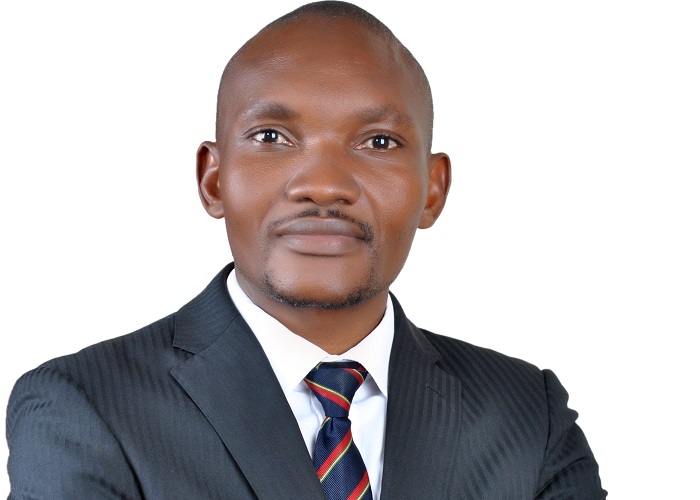
The Author is an Economic and Governance Commentator focusing on East African Markets, labour Dynamics, and Public-Private Partnerships.
