

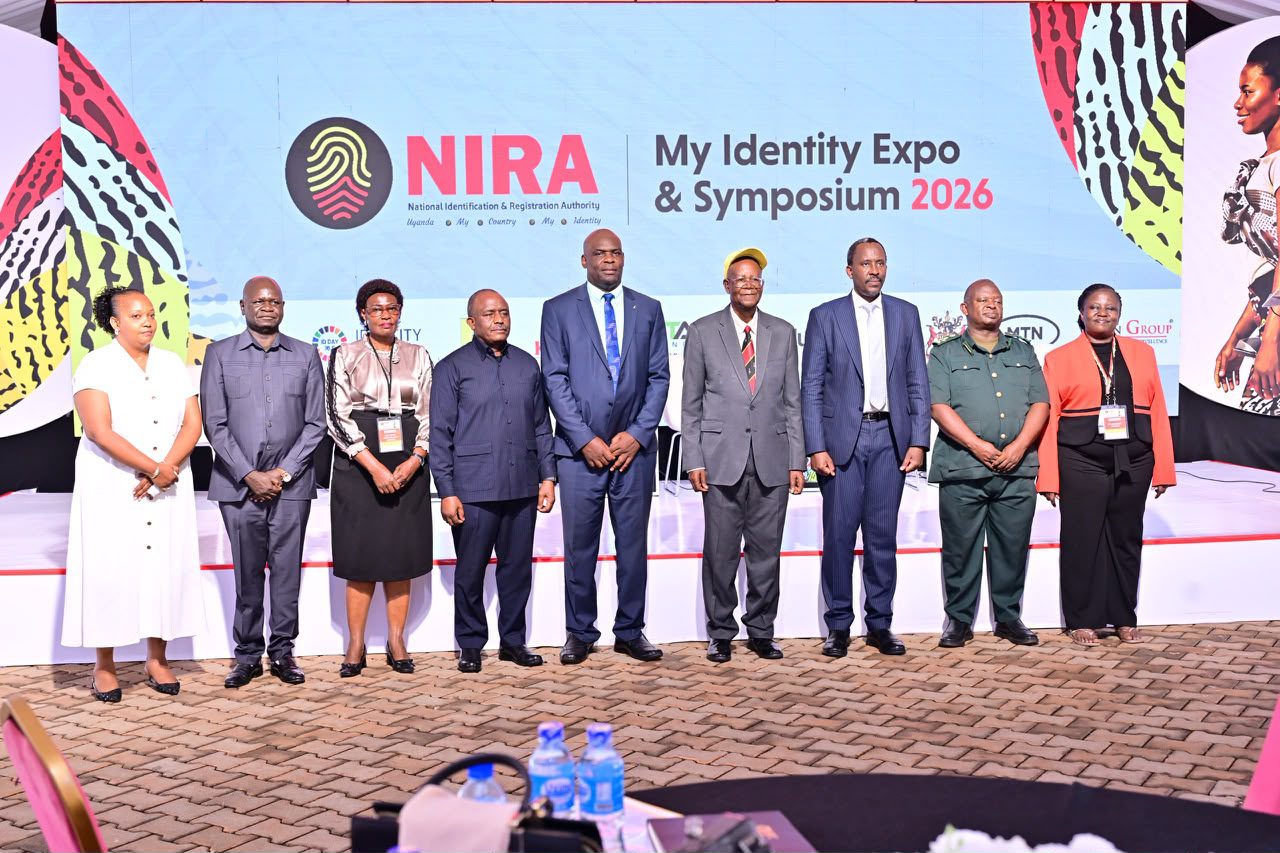
A national ID is more than just a card or a number; it is the absolute foundation of Uganda’s national security, economic planning, and human dignity.
That was the heavy reality delivered by Internal Affairs Minister Ephraim Kamuntu at the launch of the inaugural My Identity Expo and Symposium 2026. Organised by the National Identification and Registration Authority (NIRA), the milestone event coincided with exactly 100 years since Uganda’s official borders were mapped.
“If You Don’t Have Numbers, You Cannot Plan”

Minister Kamuntu pulled no punches regarding the critical link between data and development. While acknowledging NIRA’s progress in capturing 36.2 million Ugandans (78.8% of the population), he insisted there is no room for complacency.
“This is okay, but you cannot rest,” Kamuntu urged NIRA, demanding a relentless push toward 100% universal registration. “Unless you have accurate population data, the state cannot plan. If you don’t have numbers, you cannot aim for something you don’t know.”
Without a legal identity, citizens are locked out of the modern economy. Kamuntu noted that a national ID is mandatory to open bank accounts, enroll in schools, and receive healthcare.
Vote, secure driving permits, and obtain passports and tap into state initiatives like the Parish Development Model (PDM) and youth livelihood projects.
“You cannot be identified as a Ugandan unless you are registered,” Kamuntu added, noting that accurate data is the backbone of border control, law enforcement, and fair resource allocation.

NIRA Board Vice Chairperson Benny Namugwanya anchored the conversation around human dignity and United Nations Sustainable Development Goal 16.9, which targets legal identity for all by 2030.
“Every person has the right to be recognised as a person before the law,” Namugwanya said. “Identity is fundamental to human dignity.”
However, reaching the remaining 21.2% of the population will require breaking down systemic barriers. Namugwanya called for a targeted, aggressive focus on Uganda’s most vulnerable groups, including children and older persons,People with disabilities and remote, hard-to-reach communities
 As digital technology reshapes public services, Namugwanya emphasized that Uganda’s identity system must remain secure, trusted, and strictly protective of personal data.
NIRA’s mandate extends far beyond IDs—it covers the lifecycle of civil registration, including births, deaths, adoptions, and marriages for both citizens and legal foreign residents. But Namugwanya warned that NIRA cannot bridge the remaining gap in isolation.
“Universal legal identity cannot be achieved by the authority alone,” she concluded. “It requires collaboration across government, Parliament, civil society, the private sector, and local communities.”
