


Held under the theme “No One Should Die of Malaria,” Deputy Speaker of Parliament Thomas Tayebwa has highlighted the urgent need for stronger collaboration in tackling Malaria that continues to disproportionately affect children under five, pregnant women and vulnerable communities. Participants also called for greater public awareness, increased access to prevention tools and sustained investment in healthcare systems.
He noted that despite years of progress, malaria remains Uganda’s leading cause of illness, accounting for an estimated 30–40 percent of outpatient visits and up to 20 percent of hospital admissions every year.
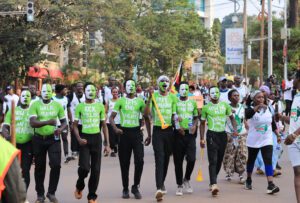
“The disease continues to place enormous pressure on families, healthcare facilities and the country’s economy, making collective action more important than ever.Over 90% of Uganda’s population remains at risk, with the country recording over 12 million to 16 million cases annually,”he stated.
Tayebwa called for a united national response to malaria, noting that the disease continues to undermine the health and education of Uganda’s children.
“Malaria remains one of the greatest threats to our nation’s future because it continues to keep our children out of school and places an enormous burden on families and our health system.
Ending malaria requires all of us as government, the private sector, development partners, and communities to work together to strengthen prevention, early diagnosis, and treatment,” he said.

Tayebwa observed that fighting malaria doesn’t have to be about the amount of money available, but instead embracing the basic strategies such as clearing bushes around homes. “Let us use plants in our homes that are mosquito repellents. As leaders, we must combine efforts and kick malaria out of Uganda and save lives by ensuring that our people take the basic prevention measures such as draining stagnant water, and clearing bushes, as laid out by Ministry of Health and the World Health Organization,” he added.
Noela Byuma, Head of Marketing and Communications at KCB Bank Uganda, said the fight against malaria requires every sector of society to play its part.
“Malaria is an economic and social issue that affects families, businesses and the nations productivity. At KCB Bank Uganda, we believe that sustainable development begins with healthy communities. We are proud to stand alongside Parliament, government, development partners and fellow corporate organizations in supporting efforts to eliminate malaria. Every step we take today represents hope for healthier families and a stronger Uganda,”she said.
 Noting that the Banks participation reflects its broader commitment to creating lasting social impact, like its bank promise, For People For Better, through partnerships that improve health, education, environmental sustainability and economic empowerment.
“By supporting initiatives such as the Parliamentary Malaria Walk, KCB Bank Uganda continues to contribute to national efforts aimed at building healthier and more resilient communities,”
She pledged KCB Bank Uganda nationwide campaign to raise awareness, advocate for increased investment in malaria prevention and treatment, and demonstrate the private sectors commitment to improving public health outcomes.
Dr. Jimmy Opigo, the Assistant Commissioner in charge of the National Malaria Control Division at MoH noted that Uganda has continued to record an upsurge of malaria cases, especially in Karamoja, Acholi and Bukedea Sub-regions despite different government interventions to contain the disease. He urged the Members of Parliament to embrace MoH programs aimed at fighting malaria, and advocate for more funding towards the cause. “On World Malaria Day, we rolled out distribution of insecticide treated bed nets, and this exercise will soon be extended to parishes across Uganda. We urge leaders to work with us and ensure the nets are well distributed, and used by people in their respective communities,” he said.

Dr. Charles Katureebe, the Malaria Advisor at WHO Uganda asked members of the forum to include malaria among the other 19 neglected tropical diseases and called for political commitment at all levels to ensure a successful fight against the disease. “We need to have mass action against malaria where control is everyone’s responsibility, at all levels,” he said.
“We need to break down the slogan ‘A Malaria-free constituency is our responsibility’ to all levels of the constituency to ensure all leaders at schools, factories, churches work towards malaria free communities under their care.”
He also called for strengthening of community systems to ensure that efforts in the fight against malaria are not in vain.
“We need to ensure that utilization tools are duly adhered to by the people. Saying that we distributed mosquito bed nets is not enough if people are not sleeping under them. Indoor spraying alone is not enough; but it must be done with an effective safe insecticide,” Dr. Katureebe said.
Uganda is currently experiencing a new burden of malaria since January 2022 with cases rising higher by the end of the year. At the peak, more than 300,000 were reported cases every week.
