

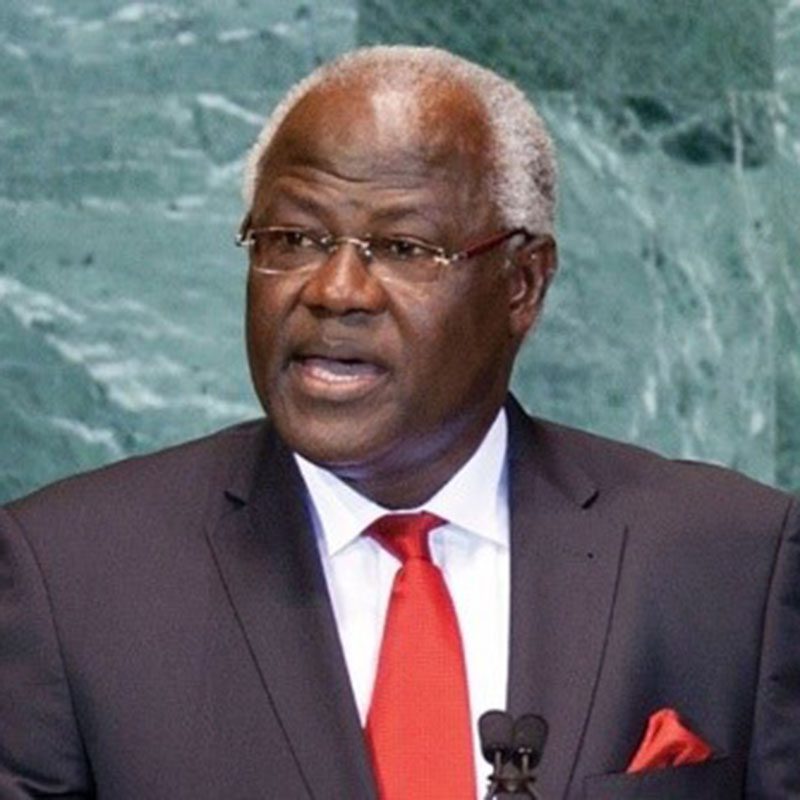
Sierra Leone’s government has dropped its charges, including treason, against ex-President Ernest Bai Koroma, who was arrested in connection with an attempted coup nearly three years ago.
The 72-year-old former president has always denied involvement in the November 2023 attempted coup when gunmen broke into a military armoury and several prisons, freeing almost 2,000 inmates.
Responding to his case being dropped, Koroma noted his “enduring conviction that peace, justice and reconciliation must always triumph over adversity”.

In his statement on Tuesday, Koroma also expressed gratitude towards Sierra Leonean President Julius Maada Bio, Nigerian President Bola Tinubu and the West African regional bloc Ecowas for their support.
After Koroma was charged and placed under house arrest, Ecowas brokered a deal with the government of Sierra Leone, allowing the former president to go into exile in Nigeria and seek medical attention there.
The attorney general had then filed to discontinue the case against Koroma and drop the charges, Bah said.
“The former president is therefore free to return to Sierra Leone at a time of his choosing and to go about his normal business,” he added.
Koroma led Sierra Leone for 11 years until 2018, when current President Bio was elected.

Eleven civilians and 24 soldiers were found guilty of involvement in the coup attempt and received long prison terms in 2024.
Around 20 people were killed in the uprising, which came five months after a disputed election which saw President Bio narrowly re-elected for a second term.
The results were rejected by Koroma’s All People’s Congress. International observers also criticised the elections, highlighting a lack of transparency in the count.
Sierra Leone is famous for its lush rainforests, rich mineral deposits (diamonds and iron ore), and pristine, untouched beaches
Sierra Leone’s main political issues are rooted in contested elections, deep ethnic divides, and economic hardship The June 2023 presidential election caused deep division. The main opposition party (APC) rejected the results, citing a lack of transparency by the Electoral Commission and Public trust in government institutions has dropped. Controversial parliamentary moves, such as altering voting rules and removing the Auditor-General, have sparked severe criticism
