

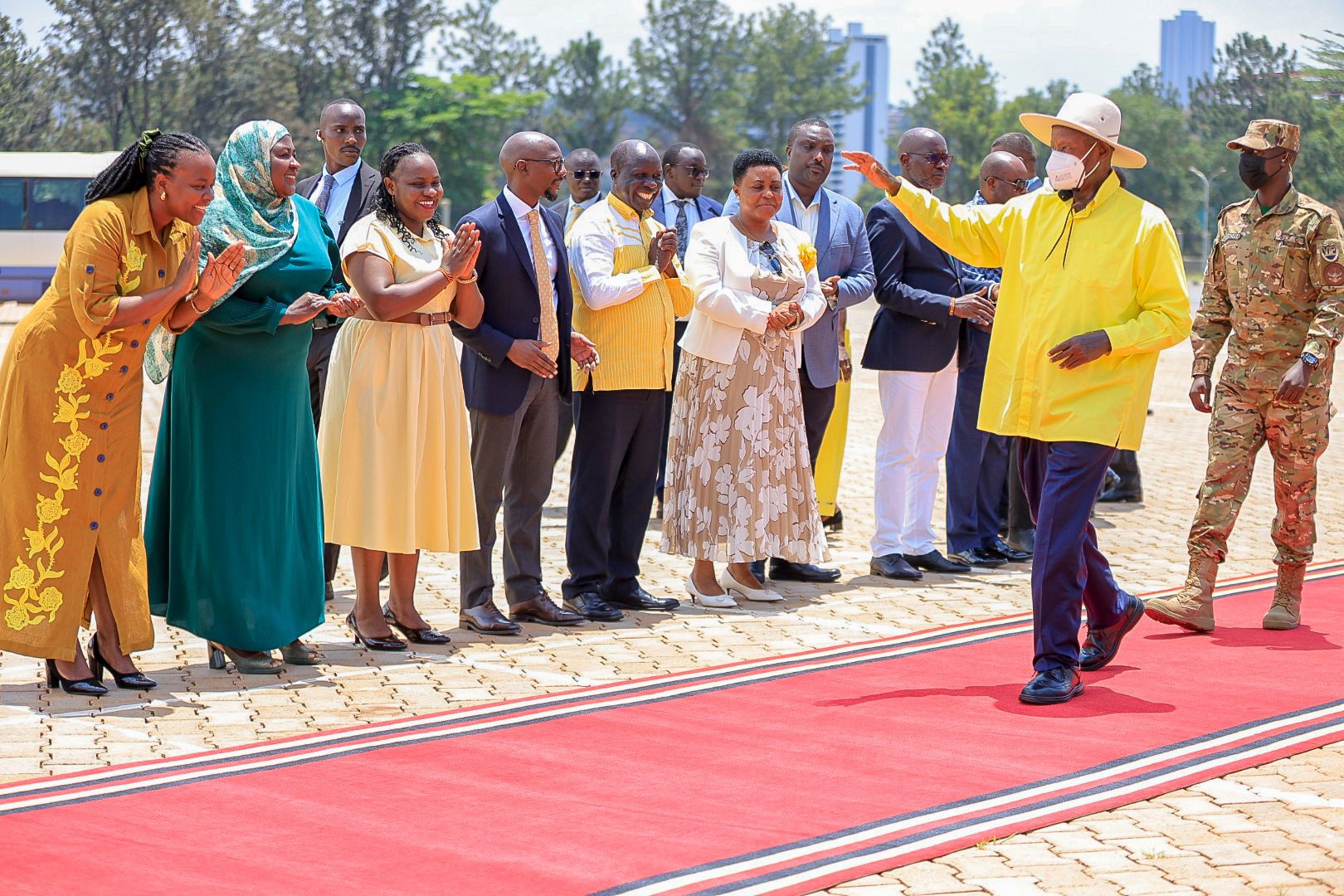
President Yoweri Kaguta Museveni issued a scathing rebuke of detached lawmakers during a high-stakes address to the National Resistance Movement (NRM) Parliamentary Caucus at the Kololo Independence Grounds, demanding an immediate return to grassroots mobilization and endorsing the uncompromising anti-corruption crusade championed by Local Government Minister Balaam Barugahara.
Speaking on Friday, October 2, 2026, as legislators returned from a three-week recess, the NRM National Chairperson tore into leaders who substitute genuine community engagement with superficial displays of food, water, and musical performances.
President Museveni asserted that the party originally won public trust through direct, frontline problem-solving rather than elite detachment. Pointing to the practical, low-cost methods utilized by Hon. Balaam and State House aide Naome Nameere, the President warned that the fight against corruption must be aggressively driven into the villages to protect ordinary citizens.
The address shifted from political accountability to hard economic survival, with President Museveni laying down strict performance targets for the Parish Development Model (PDM).

He tasked the MPs with personally policing the Shs 1 million revolving fund to ensure it reaches the grassroots, aiming to pull the remaining 33 percent of Ugandans out of subsistence and firmly into the money economy. Intervening on a plea raised by Hon. Laura Kanushu regarding the marginalization of Persons with Disabilities, the President drew a hard red line, declaring that funds earmarked for vulnerable groups must face zero diversion or compromise.
On the security front, President Museveni expressed deep frustration over surging localized crime, citing reports of over 15 murders in Ibanda alongside rampant cattle and coffee thefts in Kyankwanzi and Kagadi.
Directing the Ministry of Internal Affairs and security chiefs to recalibrate sub-county policing, he signaled that gaps in local law enforcement will face direct executive intervention.
Environmental degradation and agricultural productivity formed another major flashpoint of the caucus meeting. President Museveni pronounced irrigation a non-negotiable requirement for stabilizing national yields—citing government farm models hitting 53 tonnes per hectare—and reiterated his unyielding directive to clear all encroachers from vital wetlands across Busoga, Bukedi, and Kigezi, steering displaced populations toward organized fish farming instead of destructive monoculture.

Industrialization and import substitution dominated the President’s economic blueprint. Reaffirming his “no refinery, no crude production” doctrine, Museveni drew a parallel to continental value addition, insisting that raw materials must undergo complete domestic processing before export. Using his own locally grown, ginned, spun, and tailored Ugandan cotton shirt as a tangible testament to vertical integration, he emphasized that true economic independence relies on domestic manufacturing, energy expansion through projects like the Ayago hydropower dam, and strategic railway links to Karamoja and northern export corridors.
The meeting also exposed the immediate political pressures facing the ruling party. Government Chief Whip Dr. Jane Ruth Aceng opened the session by mourning the late King Oyo Nyimba Kabamba Iguru Rukidi IV of Tooro and congratulating his successor, King Edward Kijanangoma Nyabongo I, before delivering a sobering legislative and legal reality check.
Dr. Aceng revealed that 75 NRM Members of Parliament and flag bearers are currently tangled in grueling election petitions stemming from the 2026 general elections, prompting an urgent appeal for institutional and legal facilitation from the party leadership. She also updated the caucus on the progress of the Agriculture Regulatory Bill and criminal investigations recommended for the Kampala Expressway toll collections.
Concluding the intense session, the NRM Parliamentary Caucus formally adopted a sweeping nine-point resolution committing members to decentralized accountability, rigorous PDM oversight, stringent security vigilance, and unwavering support for East African regional integration.
