

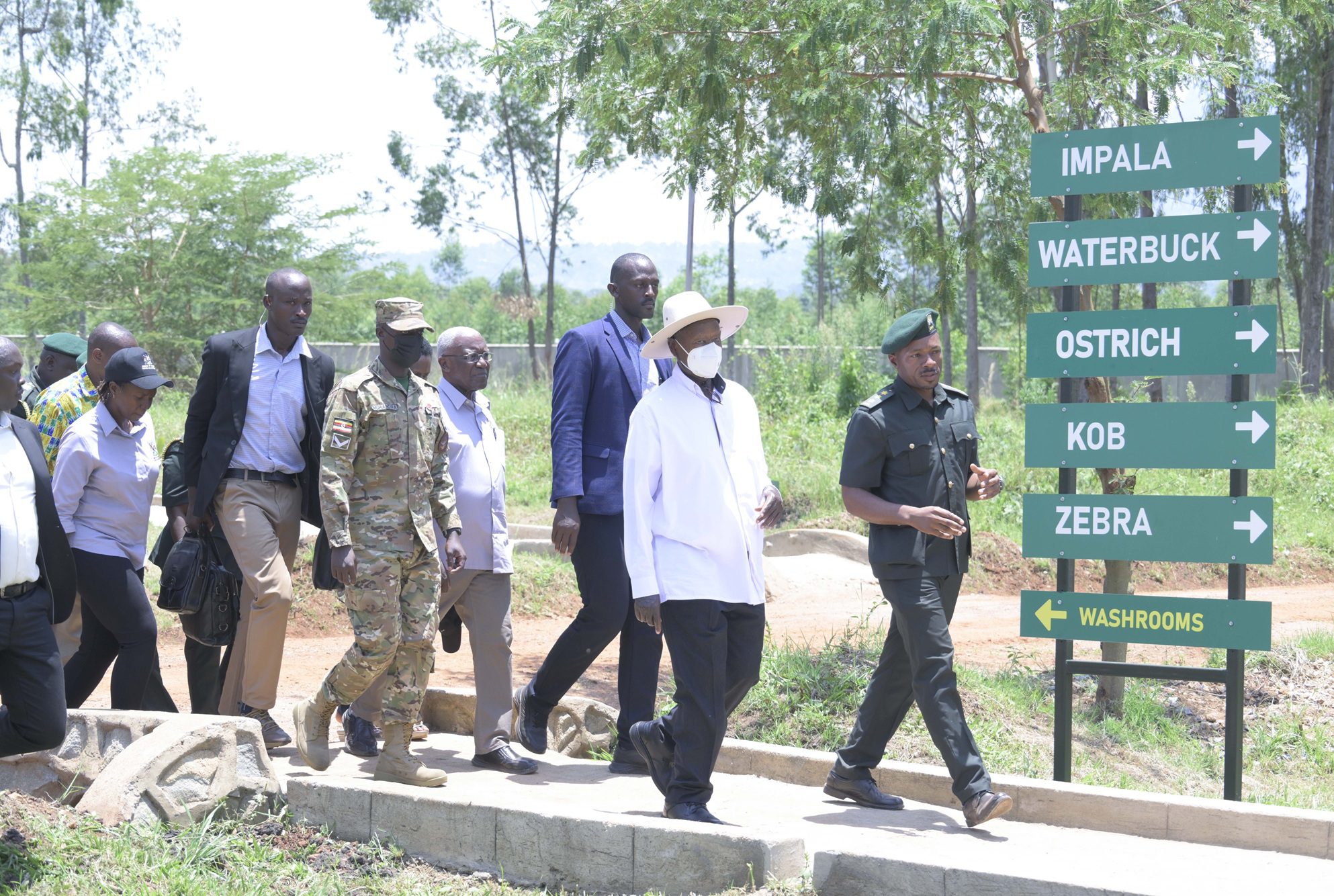
MBALE — As the morning mist lifts over the jagged precipice of the Wanale Ridge, it reveals a landscape caught in a high-stakes economic tug-of-war. For generations, the fertile volcanic soils of the Bugisu economy have been defined by the deep crimson of Arabica coffee cherries. However, a powerful transformation is underway. Driven by the recent launch of the Mbale Wildlife Conservation Education Centre (Mbale Zoo) and the momentum of the 2026 World Tourism Day celebrations, conservationists and local leaders are pioneering a strategic shift. They are proving that by preserving the landscape rather than clearing it, eco-tourism can build a far wider, more resilient community wealth chain than coffee ever could.
The temptation to fell a native Prunus africana tree to plant another row of coffee is a daily economic reality for farmers bordering Mount Elgon National Park. Driven by land fragmentation and expanding families, smallholder agriculture has steadily pushed into fragile afro-montane zones.
This encroachment does more than displace local wildlife like the black-and-white colobus monkeys—it actively threatens the water tower of Eastern Uganda. When native forests are replaced by coffee monoculture, the mountain loses its natural root network. Without deep roots to anchor the earth during torrential downpours, steep slopes become ticking time bombs.
According to the Uganda Wildlife Authority (UWA):1,935+ Acres Cleared Illegal farming, logging, and charcoal burning have historically decimated massive swathes of protected forest, level of deforestation faces the potential local extinction of critical indigenous tree species like the Elgon Teak and Mahogany and 1,500+ lives lost: due to flash flooding, and catastrophic landslides.
To counter this, UWA is shifting the narrative from strict policing to collaborative stewardship. By demonstrating that intact forests and flowing waterfalls like Sipi and Wanale attract high-spending international hikers, local communities are beginning to view the park boundary not as a barrier to farming, but as a protected financial asset.
For decades, wildlife conservation was an abstract concept for youth in Eastern Uganda. The regional wildlife education hub was physically locked away inside the Entebbe Zoo, nearly 300 kilometers away. The financial reality of long-distance travel meant that thousands of students in the Bugisu, Teso, and Bukedi sub-regions grew up right alongside Mount Elgon National Park without ever interacting with the diverse wildlife they were being asked to protect.
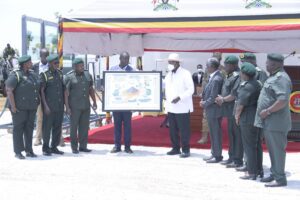
The grand commissioning of the Mbale Wildlife Conservation Education Centre (Mbale Zoo) by President Yoweri Kaguta Museveni permanently changed that dynamic. Positioned at the base of the mountain, this new satellite facility serves as a vital regional gateway for experiential learning and environmental stewardship.
Instead of reading about conservation in textbooks, local residents can now see the direct link between healthy ecosystems and wildlife survival up close. The facility acts as an education hub, demystifying the role of UWA and demonstrating how wildlife protection directly combats climate catastrophes.
When a farmer harvests a kilogram of coffee, the financial transaction is largely linear and vulnerable to erratic weather and fluctuating global commodity prices. In stark contrast, a single tourist visiting the Elgon sub-region sets off a powerful economic multiplier effect.

Uganda recorded 1.64 million international tourist arrivals in 2025, generating approximately USD 1.62 billion (UGX 5.83 trillion) in national revenue and creating more than 876,000 direct jobs. When hikers arrive to track the trails or visit the new Mbale Zoo, their expenditure directly feeds the local hospitality economy, flowing to transport providers, local food markets, craft makers, and regional hospitality staff.
Speaking at the World Tourism Day 2026 national celebrations in Mbale City, President Yoweri Kaguta Museveni explicitly declared that the country’s forests and national parks are “national economic assets,” not obstacles to human development.
“Tourism presents economic opportunities on a much larger scale [than coffee] because it supports a broad chain of activities, including accommodation, transport, food, entertainment, guiding, cultural enterprises, and other services. Environmental degradation directly affects tourism because forests, wetlands, and wildlife habitats form the foundation of many of Uganda’s attractions… We must protect the wetlands and the forest.”— President Yoweri Kaguta Museveni
This vision is echoed across leadership. The Minister of State for Tourism, Wildlife and Antiquities, Hon. Susan Nakawuki Nsambu, publicly urged UWA leadership to remain “steadfast and decisive” in confidently enforcing the Uganda Wildlife Act. Tourism Minister Hon. Col. Tom R. Butime added, “Our objective is to ensure that the benefits of tourism reach the small hotel in Mbale, the guide on Mount Elgon, the craft producer in Bugisu, the farmer supplying a lodge…”
Local communities are already proving that change is profitable. Sarah Nabugodi, a former coffee picker who retrained as a certified local tour guide based in Wanale, now leads international hikers up to the cascading ridge waterfalls.
“A bag of coffee beans pays me once a season, and if the global price drops, my family suffers,” Nabugodi explains. “But protecting this forest means tourists come year-round. They pay me to guide them, they buy crafts from my neighbors, and they sleep in our local lodges. The forest is worth more to us standing than cleared.”
Ultimately, the future of the Elgon sub-region does not lie in choosing between its heritage of rich agriculture and environmental preservation, but in recognizing that one cannot survive without the other. Transforming the community mindset from exploiting the mountain to safeguarding its slopes is an economic imperative. By weaving local livelihoods directly into the protective fabric of eco-tourism, Bugisu is proving that conservation is the ultimate investment.
