

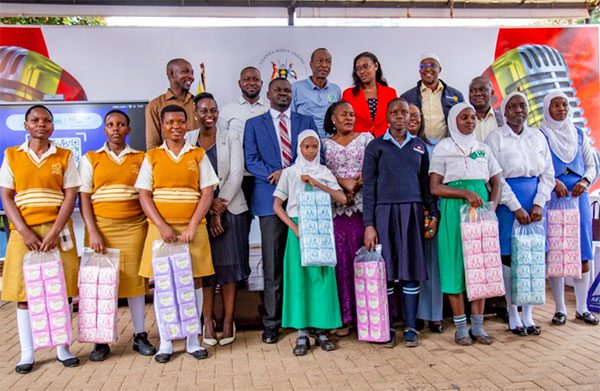
Behind the walls of schools across the country is a silent battle — a struggle faced by girls who miss lessons, lose confidence and sometimes withdraw from education because they cannot afford safe menstrual hygiene products.
In Uganda and globally, menstrual challenges cause up to 60% of schoolgirls to miss class or drop out entirely. This “period poverty” is driven by a lack of affordable sanitary pads, inadequate WASH facilities, and pervasive stigma. Addressing these requires sustainable, community-driven solutions.

However Fred Ssenoga, the Chief Executive Officer of Union Transport Alliance (UTA), wants to confront this mensuration challenge through an ambitious social enterprise initiative — Union Sanitary Pads,under the Kili Clear Campaign.
For Ssenoga, the sanitary pad is not just a consumer product.It is a tool for restoring dignity, an investment in Uganda’s girl child and a business opportunity where social impact and economic transformation meet.
Inspired by President Yoweri Kaguta Museveni’s philosophy in Sowing the Mustard Seed that great transformation begins from small but purposeful investments, Ssenoga believes Union Sanitary Pads can grow from a simple idea into a national movement against what he describes as the “monster called period poverty.”
“We are targeting students because education should never stop because of menstruation. Every girl deserves to remain in school with dignity, confidence and good health,” Ssenoga said.
During the campaign period ,schools and learners will access Union Sanitary Pads at Shs20,000 per package, designed to support a learner’s menstrual hygiene needs for an entire year.
The initiative also has digital accessibility through mobile payment technology, allowing customers to purchase the products by dialing *289*9#.
For Ssenoga, affordability is the bridge between a girl staying in class and a girl missing her education.
“Union Sanitary Pads are more than a product. They are an investment in Uganda’s girls, women’s health and the country’s future workforce. Every girl who stays in school because she has access to menstrual hygiene products is one more young Ugandan empowered to contribute to national development,” he said.
For investors, Ssenoga’s vision goes beyond sanitary pads. He believes Union Sanitary Pads represents a model where commercial sustainability meets social transformation.

According to him,across the world, impact investors are increasingly supporting businesses that solve social challenges while creating economic value.
Enterprises addressing education, healthcare, gender equality and essential consumer needs are attracting attention because they combine profitability with measurable community impact.
Union Transport Alliance believes its existing transport network provides a strategic advantage in distributing products across urban and rural communities.
The company’s vision is to combine transport, manufacturing, distribution and digital innovation to create a nationwide ecosystem.
“No girl should miss school because she cannot afford a sanitary pad. I am honoured to serve as the face of this campaign, and I will work with Union Transport Alliance and our partners to ensure these products reach schools and vulnerable communities across Uganda,”Ms. Daina Ampaire the official face of the Union Sanitary Pads – Kili Clear Campaign.
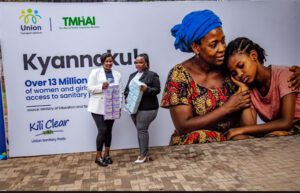
At the Kili Clear “1 Million Pads for 1 Million Girls” campaign launch, Ministry of Health Commissioner Dr. Richard Mugahi commended the Union Transport Alliance for combating period poverty emphasizing that menstrual health protects the health, dignity, and future of young girls, directly reducing school dropouts, teenage pregnancies, and associated social challenges
He highlighted that poor menstrual hygiene management and a lack of affordable pads force many adolescent girls to drop out of school, making them vulnerable to teenage pregnancies and other dangers.
Menstrual health is about more than just distributing products; he called for stronger reproductive health education to empower girls to make safe, healthy choice
Ms. Noor Nakibuuka Musisi, Deputy Executive Director for Programs at the Center for Health, Human Rights and Development (CEHURD), emphasised that menstrual hygiene should be viewed beyond a health issue.
“Menstruation is a matter of human rights, dignity and equality because barriers affecting girls’ menstrual health can limit their participation in education and society,”she stressed.
CEHURD, a Ugandan health rights and human rights organisation, focuses on sexual and reproductive health rights, women and girls’ health, advocacy, research and community empowerment.
According to the Ministry of Education and Sports Education Statistical Abstract 2025, Uganda’s secondary school enrolment stands at 2,044,586 learners, with female learners accounting for 51.6 percent.
This represents more than one million female learners, most of whom fall within the adolescent age bracket where menstrual health support remains critical.
But Margret Nasuwa, Brand Marketing Manager at Ruka Pay, says when businesses support menstrual hygiene, they are investing in stronger communities, a healthier workforce and sustainable economic growth.
“Investing in the girl child is investing in the future of our nation. By supporting menstrual health today, we are helping to build a healthier, better educated and more productive Uganda tomorrow.”
Nasuwa pledged continued cooperation to ensure Union Sanitary Pads reach schools and communities across Uganda.
His invitation is directed not only to consumers but also to investors, development partners and private sector players who believe businesses can become instruments of national transformation.

“President Museveni’s mustard seed philosophy teaches us that great transformation begins with small investments. Union Sanitary Pads are our mustard seed. We invite investors, development partners and the private sector to join us in growing it into a movement that changes lives across Uganda,” Ssenoga said.
“A sanitary pad may appear small, but for a girl fighting to remain in school, it represents dignity, confidence and a future,”he stated.
