

Thirty years ago, the Capital Markets Authority (CMA) occupied a few modest rooms in the Bank of Uganda basement with a radical premise: that ordinary Ugandans could build wealth through structured investments.
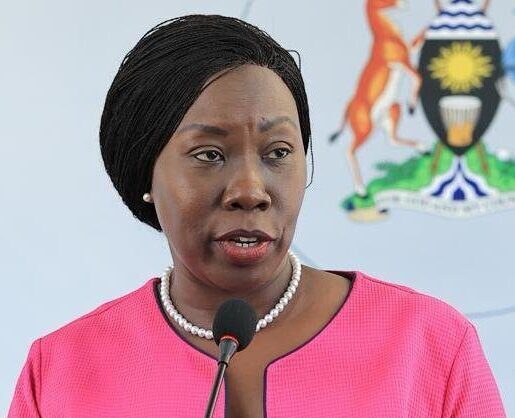
Today, that modest idea has matured into a financial backbone. “Thirty years ago, the fundamental question was: Can Uganda build a functioning capital market? Today, we know the answer. Yes, we can. And yes, we have,” says CMA Chief Executive Officer, Ms. Josephine Ossiya. Under her leadership, the authority has pushed Collective Investment Schemes (CIS) assets under management to roughly UGX 7.06 trillion, while domestic market capitalization on the Uganda Securities Exchange has surpassed UGX 15 trillion.
As the CMA marks its 30-year journey, the questions shifting the landscape are entirely new: How large, inclusive, and innovative can the market become? These answers are urgent as Uganda races toward an extraordinary ambition—building a $500 billion economy by 2040.
“We cannot bank-finance our way to a USD 500 billion economy,” Ossiya highlights. “Banks will remain critical to our economy. But transformational development also requires long-term, patient capital. It requires equity, pension and institutional capital, innovative investment vehicles and capital markets capable of connecting Uganda’s savings with Uganda’s opportunities.”

For years, financial inclusion in Uganda simply meant having access to a bank account or mobile money wallet. The CMA is looking far beyond that baseline.
“Reaching national transformation requires moving past standard transactional inclusion,” Ossiya notes. “With public understanding of capital markets climbing to 60.8%, the next frontier is investment inclusion—empowering teachers, farmers, and young entrepreneurs to own a stake in the country’s economic future.”
To back this vision, the CMA wants to scale up CIS investor accounts—which currently stand over 241,000—to one million funded accounts. They are also aggressively diversifying local instruments, with a strong focus on opening up the market to global cash pools through Uganda’s inaugural sovereign Sukuk. “And this is about much more than introducing another financial product,” she adds. “It is about widening the pool of investors that can participate in financing Uganda.”

To spark everyday participation, the CMA is launching highly practical, community-level campaigns. One standout initiative is the “Explain Capital Markets to Your Grandmother” campaign.
“Because if we cannot explain what we do to our grandmother in language she understands, perhaps we have not understood it well enough ourselves!” Ossiya explains. “Capital markets must cease to sound like something that belongs only to economists, lawyers, investment bankers and people wearing complicated suits. They must become part of everyday conversations about saving, investing, ownership and wealth creation.”
From Kampala’s Kikuubo traders to trending TikTok feeds, the Capital Markets Authority is actively stripping away the jargon. Whether you are a corporate elite or a young Ugandan starting out with just UGX 10,000, the message is clear: the future of building wealth is no longer reserved for the few.
