

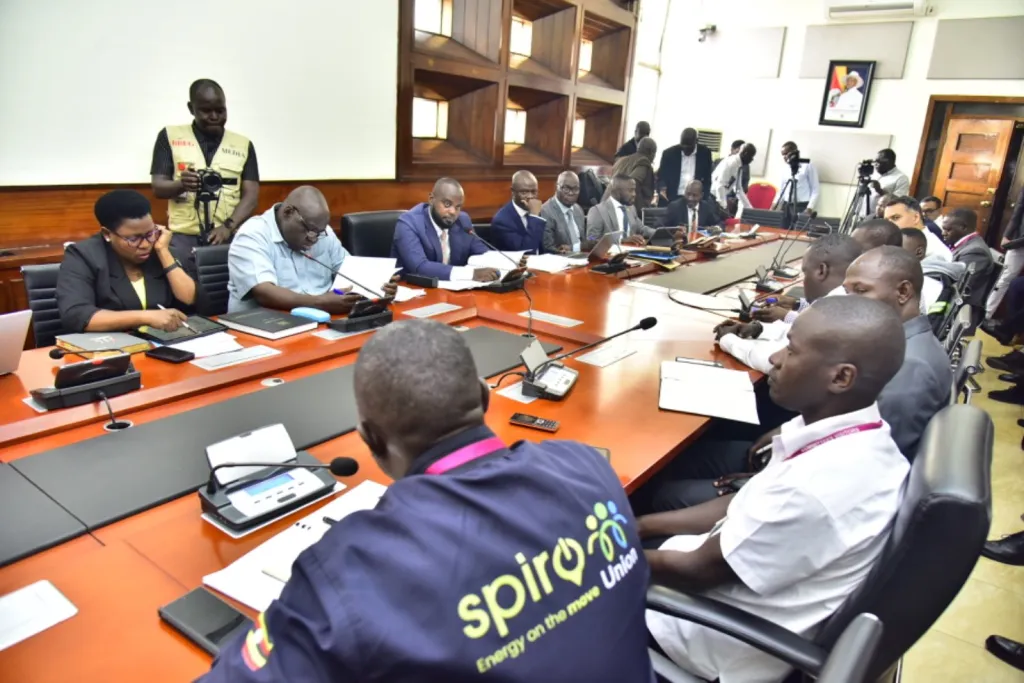
The Ugandan government is facing mounting pressure from both the manufacturing sector and transport unions to overhaul the rollout of the Intelligent Transport Monitoring System (ITMS), amid severe supply shortages and high costs that are crippling local businesses.
The Uganda Manufacturers Association (UMA) recently petitioned Parliament’s Committee on Physical Infrastructure, urging the government to break the current monopoly and allow local firms to manufacture the digital number plates. UMA officials argued that severe delivery backlogs under the sole contractor—Russian firm Joint Stock Company Global Security—have left vital business assets idle, threatening state revenue and local jobs.

“Let these other companies which were producing number plates be allowed to produce. The digital parts can come in as and when needed,” said Allan Ssenyondwa, UMA’s director of policy and research. Alongside UMA board chairperson Richard Mubiru and executive director Ezra Muhumuza, the leaders emphasized that liberalizing production would stimulate local industry, protect employment, and safeguard tax revenues while still meeting the country’s security objectives.
The parliamentary committee, chaired by Mbarara City South MP Mwine Mpaka, revealed that daily plate production has plummeted from 350 to just 100 plates. This supply bottleneck is estimated to cost the Ugandan economy more than Shs4 billion per week in lost revenue and idle stock.

Compounding the pressure, the commercial transport sector has fiercely criticized the financial burden of the new system. In a comprehensive written submission to Parliament, Frank Mawejje, chairperson of an alliance representing over 1.2 million boda boda riders, 21,000 taxis, and 900 buses, called for an immediate reduction in fees and a solution to systemic delays.
Mawejje highlighted that the Shs714,300 registration fee for new motorcycles represents a 470% increase from the previous Shs125,000 charge. With typical riders earning between Shs20,000 and Shs40,000 a day, the fee exceeds a week’s worth of gross earnings, forcing a stressful choice between “compliance and survival.”
“It is unfair for boda riders to pay the same as luxury car owners like Land Cruiser owners,” Mawejje stated. He noted that for riders purchasing motorcycles on credit, the higher upfront cost increases their overall interest burden.

Furthermore, extensive system downtime and sluggish verification processes have left thousands of riders grounded. Some have waited more than a year for plates they have already paid for, leaving them vulnerable to inconsistent law enforcement penalties across different districts. For riders relying on asset financing, these delays lead to missed loan repayments, triggering debt defaults and vehicle repossessions. The backlog has also trapped new motorcycles in bonded warehouses, disrupting importers and financing businesses.
Despite these grievances, the transport alliance clarified that it supports the government’s long-term goal to digitize vehicle tracking, noting its potential to deter theft, recover stolen property, and eliminate duplicate plates. However, they stressed that the current execution has severely eroded public trust.
The alliance submitted more than 25 recommendations to lawmakers, including: Guaranteeing plate issuance within 7 to 14 days and launching a public dashboard to track backlogs transparently.

Establishing installation centers in every municipality and deploying mobile registration units to rural areas,Introducing subsidies for low-income operators, installment payment plans through Saccos, and temporary operating permits to protect riders from fines during system delays and publishing a clear data-protection policy to outline who accesses tracking data, alongside creating an independent oversight committee that includes union representation.
The growing friction follows demands from motor dealers in July to cancel the Russian contractor’s 10-year agreement over consistent non-performance. As criticism intensifies, Security Minister Gen Jim Muhwezi appeared before the physical infrastructure committee, requesting additional time for government agencies to compile a formal response to the systemic failures
