

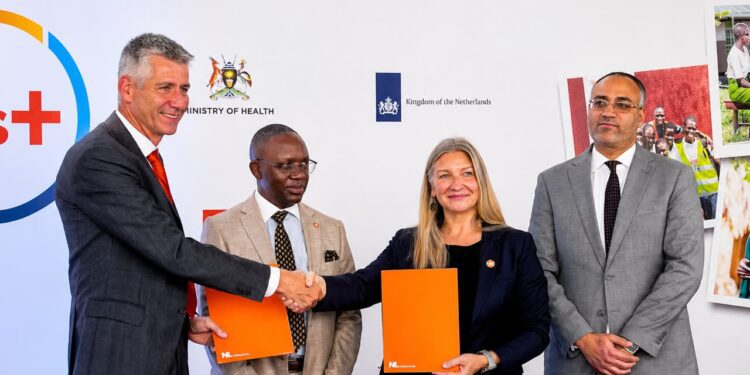
The Embassy of the Kingdom of the Netherlands has committed approximately UGX 57.6 billion (US$16 million) to the United Nations Population Fund (UNFPA) to strengthen adolescent health sexual and reproductive rights, and youth empowerment in Uganda under the Strengthening Adolescents and Youth Rights and Empowerment (SAY+) Programme.
UNFPA Uganda Country Representative Kristine Blokhus described the contribution as a significant investment in Uganda’s young population and praised the Uganda government for providing leadership in advancing adolescent and youth health.

“On behalf of UNFPA, I wish to express our sincere gratitude to the Government of the Kingdom of the Netherlands for their generous US$16 million contribution to the SAY+ programme,” Blokhus said.
She noted that the Ministry of Health’s commitment to integrated health services, bodily autonomy and the rights of young people has created a strong national foundation upon which the programme will build.
Blokhus also paid tribute to Denmark for initiating the original SAY Programme before Sweden and Iceland joined to expand it into the current SAY+ initiative.
She said Uganda’s youthful population—estimated at about 73 percent of the country’s population—presents a major opportunity for economic growth if young people are healthy, educated and empowered to make informed decisions about their lives.

According to UNFPA, 24 percent of Ugandan teenage girls become pregnant each year, translating to roughly 1,000 adolescent pregnancies every day. Many girls are forced out of school due to unplanned pregnancies, gender-based violence and other health-related challenges, limiting both their future opportunities and the country’s broader development.
Blokhus said the Netherlands’ funding will help address these challenges by strengthening health facilities and community structures to provide integrated, youth-friendly services covering sexual and reproductive health, HIV prevention and gender-based violence response.
The programme will also equip young people with accurate information, life skills and opportunities to exercise their rights while engaging communities, families and local leaders in ending harmful practices such as child marriage and gender-based violence.
A key feature of the partnership is the establishment of a Youth Advisory Committee, designed to ensure young people actively participate in designing, implementing and monitoring programmes intended to serve them.
“Nothing for us without us,” Blokhus said, emphasizing that young people should be partners rather than passive beneficiaries of development programmes.
