

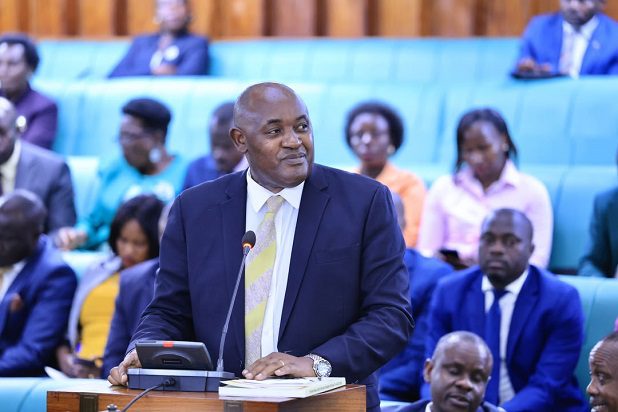
The Minister of Health, Dr. Chris Baryomunsi, has revealed a stark deficit in Uganda’s healthcare system, admitting that 80 out of 146 districts lack a single hospital.
Presenting the Status of Health Service Delivery in Uganda report to Parliament on October 15, 2026, Baryomunsi disclosed that the country’s 72 existing hospitals cover just 45% of the population’s needs.
Baryomunsi further indicated that Uganda has 54 General Hospitals and required number is 92, leaving a gap of 38; while number of Health Centre IVs is 240, yet required are 460, leaving a gap of 220; and number of Health Centre IIIs available is 1,709, required are 2,189, leaving a gap of 480.
Government achieved between 2021-2025, the Minister argued that Government has delivered significant results, including rehabilitation of 18 General Hospitals, upgrading of 407 HCIIs to HCIIIs, construction of 38 new HCIIIs, installation of 14 ICUs, 14 CT scanners, 20 new X-ray units, and MRI machine at Mbarara Regional Referral Hospital, among other investments in blood banks, laboratories, incinerators, and specialized care units.
According to Ministry of Health, coverage of HC IVs that are fully functional (offering blood transfusion and caesarean section) reached 66%, exceeding 64% target and continued investment is required to sustain blood transfusion and caesarean-section capacity.
Further, proportion of NRHs & RRHs with functional neonatal intensive care units increased to 26.3%, exceeding FY2025/26 target of 20% (Kawempe NRH, Mulago SWNH, Lira RRH, Masaka RRH, Fortportal RRH) although priority should be given to specialised staffing, equipment, and availability of essential commodities at all Regional Referral Hospitals.
This infrastructure deficit faces heavy strain from a population of 45.9 million, forcing average bed occupancy rates at National Referral Hospitals to skyrocket to 103%.
Despite these severe shortages, public facilities remain the primary lifelines for citizens, handling 77% of all outpatient attendances. The government plans to bridge these massive gaps through an aggressive 2026–2030 infrastructure expansion strategy.
To correct the systemic infrastructure deficits, Baryomunsi said government has committed to the following phased projects over the next four years to build a National Trauma Hospital at Naguru, three new National Referral Hospitals, and three new Regional Referral Hospitals,establish five City Hospitals across Kampala’s divisions and build 38 new General Hospitals across the country,Upgrade 125 HCIIIs to HCIVs and construct 488 entirely new HCIIIs,expand the official bed capacity of referral hospitals to 1,000 beds nationally and 500 beds regionally to directly combat congestion and finally build 38 new General Hospitals, expand bed capacity of referral hospitals to 1,000 beds nationally and 500 beds regionally, and upgrade 125 HCIIIs to HCIVs, construct 488 new HCIIIs, and strengthen systems for maintaining health infrastructure and equipment.
