
Close Menu
  • Demos
  • Buy Now
  • Breaking news

Subscribe to Updates

Get the latest creative news from FooBar about art, design and business.

What's Hot

WHY GOVERNMENT MUST FUND NATIONAL HOUSING TO CLOSE THE HOUSING DEFICIT

October 9, 2026

THE FACE THAT FORCED MAKERERE TO BLINK: HANIFAH NAKIRYOWA’S 15-YEAR BATTLE FOR JUSTICE

October 9, 2026

HANIFAH’S WAR: WILL A MAKERERE PROFESSOR FINALLY FALL?

October 9, 2026
Facebook X (Twitter) Instagram
Facebook X (Twitter) Instagram Vimeo
Elix News
Subscribe Login
  • Home
  • Politics

    COLONIALISM IS DEAD: MUSEVENI TELLS COMMONWEALTH CHIEF TO DITCH OLD TIES FOR AFCFTA

    October 7, 2026

    TAYEBWA CALLS FOR TAX COMPLIANCE, ETHICAL BUSINESS PRACTICES

    October 7, 2026

    THE SILENT SHIELD AGAINST TYRANNY: WHY THE OMBUDSMAN IS UGANDA’S LAST LINE OF DEFENSE

    October 5, 2026

    MUSEVENI CRACKS THE WHIP: NRM MPS ORDERED BACK TO GRASSROOTS

    October 5, 2026

    NO ESCAPE: ALL S6 VACISTS ORDERED INTO MANDATORY 6-MONTH MILITARY-STYLE KYANKWANZI BOOT CAMP!

    October 5, 2026
  • Business

     UGANDA EYES $5 BILLION TOURISM JACKPOT BY 2030

    October 8, 2026

    UGANDA’S HOSPITALITY JEWEL: SPEKE RESORT MUNYONYO CROWNED BEST LUXURY MICE RESORT GLOBALLY

    October 8, 2026

    UGANDA’S OIL WORKERS EARN INTERNATIONAL SAFETY CERTIFICATION

    October 7, 2026

      NWSC NAMED BEST SECTOR EXHIBITOR AT THE 32ND UGANDA INTERNATIONAL TRADE FAIR

    October 7, 2026

    UDB RISES: INSIDE THE BANK’S NEW MULTIBILLION KAMPALA TOWER

    October 7, 2026
  • Education

    NOT AI! VICTORIA UNIVERSITY UNVEILS STUNNING VISUALS FOR MASSIVE NEW NAGURU CAMPUS

    October 7, 2026

    ICELAND APPROVES $8 MILLION GRANT FOR SCHOOLS, WATER, AND SANITATION PROJECTS IN UGANDA

    October 6, 2026

    SYSTEMIC INJUSTICES: DELAYED PAY, PENSION HURDLES TOP PUBLIC GRIEVANCES IN UGANDA

    October 5, 2026

    MANDATORY SIX MONTHS  PATRIOTISM EDUCATION FOR S.6 VACISTS UNDER WAY

    October 5, 2026

    MUSEVENI DIRECTS NEW INDUSTRIAL SKILLING HUB FOR BUGIRI

    October 4, 2026
  • Environmental

    THE KIDEPO GAMBLE: JET FUEL, SOVEREIGNTY, AND THE BATTLE FOR EAST AFRICA’S LAST TRUE WILDERNESS

    October 7, 2026

    HOW KARAMOJA’S 200-ACRE CASSAVA REVOLUTION IS FIGHTING HUNGER AND CLIMATE CHANGE

    October 6, 2026

    KAMPALA’S NEWEST WEEKEND ESCAPE? INSIDE RUPARELIA GROUP’S STUNNING NEW ISLAND RESORT

    October 6, 2026

    BEYOND THE DEFICIT: UGANDA URGED TO BUILD SMARTER, CLIMATE-RESILIENT HOMES

    October 6, 2026

    BEYOND THE BEAN: WHY CONSERVATION IS ELGON’S NEW BILLION-SHILLING FRONTIER

    October 4, 2026
  • Regional

    UGANDA AND SOUTH SUDAN LAUNCH FORUM TO BOOST $800M TRADE CORRIDOR

    October 9, 2026

    STOP EXPORTING RAW WEALTH! MUSEVENI, RUTO AND DANGOTE UNLEASH $16BILLION LAMU REFINERY TO SHAKE UP EAST AFRICA

    September 30, 2026

    BREAKING:UGANDA SECURES $121MILLION TO POWER SOUTH SUDAN IN MASSIVE REGIONAL DEAL

    September 27, 2026

    BREAKING: 13 KILLED IN DEADLY DRC MILITARY CRASH

    September 26, 2026

    UGANDA,SWEDEN TO DEEPEN TIES ON INVESTMENT COOPERATION

    September 24, 2026
  • Entertainment

    WHY JOSE CHAMELEONE HAS ASKED AFRIGO BAND TO PRESERVE MOSES MATOVU’S SAXOPHONE

    September 26, 2026

    SAXOPHONIST ISAIAH KATUMWA MOURNS THE LOSS OF MUSIC ICON

    September 25, 2026

    POLICE DETAINS ROSE TUSIME OVER DEATH OF 77 YEAR OLD AFRIGO BAND MUSICIAN

    September 24, 2026

    ROCK BOOM TO ENERGIZES UGANDA RUGBY AFRICA 7s SERIES WITH SH 1BILLION

    September 22, 2026

    GOVERNMENT RELEASES 10BILLION TO BOOST ENTERTAINMENT INDUSTRY

    September 21, 2026
  • Health

    THE FACE THAT FORCED MAKERERE TO BLINK: HANIFAH NAKIRYOWA’S 15-YEAR BATTLE FOR JUSTICE

    October 9, 2026

    ONE IN SEVEN: UGANDA’S BLIND SPOT IN THE WAR ON HIV

    October 5, 2026

    THE RACE TO SAVE LIVES AMIDST UGANDA’S NATIONAL BLOOD CRISIS

    October 4, 2026

    STOP GAMBLING WITH YOUR FAMILY’S FUTURE:PRUDENTIAL UGANDA DROPS THREE FINANCIAL BOMBSHELLS!

    October 1, 2026

    UGANDA’S QCIL SIGNS HISTORIC DEAL TO MANUFACTURE BREAK THROUGH SINGLE DOSE FLUE DRUG

    September 26, 2026
Elix News
  • Home
  • Politics
  • Business
  • Education
  • Environmental
  • Regional
  • Entertainment
  • Health
Home»Opinion»WHY GOVERNMENT MUST FUND NATIONAL HOUSING TO CLOSE THE HOUSING DEFICIT
Opinion

WHY GOVERNMENT MUST FUND NATIONAL HOUSING TO CLOSE THE HOUSING DEFICIT

felix@elixnews.co.ugBy felix@elixnews.co.ugOctober 9, 2026Updated:October 9, 2026No Comments6 Mins Read
Facebook Twitter Pinterest LinkedIn Tumblr WhatsApp VKontakte Email
Share
Facebook Twitter LinkedIn Pinterest Email

The National Housing and Construction Company Limited (NHCC) has stood as a central pillar of Uganda’s urban development for six decades. However, as the parastatal marks 60 years of existence, it finds itself at a critical crossroads. Confronted by acute funding gaps, high borrowing costs, and rigid bureaucratic protocols, the state enterprise is actively shifting its focus away from residential housing to survive.

The depth of this systemic crisis came to light on October 8, 2026, when NHCC Chief Executive Officer Eng. Kenneth Kaijuka appeared before Parliament’s Committee on Commissions, Statutory Authorities and State Enterprises (COSASE). Responding to queries raised in the recent Auditor General’s report, Kaijuka delivered what he termed “sad news”: NHCC is actively scaling down its low-cost residential housing projects, choosing instead to pivot toward commercial government construction contracts.
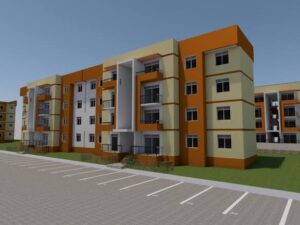
This shift leaves a glaring void in Uganda’s national housing strategy. The state cannot treat affordable housing as a self-sustaining commercial venture while expecting a public welfare outcome. Relying on presidential directives for direct procurement contracts might keep NHCC solvent as a general contractor, but it completely defeats its purpose as a national housing engine. To close the current housing deficit, the government must directly fund the NHCC for three critical reasons.

The fundamental problem facing NHCC is that it is mandated to serve a social good—providing affordable housing to low- and middle-income Ugandans—while being forced to operate under the same punishing commercial realities as private real estate developers. Unlike its regional counterparts, NHCC receives no state subsidies, operates without tax incentives, and must acquire land and construction materials at volatile market rates.

To finance its residential estates, the company has historically relied on commercial borrowing. Auditor General Edward Akol explicitly decried this structural neglect in his recent report, urging the state to immediately step up. The Auditor General highlighted that NHCC management had resolved to capitalise the company to the tune of Shs 231.5 billion through a rights issue, with the government expected to contribute Shs 118 billion.
Instead, the state starved the entity.Government allocated only Shs 30 billion, which is just 25 per cent of the expected contribution.

The consequences of this undercapitalisation are mathematically devastating. The Auditor General noted that due to the undercapitalisation of NHCCL, only 1,474 units [2.12 percent] out of the planned 69,288 units were constructed during the strategic plan period forcing NHCC to borrow Shs 200 billion on the open market forces the parastatal to price apartments in the hundreds of millions or billions of shillings just to break even. This commercial strain has directly compromised operational efficiency:

The Naalya condominium project, valued at Shs29.83 billion, stood at just 24% completion by its target date despite being heavily booked by citizens.

Direct government capitalization breaks this cycle. If the state funds the initial capital expenditure and land acquisition, NHCC can build projects efficiently, hit its completion timelines, and sell units at actual cost.

Uganda is facing an unprecedented urban youth bulge. For young professionals aged 25 to 40 seeking entry-level housing within 30 kilometers of Kampala, the state-backed entity offers no viable alternative to the exorbitant private market.

Most of the land is privately owned, which means that nearly every Ugandan becomes a builder… Families, lacking the means to negotiate with financiers, typically design homes based on what they can afford, leading to many rudimentary bungalows.

Without structured 10-to-15-year state-subsidized mortgage frameworks, NHCC is structurally restricted from addressing Uganda’s vast urban slum deficits. If young professionals earning decent formal wages are priced out of safe, structured urban centers, Kampala’s surrounding areas will devolve into dense, unserviced slums. Slum expansion devalues the capital city, strains municipal sanitation, and breeds social unrest.

Compounding these domestic strains, COSASE revealed that NHCC is currently trapped in a legal chokehold due to its historical shareholding. Libya acquired a 49% stake in NHCC in 2005 through a US$20.3 million (Shs35 billion) paper debt swap, while Uganda retained 51%. Following the fall of the Muammar Gaddafi regime in 2011, global UN sanctions barred Uganda from transacting with or locating its Libyan partners, completely freezing the company’s governance and blocking dividend collection.

Operating under an extraordinary High Court order as a “single shareholder” means NHCC cannot attract fresh international equity or conventional corporate financing without extreme legal risk. It is completely paralyzed on the open financial market. Direct government capital injections are not just a policy preference—they are the only lawful financial lifeline available to keep the company functioning.
The Auditor General’s report also exposed internal governance hurdles and compliance failures that stem directly from a cash-strapped company trying to cut corners to stay afloat. The parastatal was faulted for bypassing the Government Chief Valuer when renting out its commercial properties, as well as utilizing single-sourcing methods rather than competitive bidding for contracts worth Shs201 million. Furthermore, the report warned of financial leakages, pointing out that government laxity in collecting its 0.82% indirect share dividends from institutions like Housing Finance Bank deprives the state of critical revenue that could otherwise be re-allocated to public works.

While these administrative and procurement issues require stringent internal oversight, they must not serve as an excuse for the state to abandon its funding obligations. In fact, full government capitalization acts as a regulatory anchor: with direct funding comes strict parliamentary oversight, transparent milestones, and structural compliance.
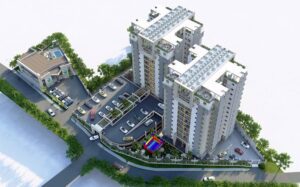
Every shilling the government directly injects into an NHCC low-cost housing development triggers a massive economic multiplier. Massive housing projects create thousands of immediate jobs for young artisans, masons, and engineers. Furthermore, it drives sustained local demand for Ugandan-made cement, steel, and structural timber, directly supporting the Build Uganda, Buy Uganda (BUBU) initiative.

To address its urban deficit, Kenya shifted from a developer-led model to an aggressive, state-driven ecosystem under the Affordable Housing Programme (AHP). This model provides an actionable blueprint for Uganda by leveraging structured state intervention across three main pillars:

If the company is to ever return to its original mandate of transforming slums and building homes for the average citizen, Uganda must implement targeted policy interventions:

Establishment of a National Housing Fund: Uganda needs a dedicated statutory fund to shield housing projects from the volatile commercial banking sector. This would enable NHCC to access capital at 0–3% interest, passing those savings directly to young prospective homeowners.

Legislating Rent-to-Own Legal Frameworks: Parliament needs to pass specific real estate guidelines protecting tenant-purchase agreements. This would allow young professionals to occupy a starter unit immediately and have their monthly rent legally recognized as equity contributions toward full ownership over a 15-year period.

Ultimately, NHCC cannot solve a public welfare crisis using purely commercial instruments. If the state wishes to change the aesthetic and structural reality of housing in Uganda, it must stop treating NHCC as a standalone commercial business and start funding it as a vital piece of national public infrastructure.

The Writer is an Urban Dweller foketcho22@gmail.com

Affordable Housing Programme AffordableHousingUganda Auditor General report on NHCC undercapitalisation Build Uganda Buy Uganda real estate BusinessSurvival CommercialProperty Committee on Commissions ConstructionUganda CorporatePivot COSASE parliamentary review NHCC EconomicInfrastructure FundingGaps Government funded housing Uganda GovernmentBureaucracy High interest rates Uganda mortgages HighBorrowingCosts HousingCrisis HousingSector How to fix Uganda housing deficit Kampala slum expansion risks Kenneth Kaijuka housing quotes Kenya affordable housing model vs Uganda Libyan shareholding crisis NHCC National Housing and Construction Company Limited NHCC NHCC shifting to commercial contracts NHCC Uganda housing crisis NHCC60Years Office of the Auditor General of Uganda PublicInfrastructureFunding Rent to own schemes for young professionals Uganda Statutory Authorities and State Enter Uganda affordable housing deficit Uganda urban development policy UgandaEconomy UgandaGovernment UgandaParastatals UgandaRealEstate UrbanDevelopment UrbanPlanningKampala Why government should fund national housing
Share. Facebook Twitter Pinterest LinkedIn Tumblr WhatsApp Email
Previous ArticleTHE FACE THAT FORCED MAKERERE TO BLINK: HANIFAH NAKIRYOWA’S 15-YEAR BATTLE FOR JUSTICE
felix@elixnews.co.ug

Related Posts

PARALYZED: UN SANCTIONS TRAP NATIONAL HOUSING IN LEGAL LIMBO OVER FROZEN LIBYAN STAKE

October 9, 2026

 UGANDA EYES $5 BILLION TOURISM JACKPOT BY 2030

October 8, 2026

TAYEBWA CALLS FOR TAX COMPLIANCE, ETHICAL BUSINESS PRACTICES

October 7, 2026

UDB RISES: INSIDE THE BANK’S NEW MULTIBILLION KAMPALA TOWER

October 7, 2026
Leave A Reply Cancel Reply

Our Picks

“REMOVE UGANDA FROM EBOLA SUSPENSION” ,CDC BOSS TELLS US

July 22, 2026

MUSEVENI ENDORSED AS NRM FLAG BEARER AHEAD OF 2026 ELECTIONS

August 28, 2025

PRINCE HARRY WELCOMES UGANDA TO INVESTUS GAMES

July 8, 2026

AMREF HEALTH AFRICA WINS WASH PROGRAMMATIC IMPACT AWARD  

October 4, 2025
  • Facebook
  • Twitter
  • Pinterest
  • Instagram
  • YouTube
  • Vimeo
Don't Miss
Opinion

WHY GOVERNMENT MUST FUND NATIONAL HOUSING TO CLOSE THE HOUSING DEFICIT

By felix@elixnews.co.ugOctober 9, 20260

The National Housing and Construction Company Limited (NHCC) has stood as a central pillar of…

THE FACE THAT FORCED MAKERERE TO BLINK: HANIFAH NAKIRYOWA’S 15-YEAR BATTLE FOR JUSTICE

October 9, 2026

HANIFAH’S WAR: WILL A MAKERERE PROFESSOR FINALLY FALL?

October 9, 2026

GUMBOOT WAR: RIDA HIT WITH SHS16.7 BILLION FINE FOR STEALING MIGOO’S DESIGN

October 9, 2026
About Us
About Us

Elix News is your source for trusted news, anytime. Browse topics from Entertainment to Politics to Sports, we cover it all!

Our Picks

WHY GOVERNMENT MUST FUND NATIONAL HOUSING TO CLOSE THE HOUSING DEFICIT

October 9, 2026

THE FACE THAT FORCED MAKERERE TO BLINK: HANIFAH NAKIRYOWA’S 15-YEAR BATTLE FOR JUSTICE

October 9, 2026

HANIFAH’S WAR: WILL A MAKERERE PROFESSOR FINALLY FALL?

October 9, 2026
Facebook X (Twitter) Instagram Pinterest
  • Home
  • Breaking news
  • Featured
  • Business
  • Entertainment
© 2026 Elix News. Designed by Goph Technologies.

Type above and press Enter to search. Press Esc to cancel.

Ad Blocker Enabled!
Ad Blocker Enabled!
Our website is made possible by displaying online advertisements to our visitors. Please support us by disabling your Ad Blocker.
I have disabled my ad blocker

Sign In or Register

Welcome Back!

Login to your account below.

Google Icon
GitHub Icon
LinkedIn Icon
X Icon
Lost password?