


The National Housing and Construction Company Limited (NHCC) is currently operating under an extraordinary High Court order to bypass its missing co-owner, Libya, as UN sanctions continue to freeze the company’s governance and finances.
The crisis was laid bare before Parliament’s Commissions, Statutory Authorities and State Enterprises (COSASE) committee on October 8, 2026. NHCC Chief Executive Officer Eng. Kenneth Kaijuka revealed that the company has been forced to run as a “single-shareholder” entity because global sanctions bar Uganda from transacting with the Libyan government.
Libya acquired a 49% stake in NHCC in 2005 through a US$20.3 million (Shs35 billion) paper debt swap with the central government, while Uganda retained 51%. However, following the fall of the Muammar Gaddafi regime in 2011, NHCC could no longer locate or legally transact with its Libyan partners.
To prevent total collapse, NHCC obtained a High Court order on June 30, 2022. This order allows the company to hold AGMs without the Libyan shareholder,empower the Board to run operations solo and preserve Libya’s interests until international sanctions are lifted.
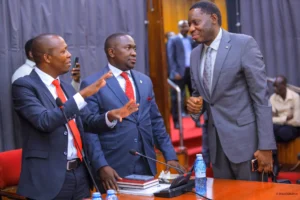
The hearing took a tense turn when COSASE Chairperson Muwada Nkunyingi (Kyadondo East) questioned where Libya’s millions in dividends are going.
“We don’t want a situation where after years they are going to sue… for wrongfully holding on to dividends. How would you account for these funds when you don’t have a clear chronology?” Muwada Nkunyingi, COSASE Chair
Parliament discovered that NHCC’s current strategy directly contradicts official government legal advice. On September 30, 2021, the Attorney General advised Uganda to compulsorily acquire Libya’s 49% stake at a fair market value and hold the compensation funds until they could be legally paid out.
Instead, NHCC has continued to spend Libya’s share of the profits on its own operations. Despite the governance gridlock, Kaijuka defended the management, noting that they have successfully moved NHCC out of loss-making territory without receiving any state capitalisation or government budgets.
