


Uganda must prioritize building climate-resilient, energy-efficient, and durable housing to bridge its massive deficit of 2.48 million units, according to Lands, Housing and Urban Development Minister Judith Nabakooba.
Speaking at the National Housing Dialogue on October 5, 2026—coinciding with World Habitat Day—Nabakooba emphasized that the country cannot solve its crisis by merely building more structures without accounting for environmental threats like floods and landslides.
The minister challenged government, private developers, financial institutions and development partners to rethink not only how many houses are built, but what kind of houses and where they are located.
“The question before us is therefore not simply how do we build more housing. It is, how do we build the right housing?” she said.

Nabakooba said climate change must be factored into housing design and physical planning, as poorly planned settlements become increasingly exposed to floods and landslides. She linked the housing challenge to weaknesses in physical planning and land-use management, saying unplanned development is fueling urban sprawl, informal settlements and rising infrastructure costs.
She said Uganda must embrace better planned and more compact urban development, including densification, to make efficient use of expensive land and reduce the cost of roads, water, sanitation and other services.
Currently, about 60% of Ugandans reside in informal or inadequate settlements, while annual production lags at just 50,000 units.
Nabakooba noted that at this current pace, closing the gap will take too long. She urged the government, private developers, and financial institutions to shift focus from sheer quantity to quality and location, advocating for denser, compact urban planning to lower infrastructure expenses for roads, water, and sanitation.
According to the minister key barriers to affordable housing high interest rates, brief repayment windows, and steep collateral requirements lock youth and low-income earners out of standard mortgages,escalating Land Prices surging property costs are no longer limited to cities but are increasingly impacting rural areas and policy gaps not yet fully visible or effective on the ground.
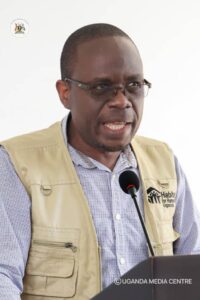
Habitat for Humanity Uganda Board Chairman Robert Waggwa Nsibirwa called for quarterly, issue-based meetings and an online research repository to prevent the dialogue from becoming an unproductive annual talk-shop.
“Today I want us to move to the how. Practical how,” he said, citing the example of a young Ugandan who saves Shs12 million to buy a 50-by-100-foot plot but cannot raise money to build a house.
Nsibirwa warned against turning the National Housing Dialogue into an annual talk-shop without measurable action. He proposed quarterly, issue-based meetings focusing on challenges such as housing finance for youth aged 18 to 35 and affordable construction technologies, plus an online platform to share policies, research and innovations.
Habitat for Humanity National Director Paul Okiring highlighted that 96% of Ugandans cannot afford a standard formally constructed home. He recommended expanding housing microfinance, cooperatives, and incremental loans that allow families to build in phases.
He called for greater use of housing microfinance, cooperatives, savings groups and incremental housing loans that allow families to build gradually.

He also identified land tenure as a major obstacle, calling for faster registration and titling, digitisation of land administration, stronger protection of women’s land rights and regularisation of tenure in informal settlements. He proposed strategic land banks and greater investment in serviced land around rapidly growing urban centres.
Leaders urged for faster land titling, digitized records, protected property rights for women, and the creation of strategic land banks around expanding cities.
Habitat for Humanity Uganda, which has built over 4,000 rural homes since 1982 using low-cost tech like interlocking soil-stabilized blocks, revealed its 2026–2028 strategic plan. This roadmap focuses on constructing better homes, making financing more accessible, and mobilizing key stakeholders to take immediate action.
Program Director Evelyn Frances Aguti said the people behind the housing statistics should not be forgotten.
“Once you are homeless, then you are powerless,” she said.
She said the organisation’s 2026–2028 strategy is built around three pillars: building more and better homes, transforming housing systems to make finance more accessible, and mobilising communities and stakeholders to take action.
