


For years, stepping outside Uganda’s major urban centers meant stepping into a digital dark age. Across the remote plains of Karamoja, the deep waters of Lake Victoria’s islands, and the dense canopies of National Parks like Murchison Falls, the phrase “no signal” was a permanent reality. Traditional telecom giants found these areas too commercially unattractive or geographically hostile to lay fiber optic cables or build terrestrial cell towers.
That era of digital exclusion is over. Following a transformative regulatory agreement with the Uganda Communication Commission, SpaceX’s Starlink has officially launched commercial operations in Uganda. By bypassing terrestrial infrastructure bottlenecks entirely, Starlink is systematically wiping out the country’s most stubborn connectivity blind spots.
Uganda’s path to satellite internet was far from seamless. In early 2026, the market was flooded with gray-market terminals smuggled from neighboring countries. Because these devices operated without a license, the UCC intervened, forcing Starlink to implement a comprehensive geofence that completely deactivated all terminals within Ugandan borders.

The breakthrough came later that year at State House Entebbe. Witnessed by President Yoweri Museveni, Starlink signed a five-year operational license with the UCC. This historic framework ensured full compliance with national security, revenue assurance, and consumer protection laws. It required Starlink to establish a local office, employ local staff, and route traffic through a dedicated national gateway—clearing the runway for an official, nationwide rollout.
Starlink is obliterating Uganda’s digital divides through two distinct consumer and enterprise models:
In a groundbreaking partnership, Airtel Uganda integrated Starlink’s Direct-to-Cell satellite infrastructure. This technology effectively transforms low-Earth orbit satellites into celestial cell towers.
Everyday consumers do not need a satellite dish, an expensive satellite phone, or even a new SIM card.
Standard compatible Android smartphones automatically migrate to Starlink’s satellite network the moment they lose traditional ground signals. Users can access the service via the MyAirtel App, enabling uninterrupted text messaging and data applications deep in the jungle or out on remote lakes.
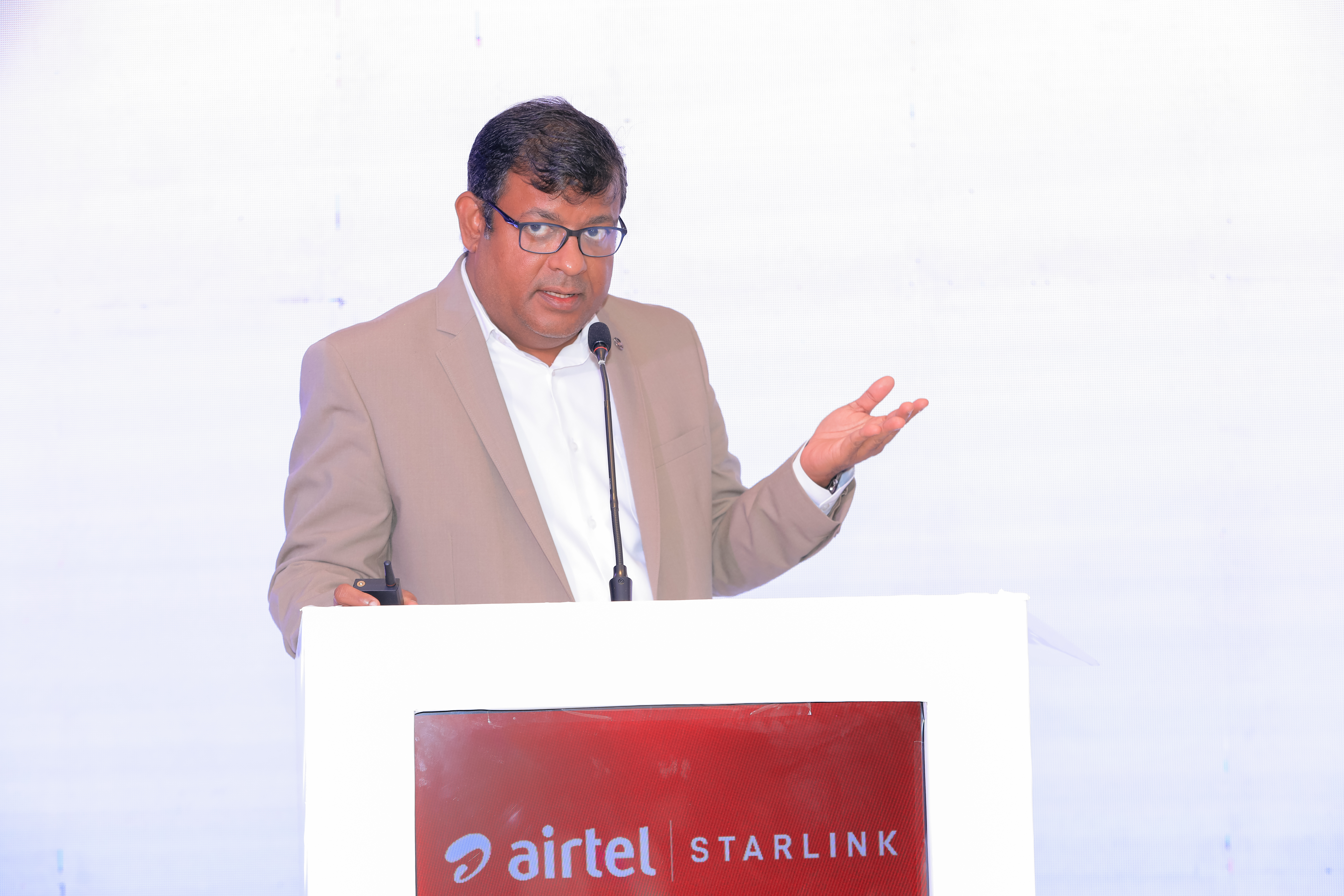
For homes, schools, healthcare centers, and industrial operations, Starlink offers direct high-speed, low-latency residential and enterprise kits. Operating from a constellation roughly 550 kilometers above the Earth, it delivers internet speeds capable of seamless 4K streaming, remote work, and instant cloud sync.
Partners like Paratus Uganda and Mtn Uganda are using these fixed terminals to anchor critical connectivity for mining, oil and gas logistics, and agricultural hubs operating far outside the reach of urban fiber.
The economic implications of this launch are vast. By introducing robust competition into the broadband space, Starlink is driving down internet costs and forcing a paradigm shift across the local telecom sector. Areas once completely cut off from the modern economy can now participate in digital banking, e-learning, real-time logistics tracking, and global tourism marketing.
With satellite-powered smartphones in the hands of rural citizens and enterprise dishes powering remote industrial outposts, Uganda’s map has been redrawn. “No Signal” is no longer an unavoidable geographic limitation—it is a choice that technology has officially made obsolete.
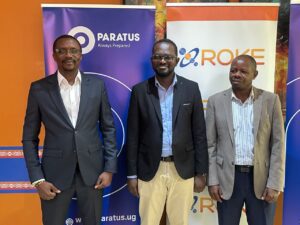
Meanwhile Roke Telkom, in partnership with Paratus Uganda Ltd, the authorized Starlink reseller in Uganda, has officially launched Starlink connectivity services for the enterprise market, opening new possibilities for businesses and organisations seeking reliable, high-speed connectivity across the country.
The partnership brings together the international telecommunications expertise of Paratus Group Holdings, a pan-African service provider operating across 16 African countries, with the local market knowledge and infrastructure of Roke Telkom, which is celebrating 20 years of connecting Ugandans this year.
The service, powered by Starlink’s Low Earth Orbit (LEO) satellite technology, is designed to provide fast, low-latency internet connectivity across a wide range of locations, including areas where traditional fibre and wireless networks may be unavailable or insufficient. It can also complement existing connectivity infrastructure for businesses operating across multiple locations.

Edwin Kyambadde, Country Manager, Paratus Uganda, said the launch marks an important development in Uganda’s connectivity landscape, particularly for businesses whose operations increasingly depend on reliable internet access.
“This is an important milestone for connectivity in Uganda because we are now able to address some of the gaps that businesses have continued to face, while also giving them another option to strengthen their existing connectivity,” said Kyambadde.
“Our focus is not simply on selling connectivity. We want to understand what the customer is trying to achieve, where they operate and what their network requires, and then design a solution that works for them. Starlink gives us another powerful tool to do that.”
The enterprise offering will target organisations operating across multiple locations, as well as businesses and institutions whose operations require reliable connectivity in locations beyond the reach or limitations of conventional networks.
Key sectors expected to benefit include construction and infrastructure, agriculture and agribusiness, tourism and hospitality, mining, education, healthcare, NGOs and government agencies, among others.
For tourism operators, for example, Starlink can help connect lodges and hospitality facilities located in remote destinations, while in education and healthcare, improved connectivity can support remote learning, access to digital resources, telemedicine and the secure sharing of information between facilities.
The technology also creates opportunities for connectivity on the move, including applications where internet access is required on buses, taxis and other mobile platforms.
Peter Muhumuza, Chief Executive Officer, Roke Telkom, said the partnership reflects the evolution of Uganda’s connectivity needs and the importance of combining new technologies with local expertise.
“Roke has spent the last 20 years building connectivity solutions for Ugandans, and as we mark that milestone, we are excited to be entering this next chapter with technologies that allow us to serve our customers in new ways,” said Muhumuza.
“Connectivity on its own is no longer enough for businesses. What businesses need is connectivity that works within their wider operations, whether that means integrating their networks, strengthening cybersecurity or connecting them to cloud services. That is where this partnership becomes particularly important.”
Through the partnership, Roke and Paratus will be able to combine Starlink connectivity with other enterprise solutions, including network integration, cybersecurity and cloud services, allowing businesses to develop customised solutions around their specific operational requirements.
The partnership also combines Paratus’ presence and expertise across 16 African countries with Roke Telkom’s two decades of local experience and established infrastructure and customer support capabilities.
Customers will benefit from local billing and local technical support, while Paratus and Roke will work with businesses to determine the most appropriate connectivity configuration based on their location, network requirements and budget.
Kyambadde said the combination of global technology and local expertise is central to the partnership.
