

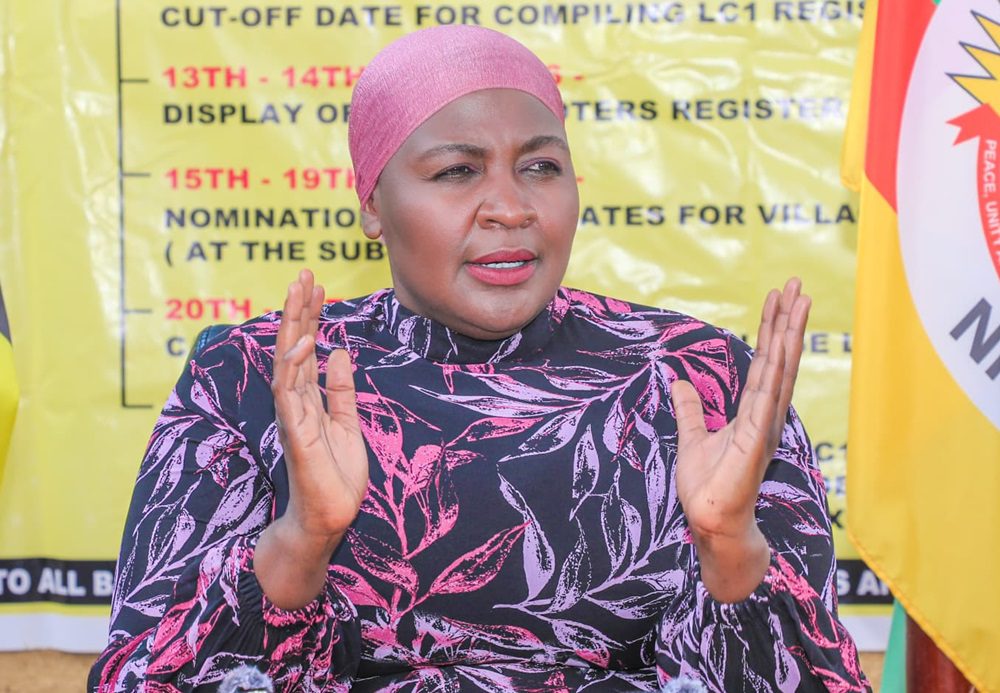
Senior Presidential Advisor on Political Affairs Hajjat Namyalo Uzeiye, has called upon the general public to participate in the Local Council I (LC1) elections scheduled for tomorrow, July 28, 2026.
Addressing the media at Kyambogo, she urged citizens to exercise their constitutional right by voting peacefully and electing leaders under the National Resistance Movement (NRM) who are committed to promoting development, accountability, unity, and effective service delivery at the grassroots.
“Turn up in large numbers and participate in the LC1 elections. Vote peacefully, uphold the democratic process, and elect NRM leaders committed to development, accountability, unity, and effective service delivery,” Namyalo stated.

She further appealed to voters to remain disciplined throughout the electoral process and vote wisely for leaders who will genuinely represent the interests of their communities.
Namyalo emphasized that the LC1 Chairperson is the “president of the village,” stressing that the office plays a critical role in coordinating government programmes and addressing community challenges.
“The LC1 Chairperson is the president of the village, so please vote wisely and vote for leaders who will work closely with the government to deliver services to the people,” she said.
“Don’t vote for land grabbers or people who will collude with thieves. Vote for leaders who will deliver for the people; leaders who will lobby for government programmes such as the Parish Development Model to reach villages, leaders who will raise the alarm whenever there are no medicines in our hospitals and ensure that the concerns of their communities are brought to the attention of the relevant authorities,” she added.
She however told the media that Electoral Commission’s voting guidelines during the Women Council elections did not provide adequate time for all eligible voters to participate..
Namyalo urged all Ugandans intending to vote in the LC1 elections to arrive at their polling stations as early as 7:00 a.m. to avoid being locked out of the process.
She further cautioned senior NRM leaders against interfering in the electoral process by imposing candidates on communities, saying leadership should be determined by the people’s free will.
“Nobody should intimidate residents because it is their constitutional right to exercise their right to vote. Go and exercise your right freely,” she said.
Namyalo revealed that her Office has deployed its district and regional coordinators across the country to mobilise residents to participate in the LC1 elections and monitor the performance of NRM candidates.
However, she emphasised that the coordinators have not been deployed to interfere with the electoral process or perform the duties of the Electoral Commission.

“As the Office of the National Chairman, we have deployed our district and regional coordinators to mobilise Ugandans to participate in the elections and monitor our NRM candidates. They are not there to interfere with the electoral process or do the work of the Electoral Commission. Their role is strictly mobilisation and monitoring,” she said.
Namyalo argued that peaceful, free and credible LC1 elections are essential for strengthening grassroots democracy and ensuring that villages are led by leaders who are accountable to the people and committed to delivering government programmes and improving service delivery at the community level.
She concluded by urging Ugandans to think carefully before casting their ballots, reminding them that the leaders elected tomorrow will shape their villages for the next five years.
“Let us vote for people you will not regret electing for the next five years,” she said.
Patrick Ocailap, the Deputy Secretary to the Treasury, said Ministry of Finance released shs56 billion to the Electoral Commission to fund the long-delayed local council elections, on Friday, June 12.
Richard Kamugisha, Secretary of the Electoral Commission confirmed receipt of the funds and scheduled the election dates.

The grass-roots elections for LC1, LC2 and village women councils have faced multiple postponements since the terms of the current leaders expired in 2023. Parliament has extended their tenures six times, for six months each, sparking governance concerns across the country.
Uganda has more than 70,000 villages where LC1 structures serve as the primary link between citizens and the central government. These local leaders resolve land and family disputes, certify residents for government programs, support local security and mobilize communities for public health and development campaigns.
