

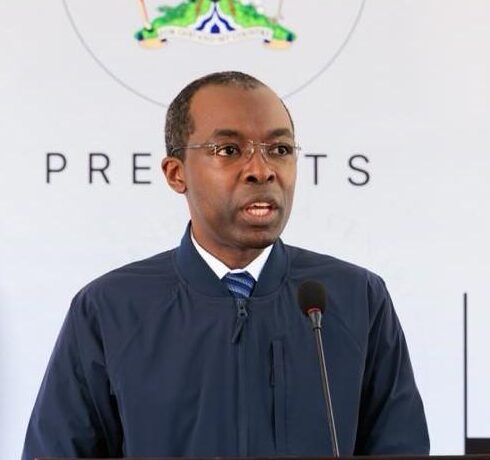
Government is set to launch National Framework on Health and Life Skills aimed at equipping children and young people with practical skills to navigate everyday challenges, protect their health and prepare for responsible adulthood.
The framework, developed through a multi-sectoral process involving the Ministry of Education and Sports, Ministry of Health, Ministry of Gender, Labour and Social Development, Office of the First Lady and Inter-Religious Council of Uganda, will guide learning for both school-going and out-of-school children and young people.
Chireophus Mugyenyi, the Chief Education Officer in the Ministry of Education and Sports, has described the framework as a major investment in the country’s future, arguing that Uganda’s youthful population could drive national development if equipped with the right skills.
“We are making a strategic, high-stakes investment in the future of Uganda,” Mugyenyi said.
He said Uganda’s youthful population offered an opportunity to advance the socio-economic transformation envisaged under Vision 2040, but warned that young people needed more than academic knowledge to navigate the challenges of growing up.
“The youth bulge is the engine that can drive the vision of 2040. However, it requires the necessary life skills to navigate life, become resilient and transition into adulthood,” he said.
According to the 2024 National Population and Housing Census, Uganda had approximately 45.9 million people, with children and young people accounting for a substantial share of the population.
Mugyenyi said the framework would prioritise preventing exposure to risks while also providing guidance to young people already facing them. It places emphasis on family involvement and a home-grown approach to health and life skills education.
Rev Dan Wejuli, representing the Inter-Religious Council of Uganda, said the development of the framework had taken considerable time and involved efforts to address concerns about the materials used to teach children life skills.
“It has been a long journey to come up with this home-based framework,” Wejuli said, describing it as compatible with religious values and the school curriculum.
He said the framework would support both formal and non-formal education and help address the use of materials that were not adequately coordinated or censored.
“It comes to solve a problem of uncensored and uncoordinated materials talking about life skills,” he said.
Wejuli said religious institutions would be important partners in implementing the framework, given their role in education. He also explained that an earlier initiative known as the National Sexuality Education Framework had faced concerns over its name.
“The first framework had issues. It was named the National Sexuality Education Framework. It was misleading,” he said.
Richard Mugabi, Commissioner in the Ministry of Health who represented the ministry’s permanent secretary, said the government had a responsibility to safeguard children’s health throughout their development.
“We are responsible for the child from birth and must ensure they are healthy throughout,” Mugabi said.
The framework’s implementation will require coordination among government ministries, religious institutions, schools, families and other stakeholders to ensure children and young people receive age-appropriate information and practical guidance.
The Ministry of Education and Sports has called on the media and other partners to help communicate the framework to young people, parents, schools, communities, cultural institutions and faith-based organisations as the country prepares to move into the implementation phase.
