

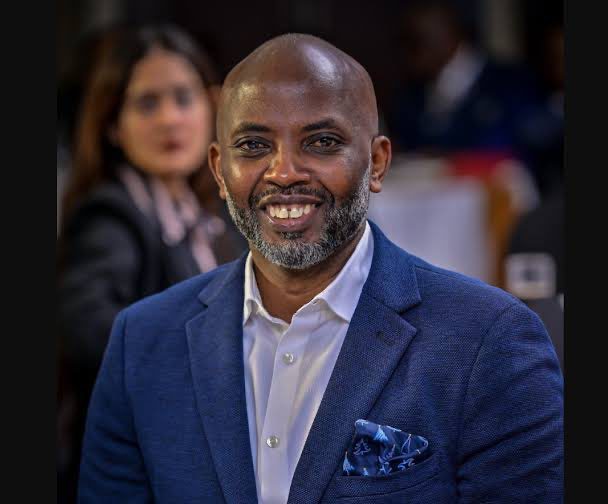
The Parliamentary Appointments Committee has rejected the appointment of Lawrence Muganga as State minister of internal affairs citing Uganda’s citizenship laws.
The committee cited the Citizenship and Immigration Act which bars holders of dual citizenship from holding offices listed in the Fifth Schedule which includes the presidency, prime minister, cabinet and ministers of state.
Lawrence Muganga is a Ugandan-Canadian scholar, digital economy educationist, academic administrator who serves as the Vice Chancellor of Victoria University Uganda. He is the author of “You Can’t Make Fish Climb Trees”, “From Chalk to Chatbots” as well as “Aunthetic University”.
Muganga was among the designated ministers vetted before Parliament May 2 following President Yoweri Museveni’s appointments of the cabinet for the 2026-2031 term.

The committee cited the Citizenship and Immigration Act which bars holders of dual citizenship from holding offices listed in the Fifth Schedule which includes the presidency, prime minister, cabinet and ministers of state.
Muganga holds Canadian citizenship and is rumoured to be a Rwandan and also holder of the Uganda passport which he acquired in 2021.
“Ndi Munyarwanda and Banyarwanda are among the tribes in Uganda. That is a simple fact. I’m not Rwandan. Before I came here, I had two citizenships — that’s the Ugandan and the Canadian citizenship,” he said.
Muganga has however reaffirmed his loyalty to Uganda amid growing scrutiny over allegations that he holds dual Ugandan-Canadian citizenship, a matter that has triggered legal and political debate following his nomination by President Yoweri Museveni.
The minister-designate acknowledged holding both Ugandan and Canadian citizenship, saying it reflected his time working and living abroad.
“Before I came here, I definitely had two citizenships—that’s the Ugandan citizenship and the Canadian citizenship,” he said.
He argued that many Ugandans who work abroad acquire foreign citizenship while maintaining ties to their home country.
Muganga further said it is possible for him to renounce his Canadian citizenship if required.

“It is possible for me to denounce my citizenship. There is no better country than Uganda,” he said.
“I was Ugandan before I became a Canadian, and I am proud to be Ugandan.”
Under Ugandan law, dual citizenship is permitted, but restrictions exist for holders of dual nationality occupying certain state offices.
Article 15(7) of the 1995 Constitution empowers Parliament to define rights of dual citizens, while the Uganda Citizenship and Immigration Control Act (2009) restricts holders of dual citizenship from occupying offices listed under Section 19D and the Fifth Schedule.
These include positions such as Cabinet Minister and Minister of State, among others connected to national security, immigration and intelligence.
His Career
Muganga graduated with a Higher Education Teaching Certificate from Harvard University Cambridge, Massachusetts. He holds a Master in Education specialising in Adult Education plus a PhD in Educational Administration and Leadership from University of Alberta Canada. He holds a dual citizenship of Uganda and Canada.
He has received many awards including the prestigious Global Impact Award at the Excellence Awards in Toronto, Canada, recognizing his works in transforming education systems worldwide.
