

By Elix News Sports Reporter
Kampala, Uganda
Kampala, Uganda
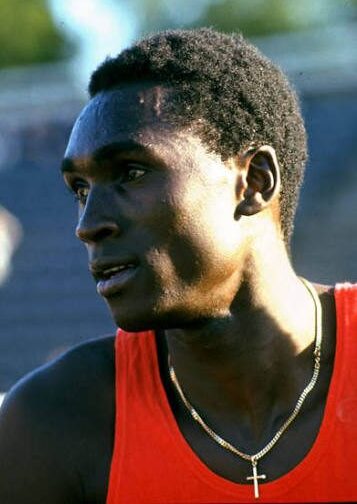
John Akii-Bua is widely revered as the father of Ugandan athletics, famously remembered as the first athlete to unlock Olympic gold for the nation. His monumental victory at the 1972 Munich Olympic Games permanently altered the country’s sporting landscape. Decades later, his legacy is taking physical shape as the state-of-the-art Akii-Bua Stadium in Lira City hits 78 per cent completion, signaling a massive new era for Ugandan sports infrastructure.
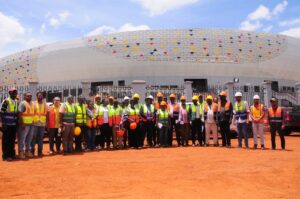
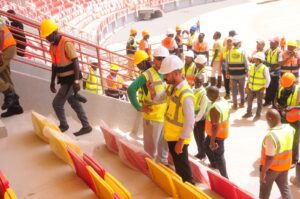
The construction progress was recently highlighted during an inspection visit by Parliament’s Committee on Education and Sports. Built by Egyptian firm SAMCO National Construction Company in partnership with Khater Sports, the massive US$129 million (approx. Shs 480 billion) multi-purpose sports complex is on track for its official handover on November 15, 2026.
As Uganda prepares to debut this world-class sports hub, Elix News takes a look back at the cinematic, tragic, and deeply inspiring journey of the ultimate Ugandan icon who inspired it all.
The Miracle of Lane 1: Breaking the Invisible Barrier
On September 2, 1972, a 22-year-old Akii-Bua lined up for the 400-metre hurdles final at the Munich Olympics. He was a complete underdog against the defending champion and world record holder, Great Britain’s David Hemery.
To make his task seemingly impossible, Akii-Bua was drawn into Lane 1. The inner lane is notoriously disliked by hurdlers due to its tight, exhausting, and visually restrictive curves.
What happened next shocked the entire world:
- The Record Shattered: Despite the geographical disadvantage, Akii-Bua executed a flawless stride strategy to win the gold medal, clocking an unbelievable time of 47.82 seconds.
- Human History Rewritten: He became the first human in history to break the elusive 48-second barrier in the 400m hurdles.
- An Unbroken Legacy: His national Ugandan record in the event has incredibly stood unbroken for over 50 years.
- A True Pioneer: He was the first East African athlete to break a world record on an international athletics stage, and the first African to win an Olympic track event under 800 meters.
During a highly turbulent political era under dictator Idi Amin, this historic triumph served as a powerful, unifying moment for all Ugandans, transcending deep-seated political, ethnic, and religious divides.

Political Heartbreak and Fleeing for His Life
Akii-Bua was fully prepared to defend his title at the 1976 Montreal Games. However, international politics cruelly intervened. President Idi Amin ordered a last-minute boycott alongside other African nations to protest apartheid South Africa. This forced a heartbroken Akii-Bua to return home right from the Olympic Village.
Worse was yet to come. As a police officer from northern Uganda, he faced immense danger as the Amin regime began to collapse. During the 1979 liberation war, he was forced to flee to Kenya to save his family. In the absolute chaos of his escape, he accidentally left his original Olympic gold medal behind. (Germany later issued him a replacement).
He finally returned to Uganda from exile in 1983, dedicating his remaining years to molding the next generation as a national athletics coach. Sadly, he passed away in 1997 at the young age of 47 and was accorded a well-deserved state funeral.

Preserving a Legacy: From Kamwokya to Lira City
Today, Akii-Bua’s family is actively working to turn his former residence in Kamwokya into a sports museum to honor forgotten Ugandan sporting heroes. Simultaneously, the Uganda Athletics Federation hosts the annual Akii-Bua Memorial Invitational Meet to celebrate the runner who paved the way for generations of Ugandan champions like Stephen Kiprotich and Joshua Cheptegei.
However, the crowning jewel of his memory will undoubtedly be the new Akii-Bua Stadium in Lira City.

The sprawling complex features:
- The Core: A 20,000-seater main stadium integrated with a football pitch and an international-standard athletics track.
- Training Facilities: An outdoor training pitch with its own running track and two five-a-side artificial turf pitches complete with modern changing rooms.
- Athlete Accommodation: A fully equipped clubhouse alongside a 60-bed hostel tailored for athletes.
- Extra Amenities: A high-tech indoor arena, a swimming pool, and extensive parking space.
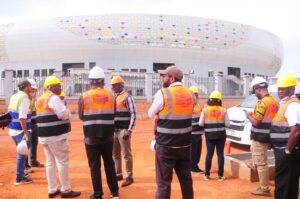
Once completed in November, the complex will drive economic opportunities for Lira City by attracting major continental sporting events, international training camps, and tourists—all while breathing new life into local businesses.
Over five decades ago, John Akii-Bua ran a flawless race from the tightest corner of the track. Today, his name anchors an ultra-modern infrastructure project that ensures Ugandan athletes will never have to run from a disadvantage again.
