

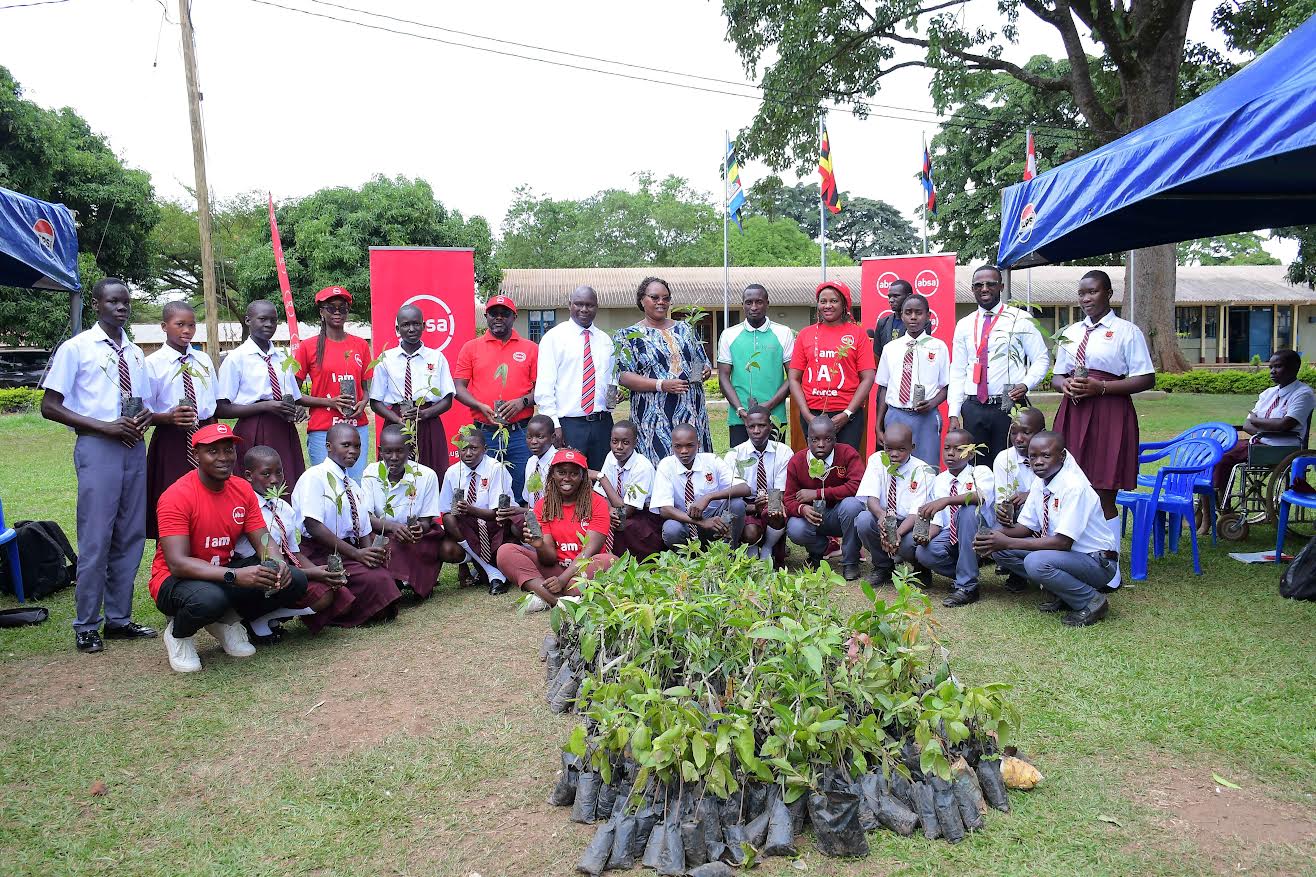
As part of Corporate Social Responsibility drive on environmental Sustainability ,Absa Bank Uganda has announced a major environmental commitment to plant and grow 2 million trees over the next three years, reinforcing its long-term focus on climate action, ecosystem restoration, and sustainable community development.
The announcement coincided with the launch of the 2026 School Greening Drive in Northern Uganda, delivered in partnership with My Tree Initiative. As a key component of the broader target, the Northern Uganda programme will see 700,000 trees planted across 300 schools by December 2026.

Under the theme “Growing 700,000 Trees in 300 Schools Across Northern Uganda,” the programme will engage approximately 150,000 students across 12 districts, including Gulu, Lira, Arua, Kitgum, and Adjumani. Tree planting activities will run from April to November 2026, culminating in a final event in Adjumani on November 11.
Francis Topacho, Chief Information Officer at Absa Bank Uganda, emphasized the bank’s expanding environmental footprint:
“Expanding into Northern Uganda, a region facing increasing climate pressures, is a natural next step. This initiative reflects our commitment to climate action and to supporting the communities where we operate.”
Gulu City Deputy Mayor Christine Olok welcomed the initiative, noting its contribution to national development priorities on climate resilience and environmental restoration.
“By focusing on schools, we are restoring ecosystems while shaping a generation that understands the importance of environmental stewardship.”

The programme will incorporate geo-tagging technology to track and monitor every tree planted through 2027, ensuring accountability and long-term impact.
Additionally, more than 50 ‘Fruit Forests’ will be established in participating schools, featuring trees such as mango, avocado, guava, and jackfruit. These will provide both environmental and nutritional benefits to students.
Since 2023, Absa Bank Uganda and My Tree Initiative have already planted nearly 900,000 trees across 860 schools, engaging over 440,000 students nationwide.
To ensure sustainability, Green Club champions will be trained in each school to oversee tree care and promote environmental education, embedding long-term stewardship within communities.
According to Nema Uganda’s forest cover has dropped significantly from roughly 24% in 1990 to an estimated 12% to 13% today. While government-managed areas have seen efforts toward stabilization, severe deforestation driven by agriculture and wood-fuel extraction continues to threaten the country’s natural forests and broader ecosystem

Current Statistics & Trends
Forests currently make up around 12.7% to 13.3% of Uganda’s total land area, down from approximately 4.9 million hectares in 1990.
The country loses roughly 38,000 to 120,000 hectares of forest annually, driven largely by population growth and land clearing for subsistence agriculture.
The Ministry of Water and Environment has set an ambitious goal to restore national forest cover to 15%.
While natural, old-growth forests have decreased by roughly half, commercially planted forests (such as pine and eucalyptus) have tripled, growing to over 500,000 hectares
