


Nation or decades, land administration in Uganda was characterized by long queues, missing files, delayed transactions and a bureaucracy that frustrated citizens, investors and businesses alike. Landowners often struggled with a paper-based system vulnerable to fraud, inefficiency and poor record management. Today,however, Uganda is undergoing one of the most significant reforms in its land governance history: the transition from paper records to a fully integrated Digital Land Economy.
This transformation goes far beyond computers replacing files.It represents a broader shift toward modern governance, improved transparency, faster service delivery and investment driven economic growth. Through digitization, Uganda is redefining how land is managed, valued, traded and protected.

Land remains Uganda’s most valuable economic resource.Agriculture alone employs nearly 70 percent of the population, making land central to livelihoods, food security and economic development. As Uganda’s population continues to grow, pressure on land resources is increasing, making efficient land administration more important than ever.
At the center of this transition is the National Land Information System (LIS), which digitizes land records, cadastral maps, title registration, valuation systems and transaction processes. The system now interfaces with key national institutions including the Uganda Revenue Authority (URA), National Identification Registration Authority (NIRA), Uganda Registration Services Bureau (URSB), banks,courts and the National Farmer Registry under AgriConnect. This interoperability has created a more efficient and secure ecosystem for land verification and management.
The impact of digitization is already visible across the Bilateral Side meeting between Republic of Uganda and Government of Georgia during the World Bank land and property research conference in Washington DC sharing experiences on land registry blockchain technology and possibility of land tokenization.

Before automation,land registration processes could take nearly six months or longer due to manual verification, file retrieval delays and bureaucratic inefficiencies. Today, average transaction timelines have reduced significantly, in some cases to nearly 10 days. For ordinary Ugandans, this means faster access to land titles, reduced transport costs and improved confidence in public services. For businesses and investors, it creates a more predictable and efficient investment environment.
Uganda’s Digital Land Economy is also reshaping the country’s financial and investment landscape. Land remains the backbone of Uganda’s financial system, with more than 70 percent of loans secured using land assets. The country’s mortgage portfolio has grown substantially over the years, while land values continue to appreciate steadily.
With digital verification systems in place, banks and financial institutions can now process collateral transactions faster and with greater confidence.
Reduced fraud and improved transparency have strengthened trust within the financial sector, enabling more Ugandans to access credit for agriculture, housing, trade and business development.
The real estate sector has equally benefited from the reforms. Improved efficiency in land administration has boosted investor confidence,accelerated property development and expanded urban growth. Industrial development has also increased, with more industrial parks and free zones emerging following the digitization of land systems.
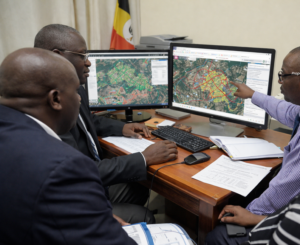
For investors, land security remains one of the most important considerations before committing capital. Historically, unclear ownership, fraudulent titles and land disputes discouraged investment.
By digitizing records and streamlining verification systems,Uganda is gradually reducing uncertainty within the land market.The Ministry of Lands, Housing and Urban Development has also registered notable gains in revenue collection through the Land Information System.
Automation and the expansion of Ministry Zonal Offices have improved efficiency while decentralization has brought land services closer to the people. Citizens no longer need to travel long distances to Kampala to process transactions. Access to land services in regional centers has improved significantly, reducing congestion and enhancing convenience.Importantly, the digital transition is promoting social inclusion.
Women’s ownership of registered land titles has increased following improved access to services and streamlined registration processes. This represents a major milestone in strengthening gender inclusion and economic participation. Challenges
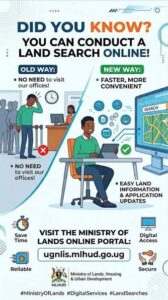
Despite the progress made,Uganda’s Digital Land Economy still faces several challenges.One of the biggest obstacles is incomplete digitization. In many areas, manual and digital systems continue to operate simultaneously, creating inconsistencies and slowing full integration.
Land conflicts also 226 Protecting the Gains, Making a Qualitative Leap into High Middle-Income Status.
Ugandan Team led by the Permanent Secretary representing Government of Uganda during the World Bank Land and property research conference in Washington DC remain a major national concern.
Boundary disputes, overlapping ownership claims and customary land disagreements continue to affect communities across the country. While digitization improves transparency, it cannot entirely eliminate historical disputes without broader legal and institutional reforms.
Low ICT adoption and limited digital literacy among sections of the population also present challenges, particularly in rural areas where many citizens still require sensitization and technical support to fully utilize digital land services. In addition, some existing legal frameworks were developed before the digital era and therefore require reforms to accommodate electronic transactions, digital records management and emerging technologies.

Interventions
To address these challenges, experts recommend full nationwide digitization of land administration systems, legal reforms, expanded public sensitization programs and stronger technical capacity building initiatives. The adoption of advanced technologies such as blockchain has also been proposed to strengthen transparency, security and traceability within land transactions.
Nationwide land registration remains another critical priority. Millions of Ugandans still occupy land without formal documentation,limiting their ability to use land as collateral or secure long-term investments. Expanding registration coverage could unlock enormous economic potential across both rural and urban communities.
Uganda’s land sector transformation is anchored within broader constitutional and policy frameworks including the 1995 Constitution, the Land Act of 1998, the Registration of Titles Act,the Physical Planning Act and the National Land Policy. Together,these frameworks continue to guide the modernization process and strengthen land governance nationally.
As Uganda continues modernizing its land systems, the Digital Land Economy is steadily emerging as one of the country’s strongest foundations for sustainable economic growth, wealth creation and national development. From faster services and improved transparency to stronger investment confidence and expanded financial inclusion,the shift from paper to digital is transforming not only land administration, but also the future of Uganda’s economy.
