

US President Donald Trump has officially notified Congress of his intention to terminate South Africa and Rwanda from the African Growth and Opportunity Act (AGOA) preferential trade programme, effective 1 January 2027.
The sweeping executive move cuts off duty-free access to lucrative American consumer markets for thousands of African products, marking a dramatic escalation in Washington’s fractured relations with both nations.
According to US Trade Representative Jamieson Greer, an annual eligibility review concluded that both countries are actively engaged in practices inconsistent with the trade pact’s strict requirements.
The Trump administration explicitly cited systemic barriers to US trade and investment, alongside mounting threats to US national security and regional foreign policy interests.
Washington leveled severe charges against Kigali, targeting human rights violations, suppressed political pluralism, erosion of the rule of law, and a lack of workers’ rights. This penalty lands just days after the US Treasury slapped sanctions on Rwanda’s Defence Ministry for deploying troops, weapons, and logistics to fight alongside M23 rebels in the eastern Democratic Republic of Congo.
Beyond pervasive corruption, Washington remains deeply hostile toward South Africa’s foreign policy alignment—especially Pretoria’s international genocide case against US-ally Israel.
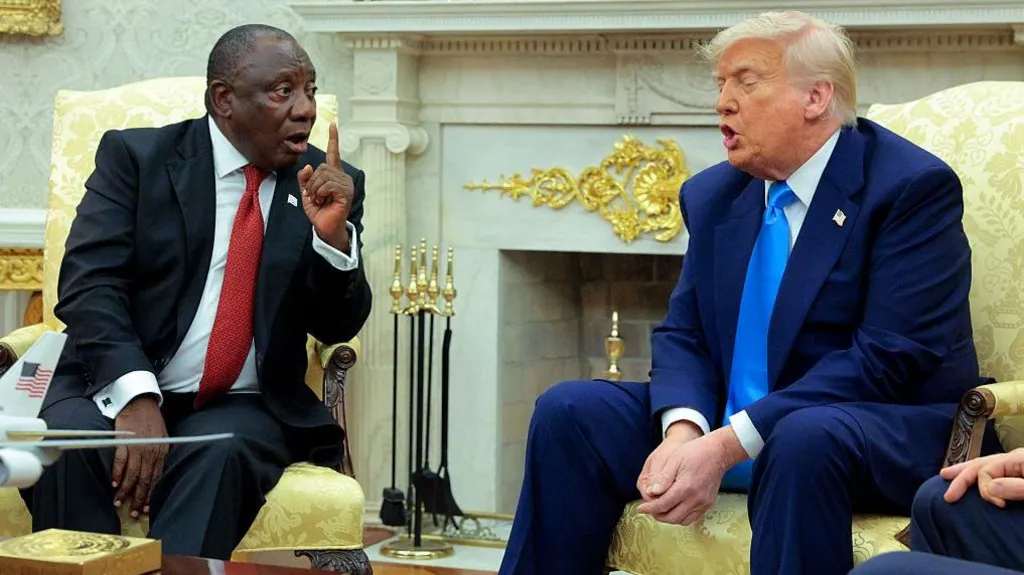
The expulsion follows a turbulent timeline of souring relations between President Trump and South African President Cyril Ramaphosa. In a high-stakes Oval Office meeting, Trump openly accused South Africa of permitting “white genocide” against white minority farmers, going as far as to play an ambush video montage to Ramaphosa.
Following that confrontation, the White House aggressively disrupted bilateral ties:
Trump authorized a specialized US refugee resettlement pathway prioritizing white Afrikaners trying to leave South Africa.
Washington froze financial aid, expelled South Africa’s ambassador, boycotted the G20 summit in Johannesburg, and blocked South African officials from attending vital regional summits.
South African Trade Minister Parks Tau called the decision “unfortunate,” protesting that Washington introduced brand-new grievances that had not been part of ongoing bilateral trade negotiations. He noted that while South Africa will support its vulnerable sectors, it is forced to accelerate the diversification of its export markets.
President Ramaphosa has echoed this defensive shift, stepping up multi-billion dollar trade talks with alternative global partners, primarily China. Conversely, US Ambassador Leo Brent Bozell III placed the blame squarely on Pretoria’s shoulders, posting on X that the outcome was entirely “predictable and preventable” after South Africa persistently rejected critical US concerns.
The Trump administration indicated that the door remains open for reversal if African partners take immediate, aggressive steps to alter domestic policies and realign with US baseline criteria before the new year deadline.
The Trump administration cited barriers to US trade and investment, as well as concerns over national security and foreign policy interests in the region.
In Rwanda’s case, Washington also raised concerns about human rights, political pluralism, the rule of law and workers’ rights.
The move comes barely a week after Rwanda’s defence ministry was hit with sanctions by US Treasury for its alleged role in the armed rebellion in eastern DR Congo.
The US Treasury said Rwanda’s defence ministry directed thousands of troops to fight alongside M23 rebels in eastern DR Congo, providing weapons, equipment, logistics and training.
For South Africa, the US additionally pointed to corruption.
“The Trump administration is working to ensure our African partners take the necessary steps to meet the eligibility criteria,” Greer said.
South Africa’s trade Minister Parks Tau described the decision as “unfortunate”, saying Washington was raising new issues that had not featured in trade negotiations between the two countries which began in 2025.
“We will continue to accelerate the diversification of South Africa’s export markets to protect jobs,” Tau said.
US Ambassador to South Africa Leo Brent Bozell III said it was regrettable that South African policies led to its termination from Agoa.
“This was a predictable and preventable outcome resulting from the rejection by South Africa’s government of real concerns raised by the US,” he wrote on X.
The announcement comes amid strained relations between Washington and both countries, with the proposed termination threatening their access to preferential trade arrangements with the US.
Last year, Trump accused South Africa of white genocide in a meeting with President Cyril Ramaphosa at the White House and launched a US refugee pathway for Afrikaners.
