

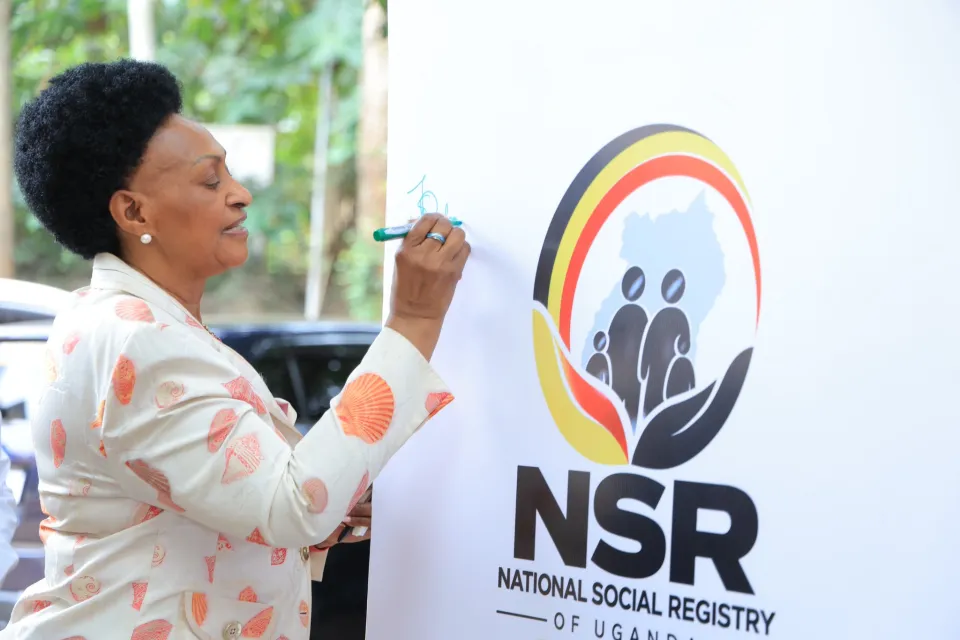
The Government of Uganda has officially commenced the development of a nationwide National Social Registry, backed by a US$12 million funding package from the World Bank, to end decades of fragmented data and ensure billions in wealth creation and social protection funds reach the right households.
Spearheaded by the Ministry of Gender, Labour and Social Development (MGLSD) in partnership with the Uganda Bureau of Statistics (UBOS), the dynamic registry is designed to overhaul how flagship anti-poverty initiatives—including the Parish Development Model (PDM), Social Assistance Grants for Empowerment (SAGE), Uganda Women Entrepreneurship Programme (UWEP), Youth Livelihood Programme (YLP), and NUSAF—identify and support vulnerable citizens.
Over the years, the Ugandan government has poured billions of shillings into economic empowerment and social safety nets. Under the Fourth National Development Plan (NDP IV, 2025/26–2029/30), the Social Development Cluster commits to expanding these safety nets to shield vulnerable households from economic shocks, illness, job loss, and climate disasters.

However, programme implementation has historically suffered from outdated, fragmented, and unreliable household records—often causing duplication of beneficiaries while leaving genuinely deserving families locked out of state support.
The US$12 million financing—secured under the Northern Uganda Social Action Fund Phase IV (NUSAF IV) via a US$10 million credit from the International Development Association (IDA) and a US$2 million grant from the Global Financing Facility—will fund nationwide household registration, data quality control, institutional capacity, and secure IT infrastructure.
Rather than acting as a single ministry’s database, the registry will serve as a secure, regularly updated national infrastructure guiding authorized assistance programmes across the country:
Eliminates the fatigue of repeated registrations across different government projects. It guarantees fairer consideration for aid, provides clear channels to update household records, and enables rapid emergency relief during droughts, floods, disease outbreaks, or sudden loss of livelihood.

Government will eliminate overlapping payments and ghost beneficiaries, sharpens national budgeting, and ensures public funds flow directly to areas of greatest need.
For Development Partners & Private Sector NSR generates credible national evidence to guide investments in employment, financial inclusion, and humanitarian response under strict data privacy laws—ensuring personal household data is never exposed as an unrestricted commercial database.
In announcing the rollout, the Ministry issued a clear caveat to prevent public misconceptions and political manipulation: being listed in the National Social Registry does not automatically guarantee immediate cash, food, or grant payouts.
Every government or partner programme will still enforce its specific objectives, strict eligibility criteria, verification processes, and budget limits before disbursing support.
As UBOS and MGLSD prepare to roll out data collection across communities, authorities have issued specific directives to safeguard the integrity of the exercise:
The Citizens asked to provide truthful, complete information during registration, safeguard your registration receipts/acknowledgements, and report household changes through official channels.
Local Leaderstp facilitate fair access for all residents without making false promises of guaranteed cash payouts or soliciting bribes and the media to educate the public on both the benefits and limits of the registry while actively debunking misinformation and fraud.
