

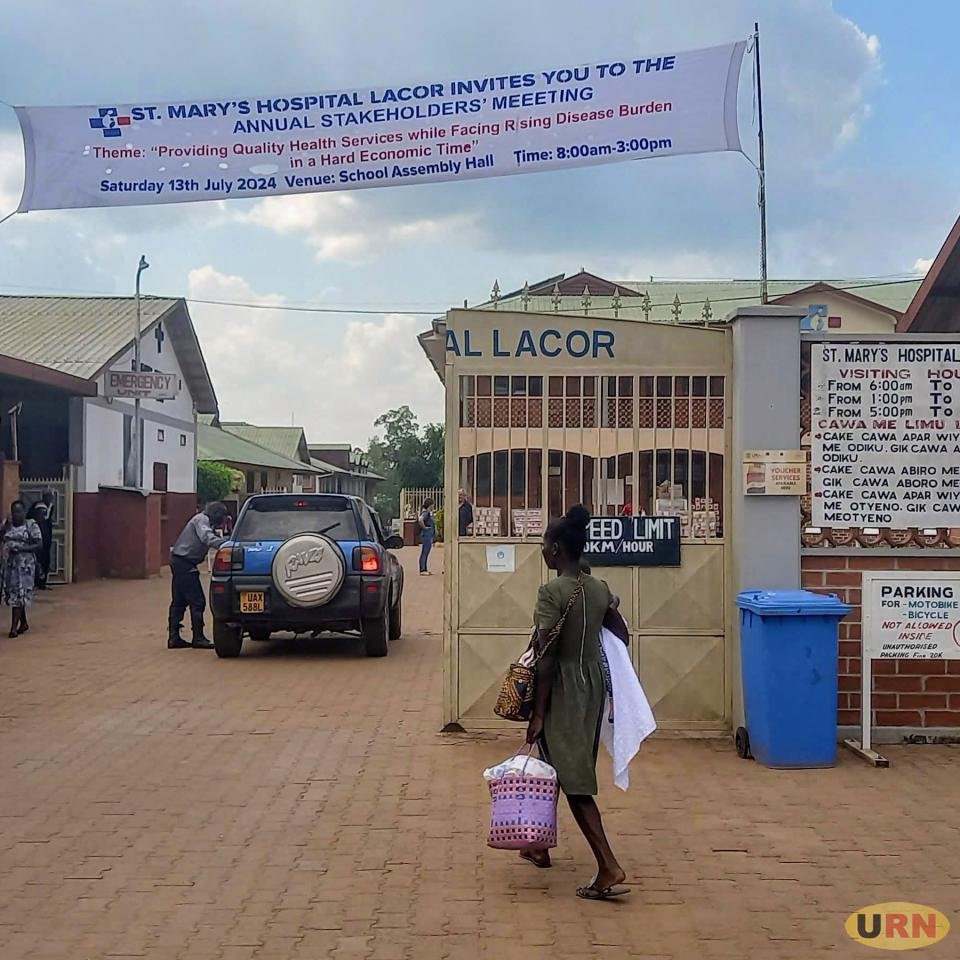
Gulu’s landmark St. Mary’s Hospital Lacor is facing a crippling UGX 1 billion import tax bill on a donation of power cables required to salvage its failing energy grid, exposing deep inequities in the state’s tax exemption architecture.
Dominique Corti, President of the Piero and Lucille Corti Foundation, revealed that the non-profit hospital is negotiating the donation of 27 kilometers of electricity cables to overhaul its dilapidated energy distribution system. However, under current Uganda Revenue Authority (URA) regulations, the critical infrastructure shipment will not clear port without a UGX 1 billion duty payment.
To put the fiscal strain into perspective, Corti noted that the UGX 1 billion tax bill is the exact commercial equivalent of affull year’s operating budget for an entire Lacor peripheral health center,the annual salaries of 60 professional nurses and nine-month supply of life-saving antibiotics for the region.
Speaking at the launch of the €12.75 million, Italian-funded Prisma health project at the AVSI Foundation offices in Nsambya, Kampala, Corti raised serious concerns over the government’s asymmetric tax enforcement.

Despite handling massive regional healthcare volumes, Lacor Hospital enjoys zero exemptions on Pay As You Earn (PAYE), Value Added Tax (VAT), or import duties on non-medical capital goods.
“We are really humbly praying for tax, PAYE and import duty exemption for hospital goods that we know other Italian NGOs as well as for-profit companies have,” Corti stated, pointing to an uneven regulatory playing field where commercial entities bypass taxes that penalize public-good infrastructure.
In response to the friction, Health Minister Dr. Chris Baryomunsi claimed state policy dictates that grants backing essential education and health services should remain untaxed. “Personally, as Minister of Health, I have no problem,” Baryomunsi said, committing to lobby the cabinet for an immediate waiver on the energy equipment.
The tax standoff highlights a glaring mismatch between Lacor’s immense public utility and the state’s financial backing:
The Government of Uganda covers a meager 5% of Lacor’s recurrent operating costs.
Smaller private-not-for-profit (PNFP) facilities with as few as 40 to 70 beds receive up to UGX 100 million more in direct government grants than Lacor’s massive operation.

The Ministry of Health has embedded just two specialists at the hospital, one of whom faces retirement within 24 months.
The hospital operates on a highly optimized, lean budget of just under €6 million (approx. UGX 24 billion) per year, heavily insulated by the Corti Foundation, which has pumped over UGX 100 billion into the facility over the last 15 years. This foreign capital infusion subsidizes impoverished patient fees by 70%—keeping standard maternity deliveries at UGX 25,000 and pediatric admissions at a flat UGX 10,000.
However, Corti warned that macro headwinds, rising technology costs, and intensifying regulatory compliance are pushing the facility to a financial breaking point. Without a systematic overhaul of how the state funds large-scale PNFP health networks, the hospital will be forced to make “very hard choices” regarding service cutbacks.
Minister Baryomunsi conceded that the funding model is flawed, promising that the Ministry of Health will review its PNFP grant matrix to ensure Lacor is “supported better” while pledging to deploy more state-salaried medical specialists to the facility.
