

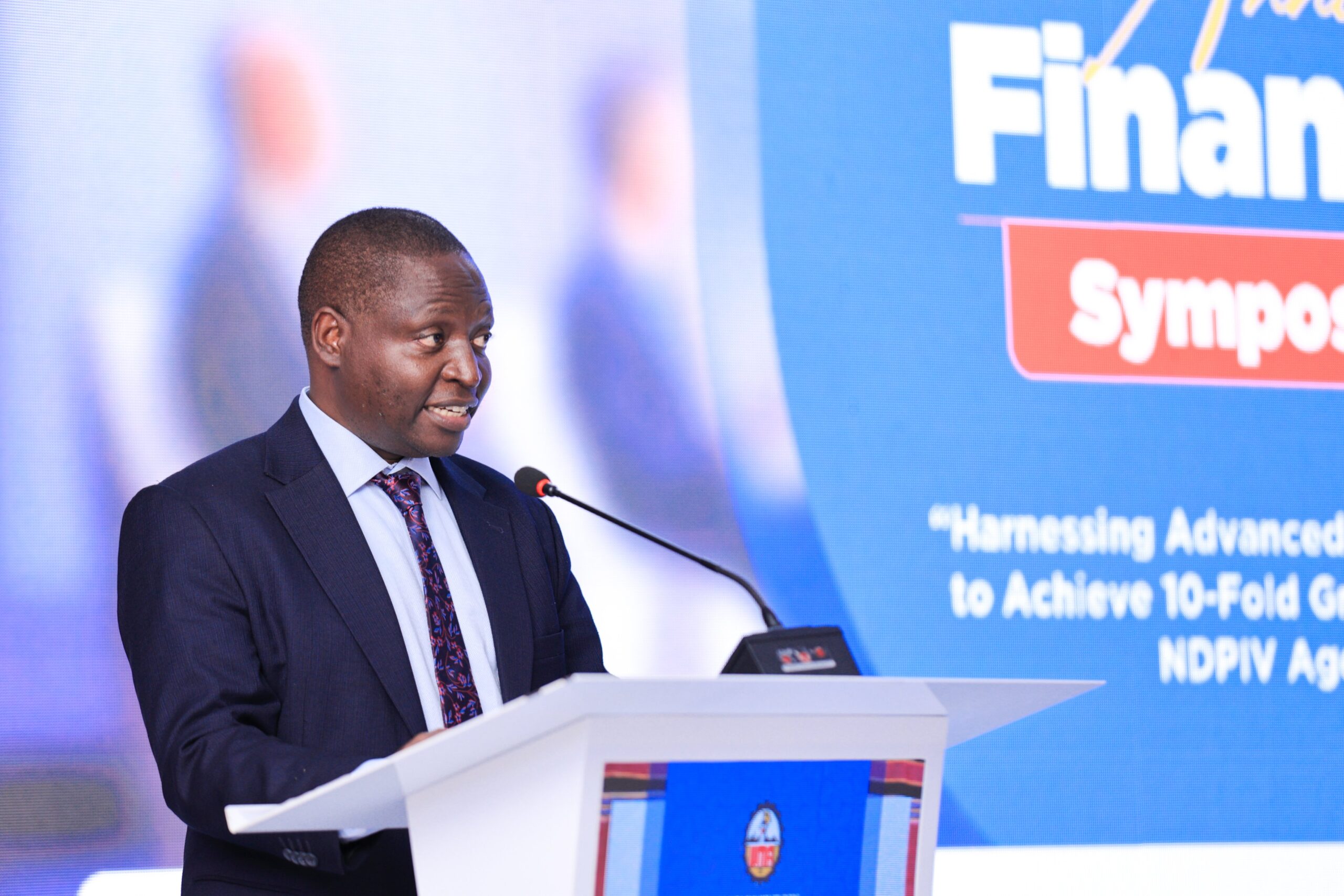
State Minister for Trade David Bahati has urged commercial banks to cut lending rates for the manufacturing sector in a bid to grow Uganda’s industrial base.
He says the gap between what factories earn and what they pay to borrow makes expansion difficult.
Bahati has hence forth put the internal rate of return for manufacturers at between 8% and 12%, against commercial lending rates that typically run from 18% to 24%.

“Borrowing money for manufacturing at 18 percent or 20 percent and expecting to break even and make profits within five years is almost impossible,” Bahati told the Uganda Manufacturers Association (UMA) at a symposium in Kampala.
He described manufacturing as an organised and bankable sector, and called on lenders to design products suited to its needs.
Bahati said the government was working to widen access to long-term finance, including through increased funding for the state-owned Uganda Development Bank and reforms such as new rules to allow Islamic banking.

Hon. Bahati noted that the industrial sector now contributes 27.4% of GDP and reiterated government’s commitment to reducing electricity tariffs for manufacturers to 5 US cents per unit, a key intervention expected to improve industrial competitiveness.
He encouraged manufacturers to continue working closely with the Ministry, describing it as their “mother ministry.”
He called for sustained collaboration and unwavering commitment to Uganda’s 10-fold growth agenda, emphasizing that continuity in implementation is key to unlocking industrial transformation, investment, and inclusive economic growth.
The event was held under the theme: Financing Uganda’s “tenfold growth” agenda, the government’s long-term plan to expand the economy from about $50bn to $500bn by 2040. Launched in 2023 and anchored on agro-industrialisation, tourism, minerals and technology, the strategy is one of the more ambitious economic targets in Africa — and one economists have questioned as achievable within the timeframe.
Manufacturing is among Uganda’s larger economic sectors that accounts for 16.5% of gross domestic product and 30.7% of domestic tax revenue.
DTB Bank Uganda’s Head of Business Banking, ouglas Damba,committed the bank to more long-term lending for manufacturers.
He further said the bank will expand longer-term lending to manufacturers, including equipment and asset financing, trade finance and working capital facilities. He argued that short-term credit alone could not deliver the country’s growth ambitions.
“Manufacturers, agribusinesses and growth-oriented enterprises need access to structured capital, asset financing, trade finance and investment products that enable expansion, improve productivity and accelerate value addition,” Damba said.
UMA Chairman Aga Sekalala welcomed the commitment but said affordable, long-term finance remains one of the biggest barriers to industrial growth, calling for closer collaboration between manufacturers, banks, government and development partners.
“Our manufacturing sector has the potential to achieve 10-fold growth, but only if finance evolves with it.”
Mr. Aga Sekalala Jr. called for integrity-driven financial reforms, innovative financing solutions, and stronger partnerships to unlock Uganda’s industrial potential and accelerate sustainable economic growth.
