


The Government of Japan has announced acontribution.of $6 million towards refugee response efforts in Uganda aimed at providing critical assistance to both refugees and their host communities.
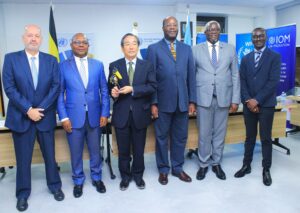
His Excellency Sasayama Takuya Ambassador of Japan to Uganda said the funding will support agencies including the World Food Programme (WFP), United Nations High Commissioner for Refugees (UNHCR), and the International Organization for Migration (IOM) wilhile addressing the media in Kampala.
Highlighting Japan’s continued international support for Uganda’s efforts to manage the refugee crisis Takuya said the contribution to UN representatives focuses on boosting nutrition response efforts, strengthening protection, supporting economic activities, providing aid to newly arrived refugees and asylum seekers among others, reinforcing Japan’s support for Uganda, which hosts one of the largest refugee populations in Uganda.
“Uganda participates in several projects under Japan’s supplementary budget funding scheme in areas such as emergency response, peace and security, strengthening early warning systems. Uganda’s commitment of towards refuges is commendable amid changing structures of balance of power with tensions,”he stated.
In April 2025, Japan committed approximately $6.6 million to the Office of the Prime Minister for diverse sectors including border health control, nutrition in Karamoja, and women’s empowerment.
In.April 2025,Japan also committed approximately US$6.6 million through its supplementary budget to support UN agencies in sectors including health, food security, and women’s empowerment.
Key Focus Areas of Japanese Aid
Providing core relief items such as blankets, kitchen sets, and mattresses for new arrivals fleeing conflicts in South Sudan and the Democratic Republic of Congo.
Funding projects to address issues affecting women, peace, and security, often implemented through UN Women and UNFPA.Food Security: Direct donations of rice (e.g., 2,000 metric tonnes in early 2024) and support for nutrition, particularly for children and pregnant women in the Karamoja sub-region.
