

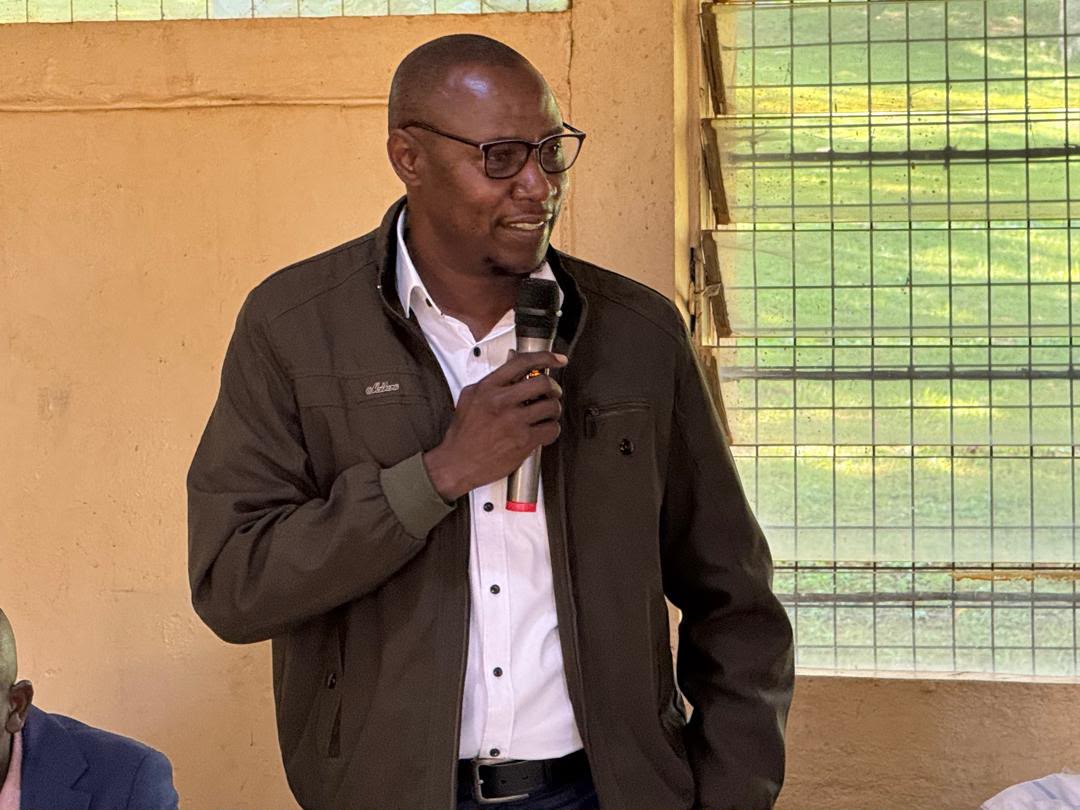
Resident District Commissioner (RDC) Mr. Bayole Stanley has urged secondary school teachers and parents across the Kapchorwa region to fully adopt and support the new lower secondary curriculum, describing its practical skills focus as a modern revival of foundational Ugandan education.
Speaking during a stakeholder engagement held at Sebei College Tegeres, Mr. Bayole addressed educators, local leaders, and officials from the Uganda National Examinations Board (UNEB) gathered to review feedback on the National Assessment of Progress in Education (NAPE) report. The engagement focused on assessing learner achievement, teaching performance, operational challenges, and strategic solutions in core subjects including Mathematics and Biology.
Addressing concerns regarding educator resistance, RDC Bayole urged teachers to abandon mindsets indifferent to curriculum reforms. He noted that practical learning is deeply rooted in Uganda’s educational history, pointing to traditional primary school agriculture and school gardens that the Ministry of Education and Sports is now restructuring for a modern, urban context.
“This curriculum is not entirely alien; it revives practical learning in a modernized way,” Mr. Bayole noted, emphasizing that teachers must manage instructional time efficiently to cater to student needs. He specifically called on instructors to allow adequate time for hands-on tasks and to offer dedicated support to slow learners.
Mr. Bayole further appealed to parents to back their children by acquiring necessary practical learning materials. He highlighted that practical competencies such as vocational skills in baking cakes, chapati, and mandazi provide learners with lifelong abilities to generate income and build self-reliance from home.
The engagement, led by UNEB officials Hajjat Salima and Mr. Kyendo Kasim, presented five-year feedback data compiled from a nationwide sample assessing secondary school performance under the revised system.
The national sample comprised of 275 secondary schools, including 4 dedicated Special Education Needs (SEN) institutions, evaluating a total of 8,234 learners 3,962 boys (48.1%) and 4,272 girls (51.9%). 70.9% of sampled learners attended government-aided schools, while 29.1% represented private institutions ,62.4% were drawn from rural schools, compared to 37.6% in urban centers.The evaluation incorporated 91 Special Education Needs (SEN) learners—comprising 60 deaf students 25 boys, 35 girls and 31 blind students 15 boys, 16 girls.

The consultative meeting was attended by key district leaders, including the Chief Administrative Officer (CAO), the LCV Chairperson, UNEB representatives, and secondary school educators from across the Kapchorwa region.
