

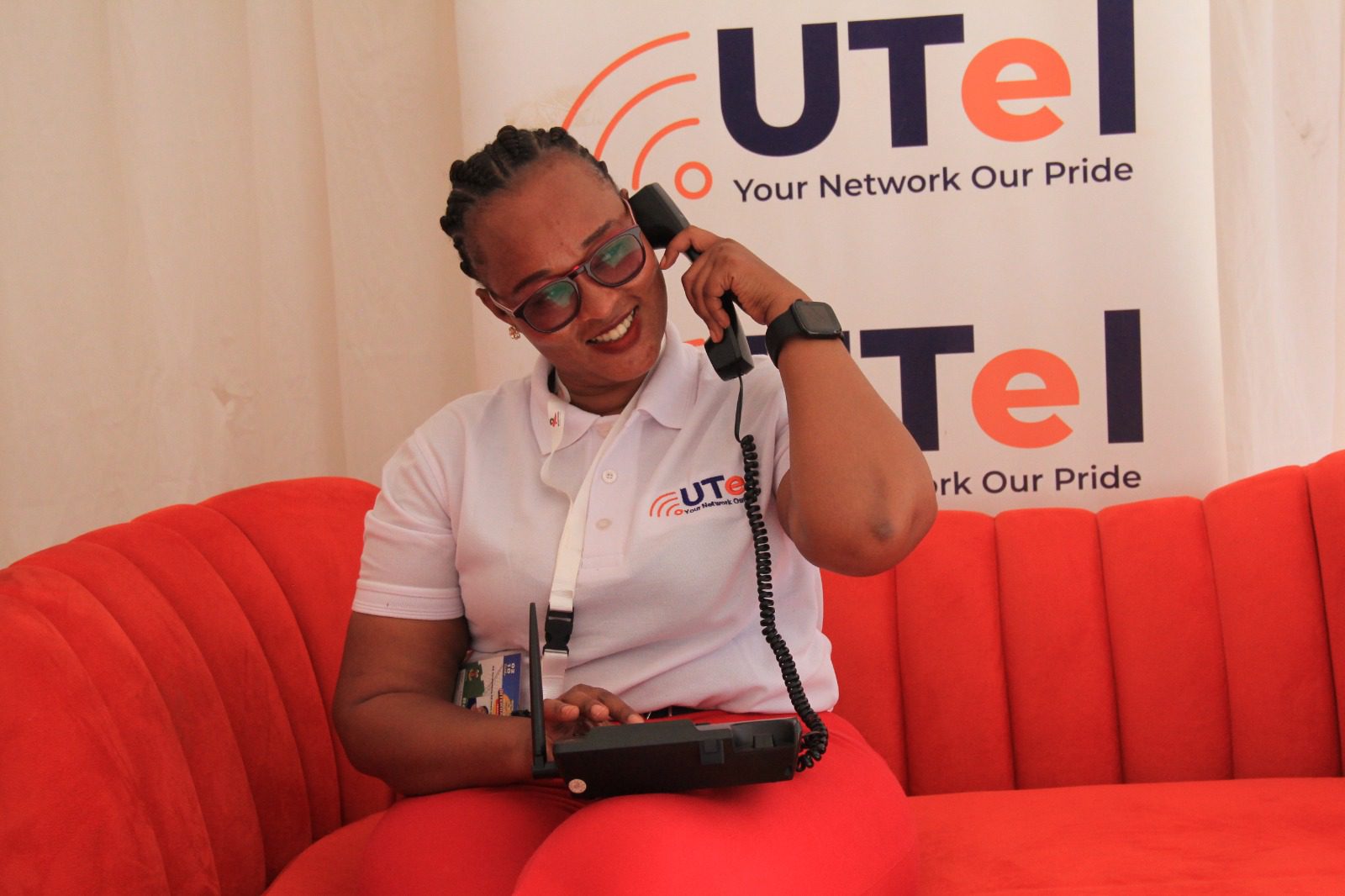
In afresh move aimed to increase internet access and make services affordable, government is calling for greater utilisation of Uganda Telecommunications Corporation Limited (UTel) to accelerate the country’s digital transformation agenda.
During a familiarisation visit to UTel,Minister of ICT and National Guidance, Rt. Hon. Justine Kasule Lumumba,discussed with Management on strategic role in supporting government digitalisation, improving connectivity and contributing to Uganda’s Tenfold Growth Strategy.
UTCL purchased UTL’s key assets—such as spectrum licenses and network infrastructure—for Shs316 billion (approx. $81.3 million), ring-fencing UTL’s previous historic liabilities as government-owned enterprise, with the Ministry of Finance holding a 60% stake and the ICT Ministry holding 40%
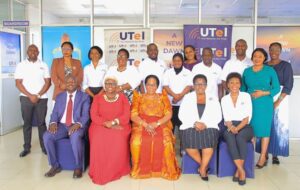
The visit formed part of the Ministry’s ongoing engagements with agencies under its supervision aimed at strengthening collaboration, assessing institutional performance and identifying opportunities to advance the country’s digital economy.
UTel Chief Operations Officer Ms. Maggie Mukiibi Lutwama presented an overview of the company’s operations, highlighting its growing role in providing internet and data services, mobile and fixed-line connectivity, as well as managed ICT solutions to government institutions, businesses and communities.
She said the company currently operates 16 customer service centres and has established a presence in about 35 districts across the country, where it continues to provide connectivity solutions that support the delivery of digital public services.

Ms. Lutwama also highlighted UTel’s strategic investment in the West Indian Ocean Cable Company (WIOCC), an international telecommunications infrastructure provider serving Africa.
She explained that the company’s investment, initially valued at approximately US$3.9 million, has grown to nearly US$39 million, positioning Uganda to access international internet bandwidth closer to its source while creating opportunities to lower the cost of internet services nationwide.
The Acting Permanent Secretary, Ms. Sophia Nantongo, observed that the affordability of internet services and digital devices remains one of the biggest barriers to digital inclusion.
“We need a whole-of-government approach to determine how we can make better use of the opportunities available to reduce the cost of internet services and improve access to digital devices,” Ms. Nantongo said.
She noted that reducing the cost of connectivity would enable more Ugandans to participate in the digital economy while accelerating the delivery of online government services.

According to UTel management, the company employs about 250 staff, nearly half of whom work in engineering and other technical fields. It also supports skills development by offering internship opportunities and educational tours that expose students to telecommunications infrastructure and emerging technologies.
Management further unveiled plans to expand the company’s role in national digital infrastructure by supporting government digitalisation, innovation, affordable connectivity and economic growth.
The company is currently working with the National Planning Authority to develop a strategic proposal outlining how UTel can make a greater contribution to Uganda’s long-term development priorities.
Speaking during the engagement, Rt. Hon. Lumumba urged UTel to benchmark countries where national telecommunications companies have successfully driven digital transformation, affordable internet access and improved public service delivery.

“We need examples that will help leaders understand and appreciate what has been presented. Benchmarking countries that have successfully done this will help us build a stronger case,” she said.
The Minister emphasised that ICT cuts across every sector of the economy and challenged UTel to develop practical proposals demonstrating how its infrastructure and services can support ministries, departments, agencies and flagship government programmes.
She said strengthening the national telecommunications company would not only improve digital access but also enhance government efficiency and support broader socio-economic transformation.
Minister of State for Information Hon. Joyce Nabbosa Ssebugwawo commended UTel’s management and staff for sustaining operations and contributing to Uganda’s expanding digital ecosystem despite the competitive nature of the telecommunications industry.
She encouraged government institutions to consider using UTel’s services wherever the company is able to provide reliable and cost-effective solutions.
The meeting concluded with a commitment by both the Ministry and UTel to deepen collaboration, maximise the utilisation of the company’s infrastructure and international investments, and explore new strategies for expanding affordable, secure and reliable digital connectivity across the country.

Officials said the partnership is expected to strengthen Uganda’s digital transformation agenda by increasing access to digital services, supporting innovation and improving the efficiency of public service delivery.
Can Utel still compete in the fast voice and data business
Micheal Niyitegeka Director Refactory says to survive against telecom giants MTN and Airtel, UTel’s strategy centers on securing the National Backbone Infrastructure (NBI/EGI) and targeting the government, enterprise, and SME markets rather than relying solely on the mass consumer market
“By taking over the management of the NBI, UTel has positioned itself as the primary internet service provider for government ministries and agencies. This guarantees a steady stream of institutional revenue,:he stated.
He noted that while MTN and Airtel have aggressively rolled out 5G networks across the country, UTel has historically lagged, largely operating on 2G and 3G networks.
“To remain relevant in the fast data business, the telco is actively seeking to accelerate its 4G and future 5G infrastructure expansion,”he stressed.
According to recent Uganda Communication Commission market performance reports, active mobile subscriptions stand at approximately 47.1 million, with 18.5 million active internet subscriptions. While mobile coverage is near-universal, this reflects an estimated 42.2% of the population actively accessing the internet
Approximately 42.2% of Ugandans report using the internet in any given 90-day period, with mobile broadband accounting for 97.4% of all connections meanwhile Smartphone penetration has reached 46.8% nationally, leaving the remainder of data traffic supported by feature phones.
