

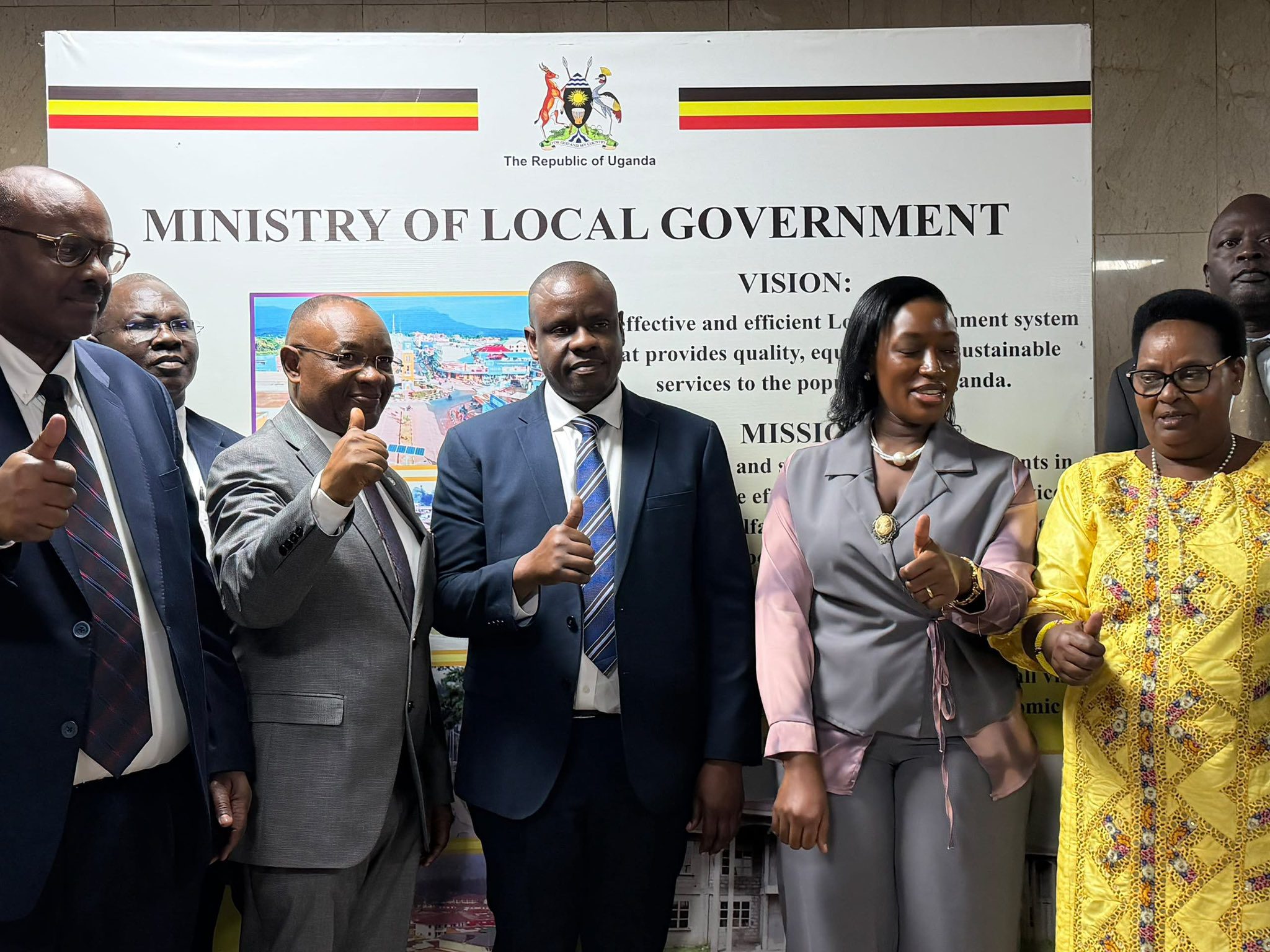
Described by President Yoweri Museveni as Cantankerous and quarrelsome Dr Balaam Barugahare and Justine Nameere have taken over leadership of Ministry of Local Government from long time Politician Raphael Magyezi who officially handed over on Friday.
Held under the theme, “Welcoming the New Political Leadership for Effective Service Delivery in Local Governments,” the event brought together senior ministry officials, local government leaders and other stakeholders to witness the change in leadership.
The handover ceremony marked the formal transition of political leadership following recent cabinet appointments by President Yoweri Museveni.

The Ministry of Local government is a cabinet-level ministry in Uganda responsible for supervising, guiding, and harmonizing decentralization, local economic development, and service delivery across the country’s local councils.
The ministry is facilitating the induction of newly elected leaders for the 2026–2031 tenure, focusing on decentralization policies, service culture, and administrative guidelines
In his remarks Magyezi officially transferred responsibility for the ministry’s affairs to the new ministers, highlighting the importance of continuity in implementing government programmes and strengthening service delivery across local governments.
Balaam and Nameere used the occasion to outline their vision for the ministry, pledging to work closely with technical staff, local leaders and development partners to improve service delivery and enhance accountability at all levels of local government.
Balaam emphasized the need for teamwork and commitment in delivering services to Ugandans, while Nameere pledged to support efforts aimed at ensuring government programmes directly benefit communities across the country.
The Ministry of Local Government plays a central role in overseeing local administrations, coordinating service delivery and supporting districts, cities, municipalities and lower local government units.
The new ministers assume office at a time when the government is intensifying efforts to improve the implementation of key programmes, including the Parish Development Model (PDM), and address concerns about corruption and inefficiencies in local government structures

In the Financial year 2026/27 national budget the Government of Uganda has allocated Shs4.4 trillion) to the Parish Development Model out of the overall Shs84.3 trillion national budget. The funds aim to expand productivity, accelerate economic transformation, and eventually help transition PDM SACCOs into a self-sustaining PDM Bank
President Yoweri Museveni has demanded strict oversight of the Parish Development Model (PDM) in Uganda, issuing a stern warning to elected leaders and government officials. He criticized persistent laxity, noting that leaders who fail to monitor funds will face serious accountability consequences and potential scrutiny from the Attorney General
Museveni has put both opposition and NRM leaders on notice regarding their oversight duties. Addressing persistent complaints about the theft and mismanagement of funds, he demanded that legislators and local leaders actively protect the program. Citing a local proverb, he emphasized that “the eyes of the dead body are the eyes of the one carrying it,” meaning leaders will share the consequences if the public resources fail to reach their intended destinations

Crackdown on Fund Theft and Misuse
The President has championed a crackdown on corruption, directing that PDM funds be properly managed. Key enforcement directives include: any unqualified individuals—such as civil servants or wealthy citizens (“the bagagga”)—who irregularly received the funds must repay them immediately
Individuals who take PDM funds and misuse them on unproductive activities like alcoholism face up to 12 months in prison, where they will do forced labor to earn money for the government.
The government has been directed to arrest and prosecute officials and parish chiefs who extort or underpay intended beneficiaries
Museveni views the PDM as the government’s primary tool to eliminate poverty by shifting subsistence households into the commercial money economy. He regularly tours the country to inspect PDM success stories. The government remains committed to sending Shs 100 million to each parish annually, and he has proposed increasing this to Shs 200 million for parishes that utilize the funds successfully and transparently.
