

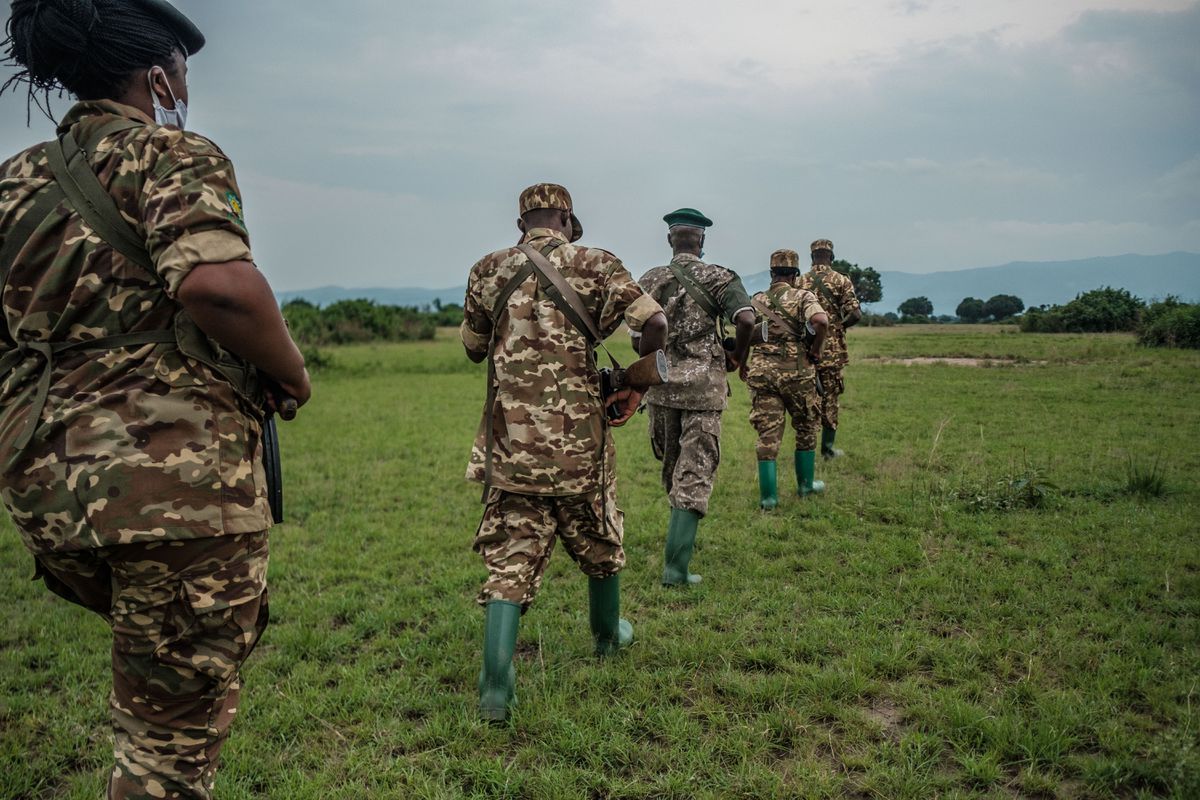
In a strategic move aimed at curbing encroachment, illegal cultivation, poaching activities along Mt Elgon,Uganda Wildlife Authority (UWA) has announced plans to deploy 4,000 Uganda People’s Defence Forces (UPDF) soldiers in and around Mt Elgon National Park conservation area.
According to UWA officals the planned deployment comes amid growing concern over the continued degradation of the protected ecosystem, which stretches across the Bugisu and Sebei sub-regions and has for years been at the centre of disputes between park authorities and neighbouring communities over boundary demarcation and access to natural resources.
Speaking during a stakeholders’ engagement ahead of the official launch of the Mbale Satellite Centre of the Uganda Wildlife Education and Conservation Centre (UWECC) in Mbale City UWA Commissioner for Community Conservation David Musingo said the authority had sought military support to strengthen protection of the park.
“People want to cut trees and others want to cultivate crops, knowing very well that it is a protected area. We are going to properly mark the boundaries so that our people do not get into trouble. Here we are going to add guns because the people want a hard way. We have invited 4,000 UPDF soldiers to join us to protect Mt Elgon,” he said.
Musingo revealed that the soldiers, who are currently undergoing training under the UPDF 3rd Division in Moroto, would be deployed to support wildlife rangers in enforcing conservation laws and safeguarding the park.
Commenting about UPDF deployment, Musingo said UWA personnel had for years faced violent attacks while carrying out conservation work in the area.
“Our rangers have been speared and others have been killed. I know our people have also been harassed. We are going to use a gun quickly and it will be a bit harder because we cannot watch when our people are being killed,” he stated.
Musingo stressed that community sensitisation and education remained the most sustainable approach to addressing conservation challenges in the long term.
He said the newly established Mbale Satellite Centre would play a critical role in promoting wildlife education and helping communities appreciate the value of conservation and tourism.
“For me, I believe in reducing guns and increasing what you call educators. We need to create harmony, and that is why this centre has been opened,” he said.
He however expressed concern over the disappearance of black-and-white colobus monkeys from parts of Mt Elgon National Park, attributing the decline to hunting associated with the demand for traditional Imbalu circumcision regalia.
Acting Chief Warden of Mt Elgon National Park, Godfrey Matanda, supported the planned military deployment, arguing that wildlife rangers had paid a heavy price while protecting the park.
“More than 30 rangers have been injured and about five have died. We cannot continue like this. The guns are coming to keep the mountain safe, and for many years, UWA has suffered so much at the hands of some locals,” Mr Matanda said.

The tourism sector has welcomed the development of the Mbale Wildlife Centre, describing it as a long-awaited addition to eastern Uganda’s tourism offerings.
Saleh Naminya,Chief Executive Officer of Casa Uganda Safaris and Lodges, said the region had historically suffered from limited tourism product development despite possessing numerous attractions.
“We now have an opportunity to add this unique wildlife centre to our coffee tourism and cultural experiences. Besides the animals, the setup gives visitors an opportunity to view wildlife in a more natural environment. This is the opportunity we have been waiting for,” he said.Naminya said the facility would create new opportunities for hotels, tour operators and entrepreneurs across the region.
Retired Entomologist and former Makerere University lecturer Peter Kiwuso called for extensive public sensitisation campaigns to address fears and misconceptions surrounding the wildlife centre.
“Some people are saying they are bringing lions to terrorise people and their domestic animals. On the issue of the colobus monkey, we also need to provide alternatives for Imbalu headgear and tails,” he said.
He urged communities living near protected areas to adopt farming practices that minimise human-wildlife conflict.
“Communities should learn to adapt to living near conservation areas by planting crops that are not commonly eaten by animals,” he said.
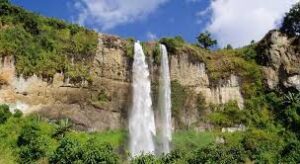
About Mt.Elgon
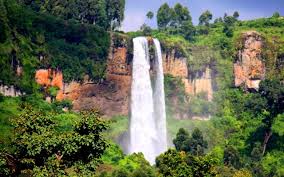
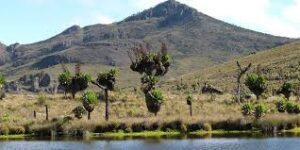
Mount Elgon is an ancient, extinct shield volcano straddling the Uganda-Kenya border, renowned for possessing the largest mountain caldera in the world. Rising to Wagagai Peak at 4,321 m, it serves as a spectacular, uncrowded hiking destination and a vital water catchment for over a million people
At roughly 24 million years old, it is East Africa’s oldest solitary volcano. Though reduced by erosion, it once stood taller than Mount Kilimanjaro.
The Mount Elgon Conservation Area protects the massive, extinct transboundary volcano on the Uganda-Kenya border. Designated as a UNESCO Man and Biosphere Reserve, this vital biodiversity hotspot encompasses two contiguous national parks spanning over 1,279 km², renowned for its 40 km² caldera, rare flora, and deep, salt-mining caves
