

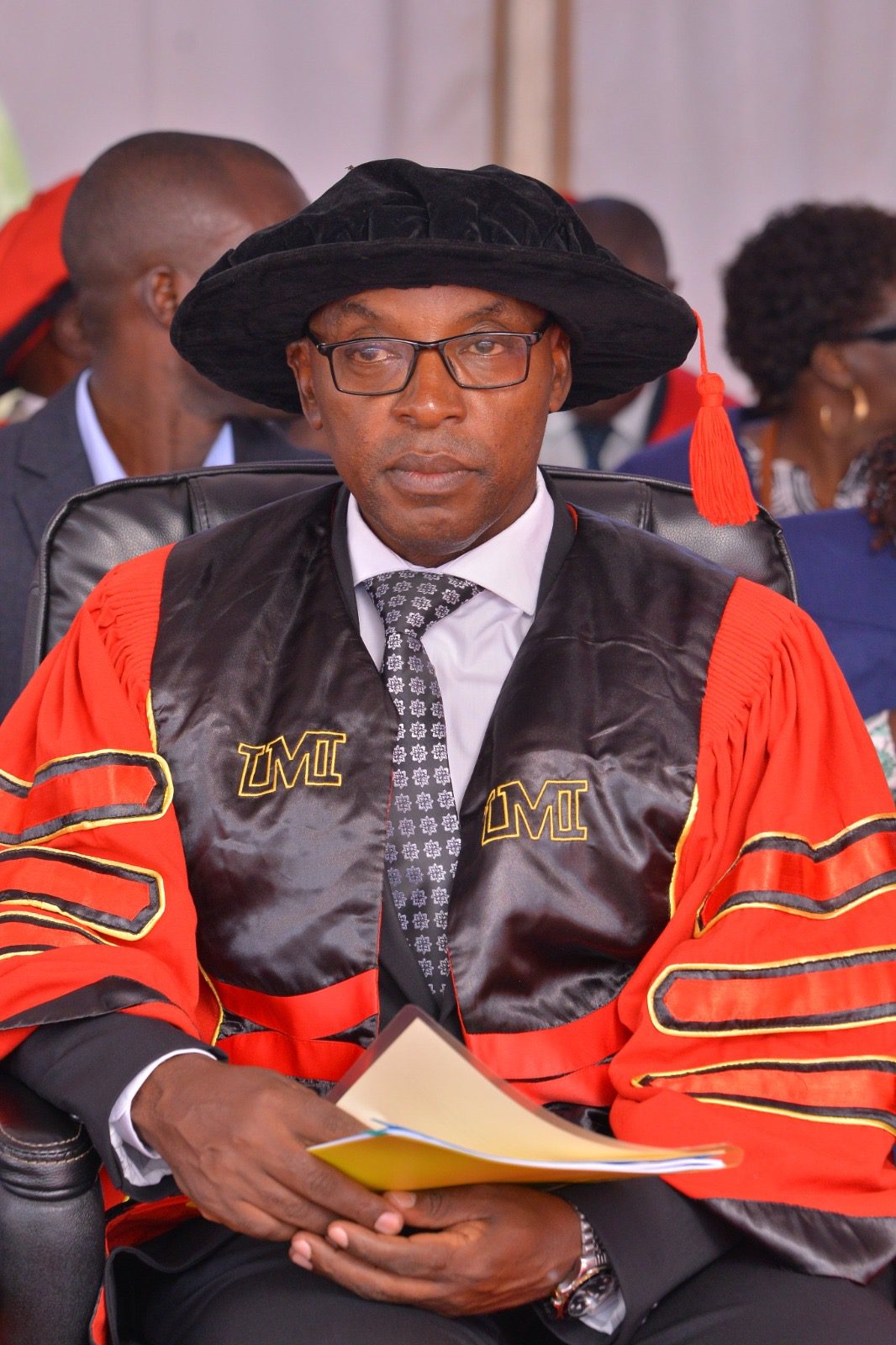
The Chief Justice of Uganda Dr. Flavian Zeija has advised graduates across Uganda learning institutions to embrace continues professional development and reskilling measures to remain relevant in the job market.
Delivering akeynote address during UMI’s 23rd graduation ceremony where over 4000 received post graduate certificates Zeija warned that technological disruption, demographic shifts, and economic transformation are reshaping the global labour market at an unprecedented pace.
“The days of straight jacket professionals are over.If you are not dynamic, you may not be relevant in 10 years to come.”Justice Zeija stated.

Citing the World Economic Forum Future of Jobs Report 2025, the Chief Justice noted that an estimated 59 percent of the global workforce will require reskilling by 2030 to meet changing labour demands, although many workers may never access such opportunities.
He said the changing nature of work was already creating a widening gap between available jobs and the skills required to perform them.
“The inability to meet evolving skills demands is slowing down progress across industries and creating new pressures for workers and employers alike,” he said.
According to Justice Zeija the fastest-growing jobs are expected to include software developers, project managers, nursing professionals, university lecturers, agricultural workers, and data-driven managerial roles meanwhile traditional clerical and administrative positions such as cashiers, bank tellers, data entry clerks, executive secretaries, and customer care workers are projected to decline sharply.

Zeija however challenged higher institutions of learning to reposition themselves as centres for future-ready skills and innovation rather than focusing on minting money from students.
“Education institutions should position themselves to reskill citizens with the competencies needed for the innovations of the future,” he added.
He further warned graduates against joining the corruption scandals describing integrity as the most important qualification they could carry into the workplace.
“Let the first degree for each one of you be in integrity.Deliver service without asking for facilitation. A single ethical decision can restore a citizen’s faith in public institutions.”Zeija stressed.
In his remarks Uganda Management Institute Director General James Nkata revealed that the institution was repositioning itself as a research and innovation-led university capable of preparing professionals for future workforce demands.
According to him,UMI has recruited 15 new lecturers with PhDs, bringing the proportion of PhD-holding faculty members to 85 percent citing Rose B. Namara, Maria Karuhangire Barifaijo, Gerald Kagambire Karyeija, Proscovia Namubiru Ssentamu, and Prof. Nkata himself.
Prof. Nkata further revealed that UMI has introduced new programmes in cybersecurity, data science, business analytics, and business computing management to align with emerging market demands while transitioning from traditional teaching methods toward practical, research-driven learning models involving innovation hubs, hackathons, and incubation programmes.
During the same event UMI Chancellor Bart Katureebe called on universities to strengthen community engagement and ensure research directly informs public policy and improves citizens’ lives.
“Knowledge must serve communities, be shaped by them, and hold power accountable,” Justice Katureebe said.
“Become custodians of Uganda’s future by leading with integrity, humility, and accountability in both public and private institutions,”he added.
The Uganda Management Institute (UMI) conducts intensive in-service training to quickly develop management capacity in the public service.
UMI was elevated to a Degree-Granting Institution by an act of Parliament while continuing with its mandate of offering short courses leading to the award of certificates and diplomas.
