

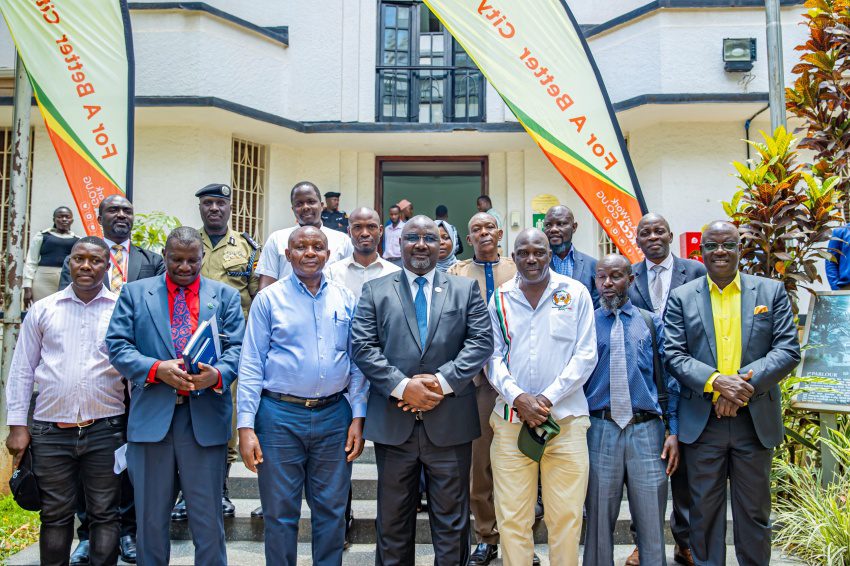
In a move aimed to modernise Kampala city,Kampala Capital City Authority (KCCA) has stepped up its push for organized city growth through implementation of proper physical planning.
Approximately 60% of Kampala population lives in unplanned ,informal settlements due to rapid urban growth. This uncontrolled expansion stems from weak enforcement of development regulations, corruption, and high rural-urban migration, leading to collapsing buildings, severe flooding from obstructed drainage, and strained public services.
Deputy Executive Director Benon Kigenyi said illegal construction and those with out approved plans are harming Kampala’s ability to grow in a sustainable way.
“When plans are ignored or bypassed, the consequences come back to us. Residents and developers should follow approved guidelines and support efforts to restore order,” Kigenyi said while officiating at the Kampala Open Day.
Director of Physical Planning Vincent Byendamaire uregd developers to embrace online system to speed up their Kampala developments .
Supervisor Mike Yiga revealed that 56.6 percent of wetlands in Kampala have been damaged, mainly due to informal settlements and unplanned expansion.
He revealed that Kcca will soon implement construction of high rising apartments in the suburbs to address high-density housing demand and sort out land limited land.
KCCA is rolling out key plans including the Kawempe Urban Detailed Plan and strategies for 10 major road corridors. Other projects include the Royal Mile and the Lubiri Cultural and Heritage Centre, aimed at improving city planning and protecting cultural heritage.
The new development framework also expands the Central Business District to cover areas like Bugolobi and Nsambya, showing changes in Kampala’s economic activity.
The Open Day, held under the theme “Get the Plan. Shape the City. Together,” brought together developers, professionals and community members. Participants engaged directly with planners and received guidance through demonstrations on mapping, zoning and online permit systems.
Officials said the event is part of efforts to improve trust, encourage compliance and involve the public in planning the city’s future. They added that feedback collected will help shape future policies and services.
For 2026, KCCA is focusing on transforming Kampala into a smart city through shs 11.9trillion that prioritizes infrastructure, transport regulation, and environmental sustainability. Key initiatives include completing over 140 km of road construction, upgrading 48 km of drainage, signalizing 22 new junctions, and restricting boda bodas to 937 gazetted stage.
