








Deep within the rugged savannah of northeastern Uganda, a USD 72 million (approx. Shs 274 billion) infrastructure project is underway, signaling a massive shift for one of East Africa’s most isolated yet ecologically rich frontiers.
The construction of Kidepo International Airport in Lomej, Karenga District—located just three kilometers south of the Kidepo Valley National Park headquarters—is engineered to rewrite the economic narrative of the Karamoja sub-region. Funded entirely through a strategic partnership with the Sharjah Chamber of Commerce and Industry from the United Arab Emirates (UAE), the facility aims to bridge the geographic gap between a pristine African safari destination and high-net-worth international travelers.


According to the Uganda Civil Aviation Authority (UCAA), all regulatory, technical, and environmental assessments are complete. The project is being implemented in three distinct phases as a Code 4E international facility, with provisions to scale up to Code 4F standards to accommodate the world’s largest commercial aircraft.
Historically, Kidepo Valley National Park has been severely under-visited compared to Uganda’s southern tourism circuits, such as Queen Elizabeth or Murchison Falls national parks. Situated more than 500 kilometers from the capital, Kampala, international tourists previously faced an exhausting 10-to-12-hour drive over challenging roads, or relied on expensive domestic charter flights. By opening the region to direct long-haul flights from the Gulf and Europe, the airport bypasses traditional entry bottlenecks.
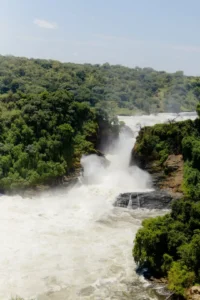

“Kidepo has always been a hidden gem,” says Tim Buhaburwa, CEO of Zebra Safari Lodge-Kidepo. “This airport will drastically reduce safari execution costs, which have historically been inflated by heavy fuel consumption and vehicle maintenance over tough terrains. It will drive up revenues for the Uganda Wildlife Authority (UWA) and pump resources directly into local craft, food, and cultural supply chains.”
Regional tourism experts view the development as a catalyst for multi-country itineraries. Theo Vos, Managing Director of Kara-Tunga, notes that improved connectivity will allow operators to design seamless East African travel packages, linking Kidepo directly with established hubs in Kenya, Rwanda, and Ethiopia.
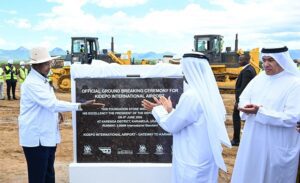

During the groundbreaking ceremony, President Yoweri Museveni emphasized that the mega-project is a direct dividend of the peace achieved following regional disarmament programs.
“Karamoja has come a long way from the days of insecurity, cattle rustling, and lawlessness,” President Museveni told the local community. “The restoration of peace has created the conditions for development. This airport will attract investors, expand markets for local products, and create sustainable jobs.”
The project is already delivering immediate economic relief, currently employing 1,620 Ugandans, with the vast majority recruited locally from Karenga District. For families living on the park’s periphery, the transformation feels immediate. “For years, our youth only looked to the wilderness for survival or conflict,” says Lokol John Bosco, a community elder from the neighboring Lomej village. “Now, my two sons are earning a fair wage building this runway. If this airport brings tourists directly to our cultural bomas and craft markets, our community will guard these wildlife corridors with our own lives because the animals will finally mean bread on our tables.”
Despite the sweeping optimism, industry stakeholders and local leaders emphasize that the airport’s long-term success hinges on solving immediate structural challenges:


Karenga District Woman MP and State Minister for Ethics, Hon. Rose Lily Akello, has urged the Ministry of Works to expedite the tarmacking of the crucial Karenga–Kitgum road. The current road network becomes notoriously difficult during the wet season, threatening construction logistics and tourist transfers.
Kidepo currently faces a critical shortage of luxury and mid-range accommodation options compared to competitive safari parks in neighboring Kenya or Tanzania. To optimize an airport built for a 2-million-passenger capacity, immediate private sector investment in green hospitality is required.
Conservationists have cautioned that rapid development must not compromise the park’s fragile ecosystem. The core value of Kidepo lies in its raw, untouched wilderness and low visitor density.

To prevent the massive infrastructure surge from disrupting the park’s pristine wilderness, local district authorities and national wildlife custodians are aligning their strategies on environmental sustainability. “We cannot afford to let tarmac choke the very wilderness that international travelers are flying thousands of miles to see,” warns Dr. Gladys Kalema-Zikusoka, founder of Conservation Through Public Health (CTPH). “An international airport sitting on the doorstep of a critical biosphere requires absolute vigilance. If the surge in human traffic brings waste, invasive species, or unregulated habitat fragmentation, we risk killing the goose that lays the golden egg. Conservation strategies must scale up at the exact same velocity as the engineering.”

The Karenga District Local Government actively collaborated with the Uganda Civil Aviation Authority and environmental agencies to survey and secure a runway site that protects critical animal paths. Local leaders emphasized that the sub-region’s newfound economic status depends entirely on keeping its ecosystem intact. By mobilizing residents to voluntarily offer land for the airport, district leadership has positioned the local community not as bystanders, but as long-term guardians of the wildlife corridors that border the facility.
The Uganda Wildlife Authority (UWA) countered growing ecological concerns by launching the Kidepo Landscape Integrated Conservation and Development Project (KLICDP 2026–2030). “Our primary directive is ensuring this gateway acts as a shield, not a threat, to Kidepo’s biodiversity,” explains Sam Mwandha, Executive Director of the Uganda Wildlife Authority.
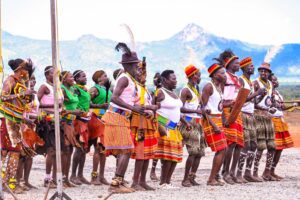
Backed by a USD 4 million fund from the Global Environment Facility (GEF) and the UN Environment Programme (UNEP), this parallel five-year initiative targets the very vulnerabilities conservationists are worried about, like managing increased animal-passenger proximity, eradicating invasive species, suppressing wildfires across the Karenga Wildlife Corridor, and strengthening anti-poaching operations alongside regional district leaders.
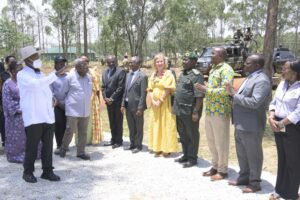
According to the Ministry of Tourism, Wildlife and Antiquities, the airport’s success is legally and operationally tied to this shared vision. By executing the KLICDP alongside runway construction, UWA ensures that as long-haul flights arrive, the raw, low-density wilderness that makes Kidepo globally unique remains completely protected.
The Kidepo ground-breaking is not an isolated project; it forms part of an aggressive, nationwide aviation strategy executed by the UCAA. This includes the rollout of Kabalega International Airport in Hoima and the upgrading of regional airstrips like Nadunget in Moroto. By turning a remote northern frontier into a highly connected international trade and aviation corridor, the government is aiming to permanently shift Karamoja away from subsistence livelihoods and into high-value global commerce.


