





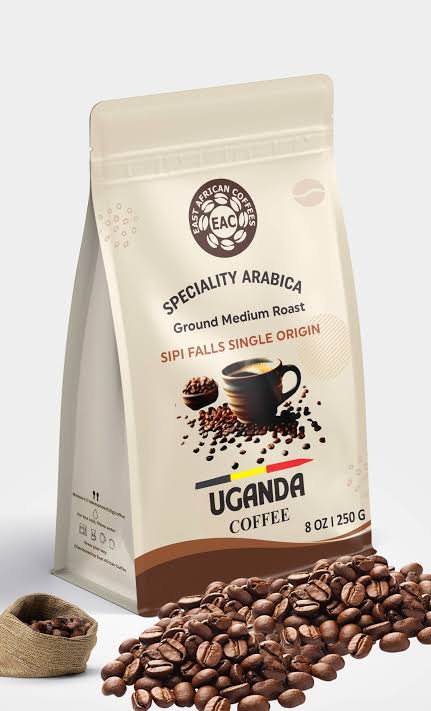
Move over, Vietnam. Step aside, Brazil. There is a new king ruling the global coffee empire, and it is reshaping the economics of commodities trading.
While traditional supply chains fractured under climate disruptions and failing crops, Uganda quietly orchestrated the most aggressive agronomic expansion of the decade. The data is definitive: the nation has shattered records by exporting an unprecedented 8.3 million 60-kg bags of coffee. This milestone firmly cements its status as Africa’s undisputed premier coffee powerhouse, leaving regional competitors like Ethiopia trailing far behind.


For international private equity and sovereign wealth funds, this isn’t just a localized boom—it is a macroeconomic shift. The sector has injected a massive $1.3 billion to $1.4 billion (approx. Shs 4.8 trillion to Shs 5.2 trillion) in annual export earnings into the country, positioning coffee as Uganda’s apex foreign exchange earner.
Uganda’s historic windfall is the product of calculated domestic policy colliding with global climate volatility. When adverse weather crippled production in traditional powerhouses like Vietnam and Brazil, global roasters faced a severe supply crunch.
Uganda was already positioned to capitalize on the deficit. Backed by a disciplined government campaign, the country deployed high-yield clonal Robusta varieties across its major growing basins.


Crucially, the global market is undergoing a taste transformation. Once dismissed as a mere filler bean, Robusta has been elevated. International roasters are now willingly paying premium prices for Uganda’s unique, bold, chocolatey, and spicy flavor profiles. This soaring demand has pushed farm-gate prices for Kase (clean Robusta medium beans) and Parchment Arabica to historic highs, fundamentally boosting purchasing power across rural economies and de-risking the agricultural supply chain.
Where other developing markets see regulatory hurdles, Uganda sees an entry barrier to be exploited.
As the European Union Deforestation Regulation (EUDR) and stricter international compliance laws tighten their grip, Uganda has moved ahead of the curve. At the 17th Swiss Coffee Trade Association (SCTA) Forum and Dinner—where the Ugandan delegation debuted alongside traditional giants like Colombia and Costa Rica—the message to global buyers was clear: Uganda is fully auditable.
The country is actively rolling out nationwide, data-driven farmer-mapping and digital registration systems to ensure complete end-to-end traceability.


“Trust begins with knowing where our coffee comes from,” states Rtd. Maj. Gen. David Kasura-Kyomukama, Permanent Secretary of the Ministry of Agriculture, Animal Industry and Fisheries (MAAIF). “We want buyers to look at a lot and instantly know the region, the farmer cooperative, the cup profile, and the verified sustainability story behind it.”
For institutional investors, the real play isn’t just buying raw green coffee—it is capitalizing on Uganda’s transition from an extractive commodity exporter to an industrial processor.
The government is aggressively incentivizing foreign direct investment (FDI) into local processing, soluble coffee manufacturing, and domestic branding. This shift is a core pillar of Uganda’s wider industrialization and job-creation strategy. By capturing the value-add segment of the supply chain on African soil, the margins available to early-mover investors are highly lucrative.


“Coffee is not simply a crop for Uganda,” emphasizes Hon. Desire Muhooza, Minister of State for Agriculture. “It represents a national commitment and a long-term ambition to produce more, produce better, and share Uganda’s coffee excellence with the world.”
Supported by a coordinated commercial diplomacy push led by Mr. Vincent Bagiire Waiswa (Permanent Secretary, Ministry of Foreign Affairs), Uganda has proven it is no longer a passive supplier vulnerable to market whims. It is a hyper-competitive, structurally sound origin designed for the future of global commodities.
The global coffee landscape has shifted. The King of Robusta is open for business, and the smartest capital is already moving in.


