

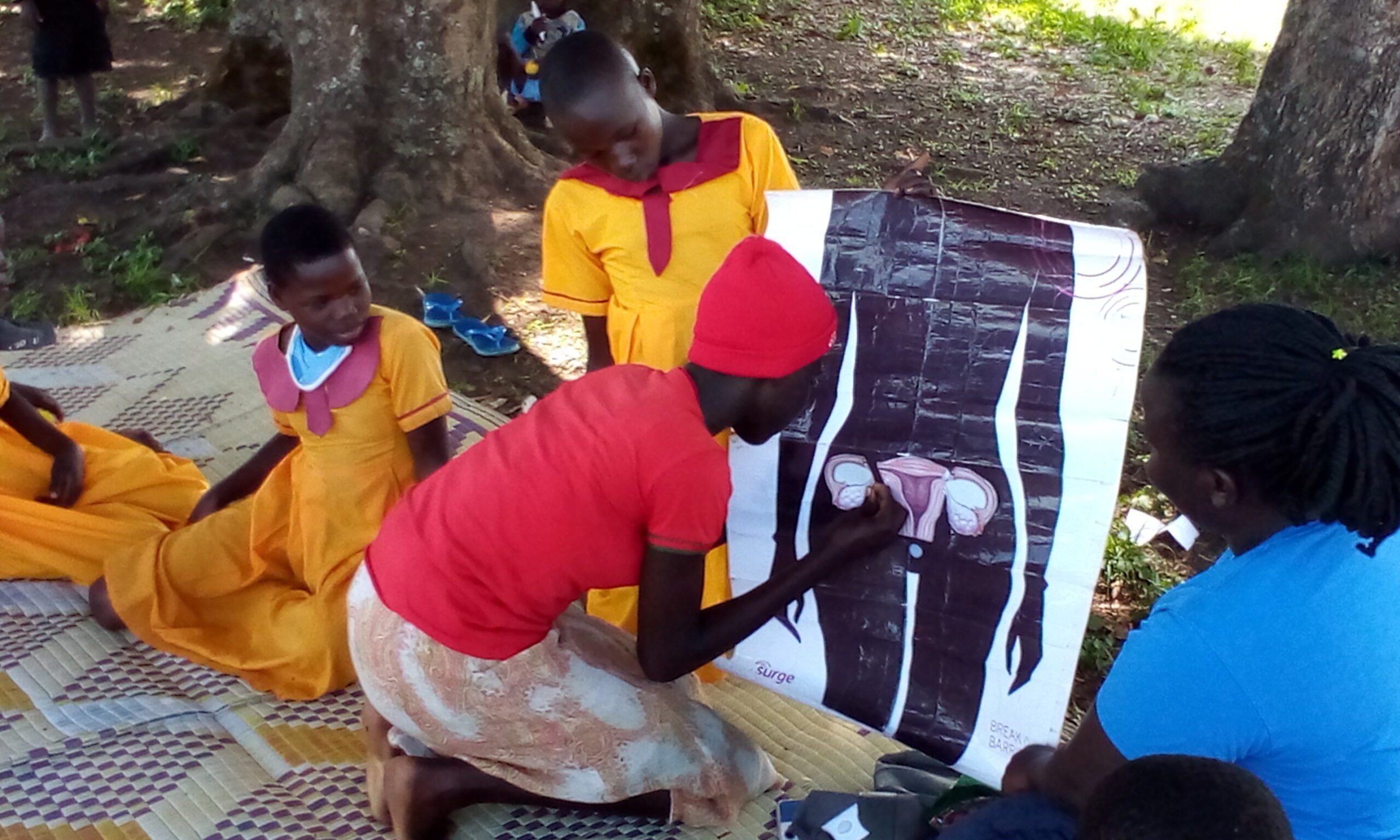
Nearly 1,000 school girls from selected primary and secondary schools in Zombo District have benefited from comprehensive training on Menstrual Hygiene Management, an intervention designed to address a key driver of school dropout among adolescent girls in rural Uganda.
Menstrual Hygiene Management encompasses the provision and proper use of clean, absorbent menstrual materials, access to safe and private changing facilities, as well as adequate water, sanitation, and hygiene (WASH) infrastructure.
According to the World Health Organization, menstrual health and hygiene are fundamental to the physical well-being, dignity, and empowerment of over 300 million women and adolescent girls who menstruate daily worldwide.
The FIDA Uganda initiative specifically targeted girls aged 12 years and above. Participants received practical training on the safe and hygienic use of sanitary pads in schools including Oturgang Girls Primary School, Mvungu Lower Primary School, and others.
Sam Rwothomio, Community Legal Volunteer with FIDA Uganda, emphasized the dual focus of the intervention: “In addition to building knowledge on proper sanitary pad usage, the organization distributed sanitary pads to Primary Seven (P.7) candidates and handed over boxes of pads to senior women teachers for continued support to the girls.”
Following the training session that reached over 500 girls at Oturgang Girls Primary School, the Head Teacher, Rev. Sister Hellen Mananu, commended FIDA Uganda for the impactful capacity-building session. She urged the organization to sustain and scale up such interventions to ensure consistent support for menstrual health needs in schools.
A June 2024 Value for Money Audit report by the Auditor General, Edward Akol, submitted to Parliament, highlighted the gravity of the situation, revealing that 64% of female students miss classes due to inadequate access to menstrual pads, clean water, and appropriate waste disposal facilities.
The audit further exposed significant gaps in the Ministry of Education’s efforts to support menstrual health and hygiene in both public and private primary and secondary schools. It pointed to insufficient investment in sanitation infrastructure and limited parental provision of menstrual supplies.
Key systemic challenges identified include the absence of menstrual hygiene materials and the low prioritization of Water, Sanitation, and Hygiene (WASH) facilities by District Local Governments.
Rev. Sister Mananu underscored the critical link between menstrual hygiene education and girls’ retention in school, noting that many girls drop out due to challenges associated with menstruation. She encouraged learners to apply the knowledge and skills acquired during the training.
Contextual data from Uganda indicates high levels of period poverty, with approximately 23–25% of girls aged 12–18 dropping out of school upon reaching puberty, largely due to lack of access to sanitary pads and appropriate menstrual hygiene management facilities , according to Joy for Children Uganda.
Topista Acamfua, Woman Member of Parliament-elect for Zombo District, previously highlighted the significant challenges girls face during menstruation and called for broader stakeholder engagement to address these barriers.
This intervention occurs against the backdrop of alarming statistics from Zombo District’s Community Development Department. Between 2024 and 2025, the district recorded 3,896 cases of teenage pregnancies among girls below 18 years. These cases accounted for 26.7% of the 14,593 antenatal care visits district-wide, a rate that exceeds the national average of approximately 24–25% for adolescent girls aged 15–19 who have begun childbearing.
Eunice Kayeny, Minister of Gender and Culture in Omua Chiefdom, Paidha, called for sustained empowerment of both young girls and boys through comprehensive sexuality education.
The FIDA Uganda initiative comes shortly after the Alur Kingdom issued a strong appeal to religious leaders and traditional chiefs across the region to stop issuing marriage certificates to couples under the age of 18. This forms part of a broader cultural and social protection strategy aimed at ending child marriage, early marriage, and teenage pregnancies.
The Kingdom’s Prime Minister (Jadipu) Opar noted that this multi-stakeholder approach seeks not only to enforce age-appropriate marriage practices but also to create an enabling environment for girls’ holistic development, family stability, and sustainable community wellbeing, including improved retention of girls in school through targeted support for the girl child.
Prince Opar Angala expressed deep concern over the high prevalence of early marriage and teenage pregnancies, which are often exacerbated by limited support to girls during their menstrual period. This vulnerability makes girls more susceptible to boys who offer material support and later demand sexual favors.
Period poverty in the area continues to affect women and girls through limited access to affordable sanitary products, inadequate sanitation facilities, and deep-rooted menstrual stigma. This results in high rates of school absenteeism often 2–3 days per month, increased health risks from using unhygienic alternatives, and ultimately lower educational attainment or complete school dropout.
In a previous interview, Sunday Kayom, a representative from MEMPROW (a civil society organization focused on women’s rights), stressed the importance of retention strategies in formal education, challenging harmful gender norms, and scaling up comprehensive sexuality education.
According to Kayom, such measures are essential for empowering adolescents and reducing their vulnerability to early marriage and unintended pregnancies.
FIDA Uganda’s intervention aligns with ongoing local, national, and international efforts to promote girls’ education and gender equality.
FIDA-Uganda is a leading feminist non-governmental organization founded in 1974. As a membership-based association of women lawyers and a registered NGO since 1999, it works to advance women’s rights, promote gender equality, and enhance access to justice through legal aid, public education, and community outreach across multiple districts in Uganda.
