








The National Housing and Construction Company Limited (NHCC) has stood as a central pillar of Uganda’s urban development for six decades. However, as the parastatal marks 60 years of existence, it finds itself at a critical crossroads. Confronted by acute funding gaps, high borrowing costs, and rigid bureaucratic protocols, the state enterprise is actively shifting its focus away from residential housing to survive.
The depth of this systemic crisis came to light on October 8, 2026, when NHCC Chief Executive Officer Eng. Kenneth Kaijuka appeared before Parliament’s Committee on Commissions, Statutory Authorities and State Enterprises (COSASE). Responding to queries raised in the recent Auditor General’s report, Kaijuka delivered what he termed “sad news”: NHCC is actively scaling down its low-cost residential housing projects, choosing instead to pivot toward commercial government construction contracts.
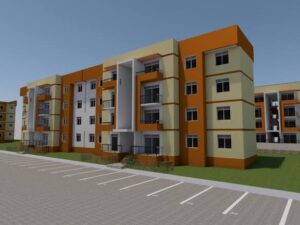

This shift leaves a glaring void in Uganda’s national housing strategy. The state cannot treat affordable housing as a self-sustaining commercial venture while expecting a public welfare outcome. Relying on presidential directives for direct procurement contracts might keep NHCC solvent as a general contractor, but it completely defeats its purpose as a national housing engine. To close the current housing deficit, the government must directly fund the NHCC for three critical reasons.
The fundamental problem facing NHCC is that it is mandated to serve a social good—providing affordable housing to low- and middle-income Ugandans—while being forced to operate under the same punishing commercial realities as private real estate developers. Unlike its regional counterparts, NHCC receives no state subsidies, operates without tax incentives, and must acquire land and construction materials at volatile market rates.
To finance its residential estates, the company has historically relied on commercial borrowing. Auditor General Edward Akol explicitly decried this structural neglect in his recent report, urging the state to immediately step up. The Auditor General highlighted that NHCC management had resolved to capitalise the company to the tune of Shs 231.5 billion through a rights issue, with the government expected to contribute Shs 118 billion.


Instead, the state starved the entity.Government allocated only Shs 30 billion, which is just 25 per cent of the expected contribution.
The consequences of this undercapitalisation are mathematically devastating. The Auditor General noted that due to the undercapitalisation of NHCCL, only 1,474 units [2.12 percent] out of the planned 69,288 units were constructed during the strategic plan period forcing NHCC to borrow Shs 200 billion on the open market forces the parastatal to price apartments in the hundreds of millions or billions of shillings just to break even. This commercial strain has directly compromised operational efficiency:
The Naalya condominium project, valued at Shs29.83 billion, stood at just 24% completion by its target date despite being heavily booked by citizens.
Direct government capitalization breaks this cycle. If the state funds the initial capital expenditure and land acquisition, NHCC can build projects efficiently, hit its completion timelines, and sell units at actual cost.
Uganda is facing an unprecedented urban youth bulge. For young professionals aged 25 to 40 seeking entry-level housing within 30 kilometers of Kampala, the state-backed entity offers no viable alternative to the exorbitant private market.


Most of the land is privately owned, which means that nearly every Ugandan becomes a builder… Families, lacking the means to negotiate with financiers, typically design homes based on what they can afford, leading to many rudimentary bungalows.
Without structured 10-to-15-year state-subsidized mortgage frameworks, NHCC is structurally restricted from addressing Uganda’s vast urban slum deficits. If young professionals earning decent formal wages are priced out of safe, structured urban centers, Kampala’s surrounding areas will devolve into dense, unserviced slums. Slum expansion devalues the capital city, strains municipal sanitation, and breeds social unrest.
Compounding these domestic strains, COSASE revealed that NHCC is currently trapped in a legal chokehold due to its historical shareholding. Libya acquired a 49% stake in NHCC in 2005 through a US$20.3 million (Shs35 billion) paper debt swap, while Uganda retained 51%. Following the fall of the Muammar Gaddafi regime in 2011, global UN sanctions barred Uganda from transacting with or locating its Libyan partners, completely freezing the company’s governance and blocking dividend collection.
Operating under an extraordinary High Court order as a “single shareholder” means NHCC cannot attract fresh international equity or conventional corporate financing without extreme legal risk. It is completely paralyzed on the open financial market. Direct government capital injections are not just a policy preference—they are the only lawful financial lifeline available to keep the company functioning.


The Auditor General’s report also exposed internal governance hurdles and compliance failures that stem directly from a cash-strapped company trying to cut corners to stay afloat. The parastatal was faulted for bypassing the Government Chief Valuer when renting out its commercial properties, as well as utilizing single-sourcing methods rather than competitive bidding for contracts worth Shs201 million. Furthermore, the report warned of financial leakages, pointing out that government laxity in collecting its 0.82% indirect share dividends from institutions like Housing Finance Bank deprives the state of critical revenue that could otherwise be re-allocated to public works.
While these administrative and procurement issues require stringent internal oversight, they must not serve as an excuse for the state to abandon its funding obligations. In fact, full government capitalization acts as a regulatory anchor: with direct funding comes strict parliamentary oversight, transparent milestones, and structural compliance.
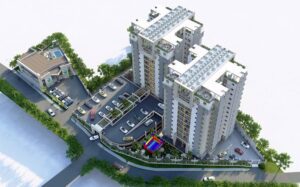

Every shilling the government directly injects into an NHCC low-cost housing development triggers a massive economic multiplier. Massive housing projects create thousands of immediate jobs for young artisans, masons, and engineers. Furthermore, it drives sustained local demand for Ugandan-made cement, steel, and structural timber, directly supporting the Build Uganda, Buy Uganda (BUBU) initiative.
To address its urban deficit, Kenya shifted from a developer-led model to an aggressive, state-driven ecosystem under the Affordable Housing Programme (AHP). This model provides an actionable blueprint for Uganda by leveraging structured state intervention across three main pillars:
If the company is to ever return to its original mandate of transforming slums and building homes for the average citizen, Uganda must implement targeted policy interventions:
Establishment of a National Housing Fund: Uganda needs a dedicated statutory fund to shield housing projects from the volatile commercial banking sector. This would enable NHCC to access capital at 0–3% interest, passing those savings directly to young prospective homeowners.
Legislating Rent-to-Own Legal Frameworks: Parliament needs to pass specific real estate guidelines protecting tenant-purchase agreements. This would allow young professionals to occupy a starter unit immediately and have their monthly rent legally recognized as equity contributions toward full ownership over a 15-year period.
Ultimately, NHCC cannot solve a public welfare crisis using purely commercial instruments. If the state wishes to change the aesthetic and structural reality of housing in Uganda, it must stop treating NHCC as a standalone commercial business and start funding it as a vital piece of national public infrastructure.
The Writer is an Urban Dweller foketcho22@gmail.com


