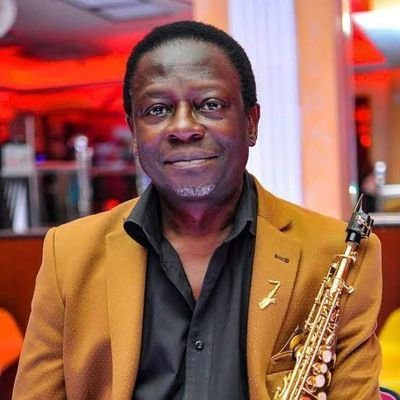






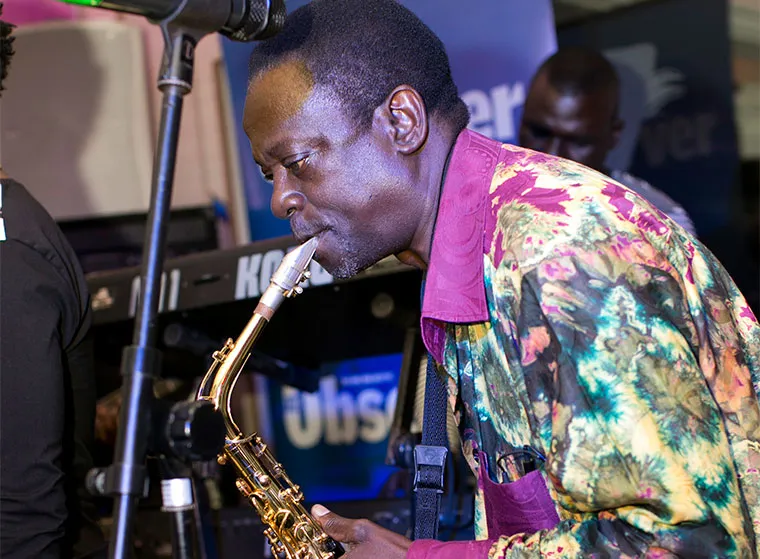
For exactly fifty years, the unmistakable sound of Moses “Papa Moi” Matovu’s saxophone was the rhythmic heartbeat of Uganda. From the political turbulence of the 1970s to the modern, tech-driven music festivals of the 2020s, Matovu did not just perform music; he preserved Ugandan cultural identity. His sudden, tragic death on September 24, 2026, left a nation in collective mourning and plunged the country’s oldest, most resilient musical institution—Afrigo Band—into an uncharted leadership vacuum.


Moses Matovu’s musical odyssey began in the late 1960s, cutting his teeth with legendary outfits like the Thunderbirds, Police Band, and Cranes Band. In 1975, alongside an ambitious cohort of veteran musicians, he co-founded Afrigo Band. As the band’s long-serving leader, primary composer, and main saxophonist, Matovu crafted a unique sonic brand: a rich, impeccably disciplined blend of Congolese rumba, traditional Ugandan rhythms, and Western jazz.
Under his uncompromising artistic guidance, Afrigo released timeless classics such as Jim, Afrigo Batuuse, Mpedde, and Mundeke, anchoring themselves as the definitive soundtrack to Ugandan weddings, state functions, and weekend nightlife across multiple generations. Poignantly, just one day before his passing, his fifty years of unmatched cultural service were formally recognized by the Kabaka of Buganda—a final, historic honor for a lifetime dedicated to his heritage.

The life of Uganda’s most celebrated instrumentalist came to a violent and abrupt halt in the early hours of Thursday, September 24, 2026. According to preliminary incident timelines released by the Kampala Metropolitan Police the 70-year-old maestro was involved in a fatal altercation in Kibuli Market Zone B, located in Makindye Division.
The authorities’ active working theory indicates that Matovu had dropped off a female companion, Rose Tumusiime, when he was confronted in a nearby corridor by a male suspect believed to have been formally in a relationship with her. The confrontation escalated into physical violence, resulting in injuries that ultimately claimed the icon’s life. Following swift Swalat Janaza prayers at the Kibuli Mosque, the maestro was laid to rest in Kyanja. While Rose Tumusiime remains in custody helping with inquiries, the Kabalagala Police Station has registered a case of suspected murder and launched a manhunt for the primary male suspect.


Beyond the true-crime shockwaves, Matovu’s death poses an immediate existential threat to Afrigo Band. Afrigo has historically defied the standard lifespan of African musical groups by operating as a highly disciplined corporate institution rather than a loose collective of artists. However, Papa Moi was the undisputed center of gravity.
He was the chief administrative decision-maker, the strict manager of financial structures, the musical director, and the public face of the brand.
Following the tragic passing of Moses Matovu the veteran members with the commanding presence, artistic authority, and experience to maintain his famously strict live-performance rehearsal standards are Joanita Kawalya and Herman Ssewanyana. Within Afrigo Band’s enduring structure, these two figures carry the institutional weight needed to guide the group forward


Joanita Kawalya (Vocalist & Front woman having spent decades at the front of the stage alongside Matovu, Kawalya is widely seen as the public face and matriarch of the band. She holds immense respect within Uganda’s music fraternity and has immediately stepped forward to champion Matovu’s musical legacy.
As a seasoned veteran instrumentalist, Ssewanyana understands the internal discipline, intricate rhythms, and rigorous live band arrangements that Matovu demanded during rehearsals.
While a younger generation of talented instrumentalists handles much of the stage instrumentation, the veteran leadership of Kawalya and Ssewanyana provides the essential continuity required to preserve Afrigo Band’s signature live sound


The signature Afrigo saxophone sound will not fade into history, as a dedicated generation of younger Ugandan horn players is actively stepping up to sustain the tradition of authentic live instrumentation. While the tragic passing of Afrigo Band co-founder and legendary saxophonist Moses “Papa Moi” Matovu on September 24, 2026, marks the end of an extraordinary era, his five decades of mentorship ensure that the torch he carried remains lit
Matovu did not merely perform; he built a resilient alternative musical ecosystem. Even as Uganda’s popular music landscape leaned heavily into electronic production and digital programming, Afrigo consistently championed live brass sections, providing a real-time masterclass for younger generations
Throughout its existence, the afrigo Band functioned as a revolving academy. Matovu consciously recruited, trained, and integrated younger instrumentalists into the lineup to play alongside veterans. Because the band’s structure depends on multi-generational brass arrangements, these mentees are already deeply embedded in the group’s sonic identity.


Uganda has seen a massive resurgence in live performance culture. Contemporary horn players, jazz instrumentalists, and modern brass ensembles—heavily inspired by the standard Afrigo set—continue to find commercial viability in Kampala’s nightlife. Matovu proved that localized, sophisticated live band music could outlast digital trends, creating a roadmap that younger artists actively follow.
While the exact tone of Papa Moi’s alto sax is irreplaceable, the discipline of live instrumentation he fiercely protected has been successfully institutionalized in the hearts of Uganda’s younger musicians
Current live bands in Kampala are keeping the Afrigo Band’s classic rumba-infused blueprint alive by blending its foundational Kadongo Kamu and Congolese rumba aesthetics with modern Afro-soul, jazz fusion, and contemporary urban sounds. Instead of merely mimicking the icons, younger ensembles treat Afrigo’s catalog as a textbook—deconstructing the iconic brass arrangements and updating them for today’s nightlife
Groups like the popular Abeeka Band frequently rearrange foundational live music grooves, introducing modern synthesizers and faster Afro-beats into classic brass structures to capture younger audiences at events like Crush Wine’sdays